Striations in the Heart

(for my friend John S.
who breeds salamanders
in his garden pond)

IMG_0299.jpg

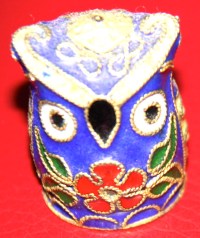
There are striations in my heart, so deep, a lizard could lie there, unseen, and wait for tomorrow’s sun. Timeless, the worm at the apple’s core waiting for its world to end. Seculae seculorum: the centuries rushing headlong. Matins: wide-eyed this owl hooting in the face of day. Somewhere, I remember a table spread for two. Breakfast. An open door. “Where are you going, dear?” Something bright has fled the world. The sun unfurls shadows. The blood whirls stars around the body. “It has gone.” she said. “The magic. I no longer tremble at your touch.” The silver birch wades at dawn’s bright edge. Somewhere, tight lips, a blaze of anger, a challenge spat in the wind’s taut face. High-pitched the rabbit’s grief in its silver snare. The midnight moon deep in a trance. If only I could kick away this death’s head, this sow’s bladder, this full moon drifting high in a cloudless sky.

This is the prose version, from Fundy Lines (2002). The prose version was based on an extract from a longer poem that first appeared in Though Lovers Be Lost (2000). I am always fascinated by the ways in which prose and poetry differ in their structure on the page. In particular, I am fascinated by how what seems to be the same, or a similar idea, changes according to format and context. Lagartija (below) is an extract from a longer poem. This became the prose version quoted above.

Lagartija

There are striations
in my heart, so deep,
a lizard could lie there,
unseen, and wait
for tomorrow’s sun.

A knot of
sorrow in daylight’s throat;
the heart a great stone
cast in placid water,
each ripple
knitted to its mate.

Timeless,
the worm at the apple’s core
waiting for its world to end.

Seculae seculorum:
the centuries
rushing headlong.

Matins:
wide-eyed
this owl hooting
in the face of day.

Somewhere,
I remember
a table spread for two.
Breakfast.
An open door.
“Where are you going, dear?”

Something bright has fled the world.
The sun unfurls shadows.
The blood whirls stars
around the body.

“It has gone.” she said. “The magic.
I no longer tremble at your touch.”

You can drown now
in this liquid
silence.

Or you can rage against this slow snow
whitening the dark space
where yesterday
you placed your friend.

The silver birch wades
at dawn’s bright edge.

Somewhere,
sunshine will break
a delphinium
into blossom.

Tight lips.
A blaze of anger.
A challenge spat
in the wind’s face.

High-pitched
the rabbit’s grief
in its silver snare.
The midnight moon
deep in a trance.

If only I could kick away
this death’s head,
this sow’s bladder.

Full moon
drifting
high in a cloudless sky.


Here is the original poem. It is the third in sequence from Though Lovers Be Lost. I find that each version has a life of its own and all are slightly different. Beauty does indeed lie in the eye of the beholder: poetry too.

Building on Sand

1
Everywhere the afternoon
gropes steadily to night.
Some people have lit fires;
others read by candlelight.

Geese litter the river bank,
drifts of snow their whiteness,
stained with freshet mud;
or is it the black
of midnight’s swift advance?

They walk on thin ice
at civilization’s edge.
Around them,
the universe’s clock
ticks slowly down.

2
Who forced that scream
through the needle’s eye?

Gathering night,
the moon on the sea bed
magnified by water.

Inverted,
the big dipper,
hanging its question
from the sky’s dark eye lid.

Ghosts of departed
constellations
walk the night.

Pale stars scythed
by moonlight
bob phosphorescent
flowers on the flood.

3
The flesh that bonds;
the bones that walk;
the shoulders and waist
on which I hang
my clothes.

Now they stand alone
beneath the moon
and listen at the water’s edge
to the whispering trees.

They have caught the words
of snowflakes
strung at midnight
between the stars.

Moonlight is a liquor
running raw within them.

4
There are striations
in my heart, so deep,
a lizard could lie there,
unseen, and wait
for tomorrow’s sun.

A knot of
sorrow in daylight’s throat;
the heart a great stone
cast in placid water,
each ripple
knitted to its mate.

Timeless,
the worm at the apple’s core
waiting for its world to end.

Seculae seculorum:
the centuries
rushing headlong.

5
Matins:
wide-eyed
this owl hooting
in the face of day.

Somewhere,
I remember
a table spread for two.
Breakfast.
An open door.
“Where are you going, dear?”

Something bright has fled the world.
The sun unfurls shadows.
The blood whirls stars
around the body.

“It has gone.” she said. “The magic.
I no longer tremble at your touch.”

6
You can drown now
in this liquid
silence.

Or you can rage against this slow snow
whitening the dark space
where yesterday
you placed your friend.

The silver birch wades
at dawn’s bright edge.

Somewhere,
sunshine will break
a delphinium
into blossom.

7
Tight lips.
A blaze of anger.
A challenge spat
in the wind’s face.

High-pitched
the rabbit’s grief
in its silver snare.
The midnight moon
deep in a trance.

If only I could kick away
this death’s head,
this sow’s bladder.

Full moon
drifting
high in a cloudless sky.

8
After heavy rain
the house shrinks.
Its mandibles close.

A crocodile peace
descends from the jaws of heaven.

I no longer fit my skin.
Iguana spots itch.
Walls encircle me,
hemming me in.

The I Ching sloughs my name:
each lottery ticket,
a bullet.

None with my number.

9
Late last night I thought
I had grasped the mystery:
but when I awoke
I clasped only shadows and sand.
Codices

Re-reading the Códices

The Mixtec Códices, indigenous screen-fold books written on deer hide, 
are Pre-Columbian pictographs that record the history of the Mixtec peoples. 
There are no words: only brightly coloured scenes 
containing information about rituals, gods, heroes, and ceremonies. 
Only a few very precious documents 
(Zouche-Nuttall, Vindobonensis, Borgia etc) survived the ravages of time
 and the continued purges of the Spanish Inquisition. 
This prose-poem, self-explanatory for the main part, 
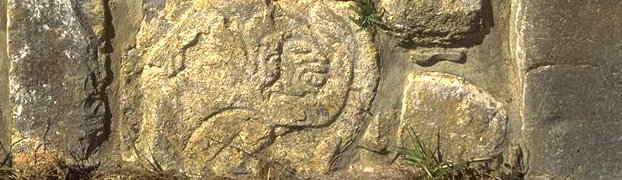
verbalizes typical symbols from the códices. 
Clearly, such symbols, as the poems suggest, are ambiguous 
and open to radically different interpretations.

IMG_0144 (1).jpg

“Two breasts: one green, one yellow, symbolic of the hill where the church stands; the church itself bi-colored, strong stone walls, a spire. A large red heart symbolic of the love we bear for you, our masters. Two feet walking the path of enlightenment you opened before us; two hands pointing the way. The feet below the heart; the hands above the heart, like wings; and the heart becomes the body of the new place you have built for us. And in the heart is our sacred symbol: the Earthquake, a sign of leadership and power used only by those of Royal Stature and the Noblest Blood. Attached to the heart is the Numeral One which means Lord of the Earthquake; for you are Number One in our Hearts. Attached to the heart is a speech scroll showing felicitous words of praise; below it is the sacred earthworm, and beneath that the serpent head of wisdom and the flint knife promising strength through sacrifice.

But be wary: for our symbols are double-edged!

The colors of the hill are divided, as the hill is divided, showing strife and division. The church is on top of the hill, for the symbol has conquered the people, and the people are starving, subject, and destroyed. The feet are pointing in opposite directions, for the people are stalled. They have no forward movement, nor will of their own. For they are conquered by the sword and not by love. And the hands are pointing in opposite directions; for the right hand knows not what the left hand is doing. And the hands are reversed showing anguish and distress. The sign of the heart is the sign of the disembodied heart, torn from the heaving chest of the vanquished and thrown to the dogs. The sign of the earthquake is also the sign of movement. And that movement is a bowel movement. And one movement in the middle of the sacrificed heart is the victor excreting on the vanquished and treating them with scorn and contempt. The scroll protrudes from the nether part and says that the victors are speaking words of excrement, that verbal diarrhea issues from their lips. And the serpent has no feathers; it cannot fly. It is as a snake treacherous and bitter, crawling on the ground. The head of the serpent is two tongued and tells of treachery and of deceit. The flint is attached to a heart; it speaks of the heart that is as hard as flint, knowing no mercy.

IMG_0146.jpg
And at the end that heart will receive no mercy in its turn.”

Dreams

Dreams are important in Oaxacan mythology.

Do we create them ourselves?

Or do they come to us as celestial messages?

Can they exist without us?

Or do we form a symbiotic relationship.,
each dependent on the other?

IMG0023_1.jpg

Eight Deer or Tiger Claw / Ocho Venado or Garra de Tigre is a Mixtec Hero; 

his name is composed of two parts: 

(1) day name (ie the name of the day on which he was born) Eight Deer and 

(2) nickname Tiger Claw. 


His symbol in the códices is a small circle with a comma like a tiger claw.

Nuttall is the twentieth century editor of the Zouche Nuttall Codex 

in which Eight Deer’s history of conquest is recounted.

Nine Wind / Nueve Viento is another Mixtec Hero 

and the founding father of the race, according to some códices.

Dreams

Once I stole the nose from a sacred statue;
today I watch it cross the square attached to a face.
Eight Deer walks past with a fanfare of conches:
you can tell him by his donut with its little tail.

A shadow moves as zopilote wings his way across the square.
I caught him once on a midnight bus;
he begged me to fold his wings and let him sleep forever.

A gringa called Nuttall sells tins of watery soap.
Her children fill my days with enchantments:
bubbles born from a magic ring.

Eight Deer, eight years old, sets out on his conquests.
Nine Wind births his people from a flint,
or was it the magic tree in Apoala?

The voices in my head slip slowly into silence.
Sometimes I think they have no need of me,
these dreams that come at midnight,
and knock at my window.

IMG_0218.JPG

K9

K9

I had a little doggy and my doggy loved me,
I fed my little doggy on cookies and tea.
My little doggy had a very sweet tooth
and when he needed feeding he went woof, woof, woof.

One day my little doggy fell down and died.
Something had broken in his inside.
I wanted another doggy but my wife said “No!
I’m not cleaning up the floor when he wants to go.”

IMG_0154.jpg

I Googled an e-dog and found one on E-bay.
E-dogs are nice and clean, that’s what they say.
They make you smile and take away your frown
and they’ll sit and guard the car when you go to town.

Now I’ve got an e-dog and he’s very, very nice.
I wind him up each day and recharge him twice.
My wife loves my e-dog and she also loves me
because my e-dog needs no feeding and he doesn’t go pee.

Twisty-Twerky

Twisty-Twerky

Twisty turns everything upside down,
Twerky steals your smile and makes you frown.

IMG_0139.jpg

Twisty makes you doubt both self and friends,
Twerky’s malevolence never ends.

Twisty turns good into evil deeds,
Twerky bites every hand that feeds.

Watch Twerky twist, see Twisty dance:
he didn’t pick on you just by chance.

Twisty-Twerky slithers through your head,
climbs into your clothes, and freezes you in bed.

Now you doubt the sun and you doubt the rain.
You’ll never trust another person again.


The Unexamined Life 1

The Unexamined Life 1

“The unexamined life
is not worth living.”
Socrates.

A philosopher’s life’s based on thinking,
and drinking, and thinking, and drinking,
and thinking and drinking,
and thinking about thinking and drinking.

He gazes and gazes at his navel,
every day for as long as he is able,
and talks to his wife
about trouble and strife
and the problems they have to unravel

IMG_0155.JPG

But all is not doom and gloom
when a philosopher enters the room,
tho none can debunk
the size of the trunk
of the elephant stuck in the room.

As for me, I am caring and giving,
and although I work hard for my living,
I’d willingly share
with a friend in despair
half my cloak and a third of my living.

“Join the army,” the philosopher said.
“There’s no life like it,” he said.
“You get very few thanks
when you’re in the front ranks,
but it’s better than walking round dead.”

(To be continued … )

“The unlived life
is not worth examining.”
Pseudo-Socrates.

M. T. Kettle

M. T. Kettle

I had a friend called M. T. Kettle
and he was one of those boys
who thought they were very,very clever
and always made a lot of noise.

Alas, he had an empty head
but the teachers set him right.
They drilled a hole in his empty head
and filled it with homework every night.

Each day in class when they tested him
hot tears fell from his eye.
It was such a shame
when they called out his name
to watch that young boy cry.

IMG_0051.jpg

In our school, education
was like filling M. T.’s head.
The masters took notebooks filled with ideas
from white males (mainly dead),
and told us stories of their own past glories,
We would have liked fresh thoughts instead.

IMG_0041.JPG

We sat in a classroom, row upon row,
our pencils in our hands,
and took dictation about every nation
that had passed through colonial hands.

IMG_0047.jpg

“Now knowledge, boys, is in your notes,”
that’s what one master said.
“I read them out, you write them down,
they never pass through anyone’s head.”

Doldrums

Colloquially:
a state of inactivity, mild depression, listlessness, or stagnation.
Dold (stupid) plus –rums (a suffix as in tant-rums).
Wikipedia

All at sea
in a pea green boat:
let’s just hope
it’ll stay afloat.

IMG_0131.JPG

When winds don’t blow
and Doll Drums roll,
pray sea-urchins
won’t devour your soul.

IMG_0130.JPG

If you feel some wind
but the flags won’t fly
watch Admiral Brown
as he passes by.

IMG_0129
Take this friendly
advice from me:
“Sit at your desk
and never go to sea.”

And if you really
want to see the sea,
just watch it on a movie
on your home TV.

“As idle as a painted ship
upon a painted ocean.”

The Ancient Mariner
S. T. Coleridge.