People Poems 2

IMG_0202 (1).jpg

People Poems are dedicated to people who, for one reason or another, have distinguished themselves in my life. People Poem 2 is dedicated to Pearl Kirkby who persuaded me — in one sentence — to change my signature from that of a backward looking former academic to that of a forward looking creative writer. ID, from Granite Ship rewritten as Land of Rocks and Saints, and liked by Pearl, reminds me of my time in academia. However, the final image of the USB states clearly the forward-looking aspect of my creativity. I am now a full-time creative writer. Thank you, Pearl, for pointing this out to me. Please accept this poem and this bouquet of e-flowers as my tribute and acknowledgement of my debt to you.

ID

Within this bookstore are many books, yet none
with my name on the cover or my life blood inside.
Deeper I dig, and deeper. Now here is a name I know,
and there in the bibliography, at last, I find my name:

two books, a dozen or so articles, a thesis, and I am
vindicated. All that study, that work, has led to this:
my name in a foreign book in a foreign bookstore. Nice
work: now I know that wherever I go, I can establish

my identity, set myself free from anonymity’s pangs.
Plug in the computer, turn it on, and there I am on the web,
smiling back at me. There is no better passport, no better

sense of being, of identity, than that contained in these
images of self, these self-reproductions that I carry with
me, always, in a memory stick looped round my neck.

Plaza de Santa Teresa
26 VII 2005


Imitation and Creation: Wednesday Workshop

IMG_0177.jpg

Imitation and Creation Wednesday Workshop

 Martes y trece, mal día / Tuesday the 13th, bad day.

Imitation:

In our age of instant and spontaneous creativity, imitation is almost always bad. And yet, as John pointed out to me on Tuesday evening at our weekly meeting, imitation is the best form of flattery. We flatter other writers when we borrow from them and imitate their styles. I don’t mean wholesale plundering and plagiarism, but a nod here and there surely does no harm.

We also discussed the idea of imitatio / imitation, in ancient and medieval (and later) rhetorical texts.

Imitatio: the ideal of the good man, of the blessed spot, of the Golden Age — in rhetoric not all imitation is bad. Moreover, imitation can be doubly good when the “remake” is more original than, and betters, the original production.

Orality

From imitation we moved to orality: how much do we see and hear and overhear and then repeat? And, by extension, how accurately do we repeat what we hear?

If we go back to Roman times, the marching songs of the Imperium spread throughout the Roman Empire (Holy or not), and catchy songs, tunes, and words they were with thousands marching to them and singing them in taverns and on the road.

Think the Re-conquest of Spain (la Reconquista) and the romances noticieros, the news ballads, songs that circulated orally and were transmitted throughout the Iberian Peninsula. It is hard to imagine a society with little writing, no newspapers, no radio, no television, and everything transmitted by foot, horseback, and word of mouth. Yet that describes the situation in Spain in the 14th and 15th centuries. News was sung, and imitated, and circulated by song and word of mouth.

Ramón Menéndez Pidal coined the phrase el poeta pueblo / the poet as people, a concept that suggested an anonymous series of authors and contributors, many nameless, speaking and revising, remembering and re-polishing, verses and songs. This leads to a true oral authenticity of authorship where everyone joins in to create and re-create and we end up with a literary process of natural selection (oh yes, we discussed Darwin, and Wilberforce, and Huxley, and Mendel, and Marx, and many other things and people as well, we don’t do things by halves on Tuesday nights).

Think now of the literate, those who had letters and could write and read, and the illiterate, those who could neither read nor print their names. For us, the illiterate come down to us as crosses or ticks or thumbprints in history or as a stonemason’s mark on a cathedral, perhaps. But nevertheless, the illiterate heard, they memorized, they repeated, and they spoke. And no, in spite of all our assumptions, they were NOT stupid.

Think Napoleonic Wars and the songs that were sung on board ship in the various navies and don’t forget the marching armies. Many of these songs, words changed, are still with us. The words change, the tunes change, the rhythms change, but so many, oh so many, are recognizable when we go to their roots and examine them.

Orality and Literacy

Now think of a society in which some people can read and some can’t. Cervantes presents us with a world in which the literate and the illiterate mingle in a changing society. He shows us how they interact in his novel Don Quixote. The closest we can come today is to a world in which some are computer literate and some aren’t; some can text and some can’t; some are totally at home in social media, and some aren’t. Often this is a case of education and money. It can also be a question of privilege. But wealth and circumstance enter into the equation as well.

Now think of how this world of ours is expanding exponentially with its many forms of instant media and also how it is contracting exponentially as it becomes, in the words of the Spanish, a pocket handkerchief / el mundo es un pañuelo.

Originality

Into this mixture we must now throw originality: how creative are we? How original are we? What does it mean to be original, to be creative? I was always horrified when I heard students and professors repeating the “best” adverts they had heard on television the night before. Alas, I can still sing many of the early ads I heard on black and white television in the fifties. How much room is there in the human brain? How original is the mind that regurgitates the tv ads of so long ago and how, just how, do we incorporate them into our own version of creativity? Is creativity then warped tradition and reconditioned memory? Then think jokes, re-cycled jokes, with an ever -changing victim subjected to a never changing punchline: I don’t want to go there.

Let us think Atlantic Canada: how do we deal with Milton Acorn’s Jackpine Sonnets? Are they failed sonnets with fewer lines and falsified rhymes and rhythms? Or are they true poetic creations that reflect the True North Strong and Free that is the Jack Pine growing frivolous and free in Atlantic Canada? I will never forget my first encounter with Milton Acorn. He borrowed my photocopier code and photocopied himself, literally, on the department photocopier, limb by limb. Now is that original or not? I still remember him carrying his photocopied features across campus …

Imitation and Creation, from my computer, our Wednesday Workshop, a day late … so Euro-Centric, for that is my background, and I do apologize. For I am well aware of the influence of the tales that spread from China and India and the Arabian Peninsula into Greece and then Rome and then places further west. A small world ours, a veritable handkerchief, a literary handkerchief with repercussions across time and space, repercussions that have breadth and depth and that may come to us in so many different ways.

Imitation? Originality? Creativity? Talk to us about them, next Tuesday, at our regular weekly meeting.


Inquisitor: Sun & Moon

IMG_0184.jpg

Inquisitor

He told me to read,
and plucked my left eye from its orbit.
He slashed the glowing globe of the other.

 Knowledge leaked out:
loose threads dangling,
the reverse side of a tapestry.

 He told me to speak and squeezed
dry dust between my teeth.
I spouted a diet of Catechism and Confession.

He emptied my mind of poetry and history.
He destroyed the myths of my people.
He filled me with fantasies from a far off land.

I live in a desert where people die of thirst,
yet he talked to me of a man who walked on water.

 On all sides, as stubborn as stucco,
the prison walls listened, and learned.

 I counted the years with feeble scratches.

For an hour, each day, the sun shone on my face;
for an hour, each night, the moon kept me company.

Broken worlds lay shattered inside me.
Dust gathered in my people’s dictionary.
My heart was a weathered stone
withering within my chest.

 I longed for the witch doctor’s magic,
for the healing slash of wind and rain.

 The Inquisitor told me to write out our history:

I wrote
how his church
had come
to save us.

Note: I am still working on Sun and Moon. It will be ready for publication on Amazon and Kindle some time this week. Monkey Temple, Though Lovers Be Lost, Bistro, and Empress of Ireland are now available for review or purchase on Amazon and Kindle.

Print: Wednesday’s Workshop

IMG_0154.jpg

Print, Printing, and Prints
Wednesday Workshop

Tuesday evening’s Gents Night Out started with John and I, on our own, and after our usual jovial salutations, we talked about putting things into print.

Print

John visited me last week and guided me through the placing of Monkey Temple on CreateSpace at Amazon. Then, when it was up, he talked me through the placing of the same text on Kindle. Now both are available online. He has read Monkey Temple and was kind enough to give it an online review (and a 5 star rating). He tells me it is his favorite among my books. Julie Gordon, another good friend from an online writing course we shared, has also read Monkey Temple, and she gave it another 5 star review, so it is doing well. Only one poem from Monkey Temple has appeared on this blog, Monkey’s FAQs. With it already in print, I may add an occasional poem to the blog, but I will not run through the whole text.

Though Lovers Be lost is also available on Amazon. John’s teaching was good, as I told him in our conversation, and I put TLBL up on my own. However, it is not yet available on Kindle, but it will be available soon. Now, Though Lovers Be Lost has appeared here on the blog in toto, so, if you, dear reader, have followed the blog and would like to contribute a review online … well, I would be very grateful.

Printing

I am just tidying up The Empress of Island and that manuscript, together with the flash fiction of Bistro, should go up on Amazon very soon. Two separate books, I should hasten to add. Again, with the amount of text from both that I have posted on this blog, if you have followed them, then please consider posting a review.

John himself is preparing yet another novel for publishing. We discussed the timeline and the structure of this novel, his twentieth, or twenty-first. He is trying to schedule gaps in the text of five years and ten years and is working out a plan to have all the characters age over those time spaces, not an easy task, as you can imagine, but then, John is a very good novelist. He gave me a signed copy of his novel, The Caroline, available online at Ex Libris, and Clare and I will be reading that, one after the other, if not together. You can find John on Amazon at John K. Sutherland, incidentally. You can find me most easily under my name and the book title: Roger Moore: Monkey Temple … that gets me every time. If you just type in my name, there is more 007 material than even James Bond and 100 secretaries could account for, all paid On Her Majesty’s Most Secret Service.

Prints

 A knock at the window of The Second Cup, right behind me: John points over my shoulder, it is Kevin, come late, with the most attractive … now, you really don’t know what I am going to say next, although you think you do, … nine week old Habanese puppy in his arms. Of course, she can’t come in, so we go out to greet her. What a darling … I refused to touch her. Puppies are catching and I don’t want to catch one: too much bending and house training at my advanced and creaky age. If I can’t tie up my shoelaces, I can’t clean up after a poo-pee — that’s the French for a puppy, la poupée, oh no, my mistake, a poupée is a little doll — just what Kevin’s puppy is.

Kevin left the dog in the car — in the shade, windows down to give air circulation, cool evening — John and I lectured him — he didn’t need the lecture –. and we discussed Kevin’s week. Things are going well and he is juggling work, writing — he is finishing his first manuscript and has a contract — wow! — I look forward to giving news of the publication of his book on a future Wednesday Workshop — and he’s also working on a new and very secret PROJECT — about which we can say nothing except ssssh!

Footprints

Kevin didn’t want to leave the poo-pee in the car for too long, especially since she was fond of climbing her way into the driving seat — remember Clyde? — oh no, not another Clyde! — and so we all soon made footprints. Alas, Chuck’s were covered with dust and sand and we didn’t see him this week. He is busy with a building project and also with his fourth novel — The Underwater Road — for which he, too, has a contract. His other novels are doing well. I have only read Steal It All … but I must say that Chuck Bowie is a master of mystery and intrigue, as I said on my online review.

So, this Wednesday’s Workshop is a potpourri: lots of announcements, friendships, changes in momentum, new editions, and new additions, and not so much literary criticism and theoretical musings. Ah well, life’s often like that.

See you all next Wednesday!

A question and an answer

Question: I am curious if you’ve ever had any of your short stories/poetry published in any lit. mag? I’m wondering because I am travelling down that publishing avenue and looking for advice when pitching to literary magazines. Although the general consensus seems to be that it’s a wholly tough market to get into!
Tales from the Trunkhttps://trunktalessite.wordpress.com/

Answer: I have published about 135 poems in literary magazines, mainly in Canada. This happened mainly in the ’80’s and ’90’s when the market was probably a little bit easier to break into. I have also published 14 or 15 short stories (and won some awards and honorable mentions, same with poetry, too, incidentally).  It seems to me that there are two distinct ways to go: (1) Submit, submit, submit: paper your walls with reject slips, keep going, keep improving, no matter what, don’t give up, ever. You must be stubborn and believe that your work is worth continuing with and BETTER than what those who are rejecting you think it is. Mind you: listen to them, keep reading, check your markets, revise your work in accordance to what editors think (if they make suggestions), and, above all, be as stubborn as a mule or worse. I did that for years and then I started to take route #2: (2) Go Indie and publish your own work. With route #1 behind me, I knew who I was and what I was writing. If other people didn’t like it, that was their problem. Sure: I am a Welshman, writing in English, in Canada, about Spain, Mexico, and Wales … duh … so, as they keep telling me, it’s just not marketable. Why not write about the Maple Trees turning red and Maple syrup … duh … going Indie led me into two further directions. (A) I published my own collections, paid for them myself and, in a fit of pique, gave them away free to my friends, “because my poetry is too precious to sell for money”! NB I had a full time job and could afford to do this. (B) I am now publishing via CreateSpace (Amazon.com). This is for free and easy to do. There are other options out there. Some ask you for cash up front …. I wouldn’t pay for their services. Others are free and excellent. I also recommend Smashwords or is it Wordsmash? Anyway, it’s also free and you can control where your books go and what they do. I chose Amazon because I had a persuasive friend who talked me through the process. If you have someone who can talk you through the process, any process, of publishing online, that helps. If you have a writing group THAT IS HONEST WITH YOUR WORK — that is essential. You must have some reliable readers who can step up and say: “No, that is not up to your usual standard” or “No, you can do better than this.”Good luck and best wishes, and yes, if I can answer your questions and help, I most certainly will.

Dialogue: Wednesday’s Workshop

IMG_0146 (1).jpg

Dialog / Dialogue

The Tuesday night writing group that I meet with is very small. It currently consists of four members (Chuck, John, Kevin, and Roger), though it was larger. Several members dropped out for sundry reasons, but we four get on well and we have continued our Tuesday sessions for a long time now. We usually concentrate on discussions, sharing ideas, and encouragement rather than on anything else. We also share work in progress by e-mail for commentary online and we throw out current writing difficulties for discussion by the group. We also indulge in other activities. For example, on Monday last, John, one of the group members, visited me at home and kindly showed me how to process a manuscript for publication on Amazon’s CreateSpace. This was a first for me, though John, a very accomplished writer, has some twenty novels published in this fashion.

I thought it might be of interest to set out elements of the discussion that took place yesterday evening at The Second Cup Coffee Shop. Here are the notes, slightly amplified, that I sent round the group.

  1. We began by asking Chuck if he had benefitted from the previous week’s conversation, when he had set out a problem situation from his novel that we had all explored. He outlined briefly how he had responded to our suggestions.
  2. He then noted that some people can write dialogue with ease, others can’t, and illustrated this with info from a workshop he had given in which 13 of the 14 submitted manuscripts were narratives without dialog, and only one contained dialogue.
  3. This led us in several different directions and we opened with using telephone messages as a means of conveying information and also as a back up to “mysterious” dialog –can you hear both ends of the conversation?
  4. This in turn developed into texting and tweeting and electronics and from here we talked about the potentially deleterious effects of social media on conversational skills, and hence lack of dialog in society.
  5. Computer techniques and knowledge at a cross-words + game play + thought play + voice interaction to rival or replace writing novels came into the conversation and we added some comments on writing by dictation and computer transcribing of voice.
  6. The question of the historical development of the Dialogue form was opened: can Plato’s dialogues be considered monologues since many of the responses to Socrates are of the ‘yessir, nossir, three bags full sir” variety. We talked about creating action via dialogue and compared the modern newscast to the Medieval visitor who tells his audience what happened ‘over there’ and answered questions set by them. We also mentioned some dialogued novels of the 15th 16th C.
  7. The transition of the Quixote from single character (I, 1-5) to double character (the rest of the book) and the important role that dialogue played in the development of Cervantes’s novel also came forward. This led to the use and development of dialogue in other novels. We discussed dialogue on TV with reference to As Time Goes By and the Midsomer Murders. We discussed dialogue as a composite of what is said, how it is said, how it is delivered, and we emphasized the importance of timing of dialogue.
  8. We ended with a brief discussion of the age effect and development of narrative and dialog in children, especially in light of the effects of electronics on young developing minds and the substitution of screen for dialog.

Kevin was absent last night, but John and Chuck agreed to contribute a paragraph each in which they show their use of dialogue. I have added a poem in dialogue, just for the fun of showing a different usage. These are by no means state of the art models of how to proceed. They are examples of the type of work we are doing. Electronic links follow each example where appropriate.

Chuck Bowie: Steal it all.

“You know you got off lucky, Hendricks. It would have been so much easier, and given me so much more pleasure to have put the two slugs through that melon of yours. Now, get up. I want your seat.” While he spoke, he drew the blind closed. Walking over to the side of the small room, he turned off the ceiling light, leaving them with just the desk lamp to view one another.

Ace hauled his massive bulk out of the chair and shuffled around to the side of the office nearest the door. He eased into a dusty metal chair, taking care to avoid touching anything with his right arm.

“Tell me this.” Donovan waved his gun at the arm. “Why is it when a guy hurts his arm, he limps? I never figured that out.” This elicited another curse from Hendricks, and his attacker tossed him a roll of paper towels, which he failed to catch. Both ignored the useless roll as it found its way into a corner of the office.

“I’m very interested to hear your story, Ace. You’ve hurt a lot of people, some of them my friends. Want to talk about it?”

“You go square to ‘ell. My men’ll be here in a minute, and that’ll be the last of you, mate.”

Donovan shook his head.

“You have no more men. They’re all dead. Twelve separate industrial accidents, is how I heard it. Plus the scum you sent to kill Gemma. She weighs one hundred-fifteen pounds, by the way. Just before she killed him with her bare hands, he probably apologized to every woman and child he ever bullied. Nope, all you have left is that old

man, tied up by the garbage bin outside. And your millions. Um, nope, you no longer have that, either. Shit, you’re not really in good shape, my friend.

“But here’s what I can do for you. I can kill you, to save you the mortification of seeing your failure in tomorrow’s headlines. Is now a good time?”

Hendricks shook his head, unsure if Donovan was serious. The cloth around his elbow had darkened, and a drop or two had begun to puddle on the floor beside him.

“Okay, then. Here’s what I’m willing to do. I’ll name a name, and you’ll tell me the story. The more names you chat about, the longer you get to live.”


Buy Link for Steal It All:

https://www.amazon.ca/s/ref=nb_sb_noss_2?url=search-alias%3Dstripbooks&field-keywords=Chuck+Bowie

John Sutherland: Convergence of Fates.

Before he drove off he decided to make another call. He’d better report what he had learned, to the Park Rangers in the Clark National Park. They’d had a bear go missing a couple of weeks earlier. The phone rang a few times before it was answered.

“Is Scott there, please?” Then, he recognized the voice.

“Melissa, it’s you” He identified himself. “Charlie Easton. Hudgin’s Mills. Remember that bear you told us to watch for, about ten days ago?”

He didn’t need to say any more, and nodded in response to her suddenly pointed questions, interrupting what he had been ready to say. Why anyone would nod into a telephone seemed a strange thing to do, but it was a reflexive action.

“It might be here. Hudgin’s Mills. At least, close to it. I just took two people into hospital. One of them had been attacked by a bear.” He listened for a while and responded as far as he could, giving her more details about his injuries.  She seemed satisfied that it had been a bear attack.

“Yes I can show you where I picked them up.” He listened further. “I don’t have a clue who he is, but I know the young woman. Susan Whitcomb. She’s….” Melissa seemed to know her, but of course she did; they were related in some way through her grandmother. He continued to nod.

“The Rollins road, ten miles out of town. The young man was pretty torn up, and bleeding like a stuck pig, but….”

Melissa cut into what he was saying and asked those questions important to her, getting the responses she needed to hear.

“It must have happened not long before I picked them up. Ten, maybe twenty minutes before. He was still bleeding. He didn’t say much, but he was conscious all of the drive in. I couldn’t see any injuries on her.

“It could be your bear. I thought I’d better tell you. From the looks of them, they should both be in the hospital for a day or two at least, maybe a week, for him, so you have time.” He listened further, and looked out at the weather.

“Rollins Road,” he repeated. “Where the river comes closest to the road and before it joins the main channel. Ten miles out, where it’s fordable. There’s only one place it does that. They were both wet, so they had waded across that river.”

He saw a flash of light and then heard a rumble of thunder about five seconds later (his subconscious told him it was about a mile away), and then responded again.

“I don’t know. You’d have to talk to him to find out where, exactly. You could probably follow his blood trail back on the other side of the river and find out, except for this rain. There’s only that one shallow place where they could have crossed, but it might not be passable by morning if we get the amount of rain they’re forecasting.

“If you call the Hospital in a couple of hours, they might be able to tell you something by then. Ask for Doctor Lewis. That young man I brought in might even be able to talk to you, if they let him. I’ll be home about midnight. You can call me there in the morning if you need my help to show you.”

From what Melissa said, Scott, her husband, the man to hunt that bear down, was already fairly close to Hudgin’s Mills on other business, so he’d be on his way as soon as she talked to him, and she wouldn’t be far behind.

“In the morning then.”

Charlie rang off, and decided that he should make one more call before he headed out.

https://www.amazon.com/John-K-Sutherland/e/B007C8DCCQ


Roger Moore: Monkey Temple.


Monkey FAQs
(with apologies to all those who draw them up
at their work place, knowing they will never be read)

“What news from the ark?”

“Only the dark waves pounding the hull, the wet winds blowing.”

“Who placed the whale ribs on this mountain
and called them a cathedral?”

“Sunshine blossoms through hollow vaults and shadows shimmer.
The day is striped across my back
and I bear its weight like a beast of burden.”

“When the anvil rings out, will the armorers appear?”

“When I snatched a blade of grass, its fine glass sliced my finger.
Yet, when I grasped the nettle, its swan-song perished in sunlight.”

 “Who will forge chains for sun and moon?

“The peregrine falcon slices my eye in two and I am a mole,
blind with a weather’s wind.”

“Who will carve a cell door for errant stars?”

“I snuffle round the tightness of the temple clock:
its legion of Roman numerals marches to the beat
of a dull, dry pendulum.”

“Why are there no birds in last year’s nests?”

“The ox tongue sandwich on which I snack
talks back to the lettuce and salt clogs the tomato.”

“Why are you avoiding these questions?”

“Speak up: the wind is high. I can no longer hear you.”

This Kevin Stephen’s  excerpt from DiAngelo: Revelations

“Can we talk Mel?” asked Caitlyn.

“Are we not? What is your mind?”

“I’m getting bad readings, like all the time, but you’ve been busy or gone for the last couple of weeks so I couldn’t talk to you.”

“Why not talk on our road trip?”

“Because. Everyone would think I sucked if I said that Tarot reading was confusing. Alex wouldn’t let me live it down.”

“Well, things are being… Vse ne tak. Crazy? For me lately. I have this moment. Ask your question.”

“For the last few weeks the Moon, the Hanged Man, and the Seven of Cups all came up in the same three positions, six, nine, and ten for everyone.”

“It is not impossible for people to be having same cards. Who is saying people do not have same outlook?”

“Well, in the last two weeks more than sixty people have had the same reading. You think that’s normal? I thought it might the sign of an impending natural disaster but then Roan came along.

“I thought the shared experience had passed when Roan pulled different cards but then he pulled the Death card in position nine time and time again. He even had that card face up when he drew a second copy of it. I didn’t have two Deaths in the deck but he really did look as surprised as I was. It had to have been a prank right? That’s what Fran thought.”

Writer’s Block

IMG_0182.jpg

Writer’s Block

Every day, well, almost every day, I meet people who tell me that they cannot write anymore. They have abandoned their current project. They sit in their work space and stare at blank screens or empty walls. They have come face to face with the dreaded Writer’s Block.

While some consider Writer’s Block to be an actual illness, others flaunt it like a flag or a badge of honor:

“Don’t touch me — I’ve got Writer’s Block: I wouldn’t want you to catch it.”

“I’m having a bad week: I’ve got Writer’s Block.”

“Sorry, I can’t make the writer’s meeting, I’ve got Writer’s Block.”

According to Wikipedia, “Writer’s block is a condition, primarily associated with writing, in which an author loses the ability to produce new work or experiences a creative slowdown. The condition ranges in difficulty from coming up with original ideas to being unable to produce a work for years. Throughout history, writer’s block has been a documented problem.”

We have probably all experienced the sensation of being unable to write, unable to think, unable to continue. I have found that it happens frequently in examinations with young students whose minds suddenly go blank when faced by a white page and an awkward question. This form of Writer’s Block comes at the most unfortunate times. Students need to be switched on just when their minds switch off. And something similar happens to writers.

Examination Block can be overcome. In many cases careful preparation for an exam will reduce or eliminate examination block. These preparations may well include correct pre-examination note-taking and revision procedures, no last minute all-night study the night before the exam, a good night’s sleep, proper food, water, and appropriate physical exercises before the exam starts. All these things prepare both body and mind and free the student for that most important task: the struggle with the blank page and the awkward question.

Will a set of pre-writing preparations work for Writer’s Block?

In order to answer this question, I would rather take a different approach. Instead of seeing Writer’s Block as a physical / mental presence that stops us writing, why not look at it as an absence that can be overcome.

What can we call that absence? Personally, I look upon it as an absence of creativity. If the creativity isn’t there, then writing creatively won’t happen. So what do we do?

Let us define creativity. For me, creativity is the expression of the creative principle that dwells within all of us. It is there, within us. We may suppress it or we may let it be suppressed. We may ignore it or we may deny it: but it is still there. It is always there. Sometimes it is beaten out of us; or we think it is. But it is still there, beneath the surface, waiting to be called on. The Roman poets spoke of it as Deus est in nobis … the God that dwells within us.

Creativity, for me, is like a river that vanishes underground and then reappears: it will be back.

The most important thing in my opinion is what you do when you’re not writing, what you do when you’re faced with that wall of blackness, what you do when you stare at that blank screen and nothing makes your fingers dance on the key board.

Here’s what I do. I make up my mind not to force myself to be creative. Forget about writing. Do something else. Ignore all idea of Writer’s Block, or the End of the World, or the Imminent Disaster of not being able to write. It may take a mental effort, but forget about it.

Now do something else, something positive. Different people respond to different stimuli. Here’s what I do.

(1) I read books

I read other people in their creative moments. I love reading people who write in other languages that I speak and read, because my own mind tries to recreate their images, their stories. This re-creation is a form of creation in itself. New words, new ideas, new combinations, rise to the surface of the mind, like bubbles on a river.

(2) I color and draw

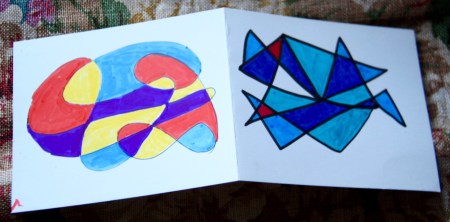
As any who have seen my drawings know, I cannot draw. However, I can take a line for a walk. And that’s what I do. Then I color the spaces I create. My friends thought I was wasting my time and I believed them until I read one of Matisse’s sayings: “My ambition: to liberate color, to make it serve both as form and content.” Voilà: I have my raison d’être. Nature abhors a vacuum. When you create a space, color and meaning rush in.

(3) I take photos

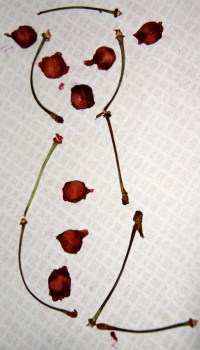
The capturing of a moment: a sunset, a new bird at the feeder, deer wandering through the garden, a black bear visiting, rain on a spider web, sunlight through a prism, a cat made out of cherry stones … the re-creation of the moment is the creation of the memory. More bubbles flow on the surface of the stream.

(4) I go for a walk, look at nature and the world around me, people too

It is incredibly important to do this. A visit to the local coffee shop, a walk around the super-market or corner store, a seat in the park on a sunny day … just be, watch, relax, look and listen, empty yourself, let the world flow back in … look at the ducks on the lake or the goldfish in the tank … more bubbles on the water, more ideas floating down the stream …

(5) I listen to music

De gustibus non disputandum … we can’t argue about taste. Where music goes, to each his or her own … the music I like fills my mind, relaxes me, flows out when it ends, takes my mind for a walk and leaves … a vacuum … into which dreams and colors, words and ideas, build like clouds …

(6) I cook

Cooking has always relaxed me. Sometimes the repeating of an old recipe helps clear my mind. Sometimes I have a need to invent something new. Hands and mind occupied, the secret, sacred underground river of creativity flows on …

(7) I sew

Last summer, an unexpected event led me to join a quilting group … oh what fun … a man quilting among a dozen women … I learned so many things … so many different ways of looking at the world … so many concepts that I would never have dreamed of on my own … Sewing runs in the family: I still have my grandfather’s sewing kit … darning and sewing needles that served him for two years before the mast … that darned his socks as he survived in the trenches of the First World War … it bears his name and I use it with pride … and what memories arise in my mind as I choose the needle … his needle … the one that will lead me into the next adventure, be it quilt, button or patch …

(8) I keep a journal

… and come hell or high water, I write in it every day and have done so since 1985. That’s 31 years during which I have scarcely missed a day. The writing maybe banal, it may be nothing but a note on the weather or a comment on a sporting event … but it’s there … a vital challenge to the idea that Writer’s Block can take me over and can win. This journal is 95% drivel … maybe more … but bobbing along the stream of words are ideas, verses, rhyme schemes, choruses, stories, flashes of inspiration, jokes, memories, magic moments, falling stars, … the secret is to catch these falling stars, to recognize these rough diamonds and to return to them and polish when the moment is ripe … and it will be, sooner or later … for bubbles are buoyant and will lift you to the stars.

(9) I believe

Through all this runs a thread of belief … belief that the black cloud of despair will not win. The Writer’s Block will go. Creativity will never be not lost. It is there, beneath the surface, always ready to be contacted, waiting to rise and take you over again. And all too soon and quite unexpectedly, one form of creativity slips into another and the creative writing (it never really went away because of the journal) comes back.

Writer’s Block: it does exist. It’s how we deal with it that’s important. Creativity rules: forget Writer’s Block and let creativity and the multiple ways back to creativity grow and flow. Sooner or later the clouds will lift, the sun will return, the block will unblock and the words will flow again.

Remember the words on the Roman sundial: Horas non numero nisi serenas … I count only the happy hours. And remember: the clouds will lift, the sun will return.

Trust me.

And believe.

Raptors Flash Fiction

IMG_0236.jpg

Raptors
Bistro 21

“Falcon, Richard?”
“Here, sir.”
“Finch, Thomas?” Mr. Shrike’s predatory eyes squinted out over half-rimmed glasses.
“Thomas Finch?”
“Not here, sir,” Dick Falcon answered.
“Why not? His trunk’s here.”
“Don’t know, sir.”
“Hawk, Peter?” Mr. Shrike continued.
“Here, sir.”

* * *
“Tom Finch not back?” Mr. Shrike perched by the fireplace with his conspicuous, upright stance. “Why not?” He addressed the staff room then spat in the fire.
“Tricky business,” Mr. Slaughter replied. “Important birthday, his mother said when she called. He’s at home but his trunk’s here. He’ll be back.”
“Pity,” Mr. Shrike winced. “That boy’s spineless. I’d like to…”
“Impale him on a thorn and hang him out to dry like the butcher you were in the war?” Mr. Slaughter peered down the long beak of his nose. “Not on school grounds, I hope,” he sniggered.

* * *
Tom and his mother lived with her parents. His birthday cake had thirteen candles that year. He blew them out and made a silent wish: “Let me be brave enough to do it.”

* * *
After tea, Tom’s mother sent him into the kitchen while she talked with her mum and dad.
“He’s got to go back to school,” Tom’s grandfather cleared his throat and spat in the fire. Tom’s mum recoiled at the stench of burning phlegm.
“He doesn’t want to go,” she murmured. “The boys bully him and the masters are worse.”
“Just like the army: he’ll get used to it. It’s me paying his fees; it’s my money you’re wasting when he’s not at school,” he spat again.

* * *
Tom leaned over the chipped porcelain sink in the kitchen. His fingers brushed against the damp red flannel and the soap dish. Then he touched the leather case of his grandfather’s cutthroat razor.
The folded razor lay cradled in his left hand. He nursed it, swaying back and forth on his feet. He found the groove and pulled the cold steel blade from its protective casing.
The razor formed a glittering right-angled claw. Then it became the sinister half-wing of a hawk that fluttered for a second, hovering above his wrist.
It pounced.
A fierce talon slashed into Tom’s wrist and a red river of pain sprang out. Tom fought the urge to scream as he stared at the flowing blood. The great claw of the triumphant hawk lay deep in his wrist. Strong wings flapped and bore him away.

* * *
“Falcon, Richard?”
“Here, sir.”
“Finch, Thomas?” Mr. Shrike’s strident voice pierced the classroom. “Thomas Finch?”
“Not here, sir,” Dick Falcon answered.
“Why not?” Mr. Shrike surveyed the class.
“Don’t know, sir. But he won’t be back.”
“How do you know that?”
“Saw his trunk being sent home, sir.”
“Finch, Thomas: absent,” Mr. Shrike looked down at his list and skewered the boy’s name with the absentee’s black cross. He smiled a cruel, calculated smile, and returned to his list.
“Hawk, Peter.”

* * *

Remembrance Day Flash Fiction


039

Remembrance Day
Bistro 20

Previously published on
http://commuterlit.com/2015/12/wednesday-remembrance-day/

            The old man watched a drop of red wine slide slowly down the side of the bottle. It was November 11, his birthday.

Seventy-three years ago, Father John had taken the boy’s ear lobe between thumb and forefinger and pinched the nail deep into the flesh until the blood ran.
“This afternoon you will go down to the bamboo grove and cut a cane. Bring that cane to me and I will bless it.”

That night, the boy woke up. Snuffles, snores, and an occasional sob broke the dormitory’s silence. The bamboo was a long, cold serpent drawn up in bed beside him.

The next day, he awoke to his seventh birthday.

Father John beckoned and the boy followed him to his cell and knelt with his hands stretched out like those of Christ on the Cross. The priest struck him with the bamboo cane six times on each hand.
“Your Savior, blessed be His name, suffered more, much more for you,” the priest sighed. “Examine your soul. Find fault with each flaw, for you are unworthy. Remember: the eye you see is not an eye because you see it,” Father John droned on. “It is an eye because it sees you. Christ sees you as you kneel there. He sees. He knows. He judges. Examine your soul with care and stay there until I return.” The priest raised his right hand and made the sign of the cross in the empty air.

The boy spent his birthday kneeling before the crucifix in prayer. He contemplated the wounds of Christ. He imagined each blow of the hammer and imagined the pain of cold nails biting into his warm flesh. He tasted bitter vinegar as it dripped off the sponge, gasped at the thrusting spear, felt the lash’s sting as it fell across his flesh. He became the flagellated Christ and knelt before the crucifix, staring at himself eyeball to eyeball in the same way he looked at himself in the morning mirror. The crucified Christ gazed back at him, his brother, his soul mate, his double.

After an hour, a red drop of paint slipped slowly from the nail hole in Christ’s right hand. The boy blinked. The red drop trembled then fell.
After two hours, Christ opened his eyes and smiled at the boy.
After three hours, salt-water formed at the corner of Christ’s eye. It glistened in a sunbeam that entered through the cell’s narrow window.
After four hours, tears began to flow down flesh and painted wooden face.
It was Remembrance Day, the boy’s birthday. He was seven years old.

Seventy-three years later, the old man sat at the table. He watched the red wine trickle down the bottle. He remembered it all and his tears flowed again.

Recalcitrant Flash Fiction

IMG_0013

Recalcitrant
Bistro 19

            The annual Old Boys Reunion took place in the sixteenth-century cellar of a world famous winery that also ran a restaurant and banquet service for pecunious customers. A man in a penguin suit, with a foreign accent, and a suspicious looking bulge under his left armpit, ushered the recalcitrant towards a set of well-worn of steps.
            “You are arriving slightly on the late side, sir,” the penguin whispered, staring mockingly at the checkered, American-style sports jacket worn by the man he escorted. “And not dressed like the others. But not to be troubled, I myself will escort you down to the place of the guests.”
As he descended the steps that led down to the former wine cellars, the recalcitrant heard the well-remembered, high nasal bray as his former headmaster’s brass voice pierced the ruminations of the penguin-suited herd that, having sniffed the glorious nature of the gregarious watering-hole, was intent on reminiscing, drinking, and feeding.
“Wonderful place … so fortunate … to be here … thank you … ” the old man neighed.
It was indeed a wondrous place, a semi-whitewashed room, warm in the center where bees wax candles in gold candlesticks blazed on antique tables and cool by the one wall left untouched since that same sixteenth century. Here the damp gathered in great grey clots and the spider webs, also untouched, sparkled and glistened, like “the mythical lights of fairyland” as the winery brochure announced to the limited circle of the wealthy to whom it was circulated.
Empty kettle … the recalcitrant thought as he remembered his old headmaster and then they were, face to face, the head and his obstinately defiant and anti-authoritarian pupil, staring each other down.
“You!” It was an authoritarian call to battle. “I remember you. The boy who denied all authority.”
“Yes, me,” the recalcitrant, eyeball to eyeball with the old enemy rejoiced in his newfound glory. And here he was, back in the old country on a lecture tour of six major universities, one of them being in this city, a full professor now, with international honors, multiple publications, department chair in a well-known university, a household name in his subject, and all of this at forty-two years old. “Yes, me,” he repeated.
“You have done well for yourself,” the ageing donkey brayed.
The gunman in the penguin suit, sensing the tension, placed himself in the gunslinger’s position from which he could survey the whole room. He lovingly stroked the armpit bulge, eyes gleaming with hope.
“Tell me,” the head drew a handkerchief from his pocket and honked his nose into it like a storm-bound goose. “How did your career take off?”
“Well, in two stages,” the recalcitrant paused, partly for effect, partly to gather his thoughts. “Just like a rocket: stage one was when I left your school and stage two was when I left your country.”
The old donkey, blinked, threw back his head, trumpeted down his nose with intense nasal wrath, and turned away with a wave of his hand towards another latecomer who had just descended the stairs. “Ah, there you are Smithers,”the fog horn blared. “At last. Saved me you have. This man was just about to …”
The rest of the sentence was lost in the rush and a hubbub as a new series of delights arrived, tapas, hors d’oeuvres, little sticky creations on fiddly little sticks, they all circulated from hand to hand along with the exquisitely chilled champagne, the single malt whiskies, and the ultimate in estate wines.
Not a penguin spoke to the sports-coated recalcitrant. Nobody offered him a hand. Nobody shared a memory with him. As he arrived at each little group, the penguins gathered in a tight circle, turned their black backs to him, and shut him out. Throughout the feasting, he sensed the gimlet eyes of the gunman glued to a spot mid-way between his shoulder blades.
The recalcitrant didn’t partake of the food or the drink, he just watched. Then, after an hour or so, he turned and climbed the sixteenth-century stairs, the gunman in the penguin suit right behind him, and walked away into the freedom of starlight and the cool night air.
He never returned for another reunion.
He never received another invitation.

Decisions

DSC02057.JPG

Decisions

We make them all the time: what shirt to wear, jeans or dress pants, black of brown shoes, loafers or lace ups, sandals … socks or not … and then there’s breakfast … tea or coffee, cereal or toast, sugar or honey … most days, we don’t even realize we are making decisions. We certainly don’t need to write out a page of pros and cons in order to choose between coffee or tea …

Then there are the big decisions, like where to go next on this blog. I have been weighing up the pros and cons and I am finally getting close to a decision. My blogging possibilities include Literary TheoryWriting about WritingHow to ReadRevising Older TextsReading Don Quixote OnlineWriting New TextsPreparing Books for Publication Offline … These are much more difficult decisions but I must think about them and make them.

Literary Theory sounds good. But what do I know about it? Nothing but the dry academic literary theory of an abandoned academia that wasn’t really very interesting anyway. An occasional question arises in the blog world, one on which I feel competent to comment, and that for me, is the way I go with my literary theory: a quick response. All that academic literary theory is money in the savings bank that I can draw on if I, or anyone else, needs to access it. But to access it on a daily basis and pontificate my way to the limbo of a blogger’s boredom? I don’t think so!

Writing about Writing also sounds good, but in many ways it is a poor person’s literary theory, rather like literary theory without the long, obfuscating technical terms. Again, if the need is there, I can contribute; but it’s not the way I want to go, not here, not on this blog, not on this particular watch.

How to Read is a subject on which many books have been written and I recommend that all people not just read, but learn to read deeply and properly. In some cases, depending upon the quantity of material that crosses the computer screen (it used to be the desk), speed reading is essential and I recommend speed reading for everybody except poets and those who love poetry. To speed read a sonnet is not the way to go. I would love to sell the film rights to some of my sonnets, but apparently, that’s not the way to go either. Ah well, we can’t have everything …

Revising Older Texts is another excellent way to run a blog. The material is always there in one form (old) and the reworking of it into another form (new) is regular, instructive, and creative. I have done that on this blog with At the Edge of Obsidian > Obsidian’s Edge and loved both the process and the result. However, at least three of my commentators, Al Lane, Chuck Bowie and Kevin Stephens, suggested that the past is in the past and should remain there, while the future lies ahead of us and needs to be created. After much thought, I have come to the conclusion that Al and Chuck and Kevin are right. I will put older material up on the blog, but I will no longer review it for future re-publication, except in exceptional circumstances, and these are yet to be determined.

Reading Don Quixote Online has been in my wish bucket for a very long time. It is something that I would love to do one more time. I have already done online readings on several occasions. I have twice taught DQ in an online hybrid environment: hybrid — an online portion and an in-class face to face portion –. To return to DQ is, for me, to return to academia, an academia that I rejected several years ago. No: much as I would like to re-formulate this project and to lay out online my definitive This Is How To Read Don Quixote, I feel in so many ways, that this is not yet the time to do so. I want so much to turn back that particular clock, but I know how much work, reading, and commitment is needed and I am not yet ready. Perhaps, like the Flowers of Scotland, those days are past now and in the past they must remain. We’ll see. I checked my DQ notes last night … they are all there, ready and waiting … and I can set out on that adventure anytime … alas, through the mists of time, I can hear those bagpipes playing Will ye no come back again? I will, my friends, but not just yet.

Writing New Texts is fun. This is a new text and it is helping me to focus  on what I want and do not want to do. There is always room here for new texts. But new texts need revisiting and revising. Maybe some of my creative texts just aren’t ready for publication yet and yes, online writing is a form of publication. Thankfully I can revise these texts, and I may yet revise this one; indeed, I will probably come back both to this text and to these decisions. And maybe I won’t and that’s another decision for another day.

Preparing Books for Publication is where I am right now in my offline life and I think this is where I want to be online as well. I have two texts in preparation: Bistro (Flash Fiction) and Echoes of an Impromptu Metaphysics (poetry). I have thus far shared 17 pieces from Bistro on this blog. There are another 17 to go. Each time I prepare a piece of Flash Fiction for publication here, I re-read it, re-think, re-frame it, re-structure it, and re-write it. Those of you who know me offline are well aware of the nature of that re-processing. Sometimes the pieces are merely sharpened and polished; often they are totally re-written. And yes, when flaws are pointed out or doubts expressed, the texts are changed. I deeply value the comments of my below the line commentators. Echoes is the other text I need to re-write. I will share that online as well. The sharing will be difficult … Echoes is a difficult and very personal text … but it will be done.

Decisions have been taken and my thought process has been shared. There will be no turning back of the clock even though I am always looking over my shoulder. Here, then, are my decisions, but remember, they are always open to revision.

  1. I will re-publish on this blog Though Lovers Be Lost, one of my favorite poetry books. I will do this as and when necessary if I need more time between blogs with my re-writing.
  2. I will finish publishing the other stories from Bistro online on this blog as I prepare it for offline publication.
  3. I will start the re-write of Echoes online. I have been away from this book for about eight months now and re-reading it earlier today I saw how and where it could be improved.
  4. I will add in literary and philosophical commentaries when and where I see the need to do so. I consider this particular article to be a literary commentary with philosophical connotations, or is it the other way round? As an academic, I could prepare a treatise on the question; as a blogger, I can leave that question in the capable minds of those who read and follow this blog.

    Vale!
    Et vade mecum!