Trains

img_0359

Trains

     You took me on holiday to the continent. Railway trains to Austria, Germany, and Switzerland. You loved those trains. I hated them. We stopped in the dark at unknown stations. I’m thirsty, you said. Get me some tea. I left the train, climbed down to the platform, went to the restaurant. I had a fistful of money, but didn’t know what it was worth. Tea? I begged the man behind the bar. My mother wants tea. They all shook their heads and offered me beer. My turn to say no. Coffee?  A pause. Uh-uh. They offered me orange juice, lemon juice, wine, and I finally water. A whistle shrilled. It’s the train, they said waving their hands in the direction of the door. I let them choose the money they wanted.  And something to eat. They gave me a sandwich, a slice of cheese in a baguette, then seized some more coins. The engine hooted, a lonely owl, calling for its lost chick.  I ran out of the restaurant, on to the platform. Carriages moved past, slow at first, gathering speed. The last passengers climbing aboard, the doors closing. I ran. The guard, at the end of the train, blew his whistle, waved a green flag, held the last door open, until I caught up. He helped me onto the train, gifting me with a storm of words in a language I could not understand. The doors between the wagons remained locked. My compartment lay to the front of the train. I couldn’t remember the number of my carriage or my seat. Wagons-Lits? I shook my head. Première classe? I shrugged. Touristique? I nodded. The guard grimaced, led me down the train, unlocked doors in the sleepers, led me on and on, until we arrived at my compartment. Restrained by another guard, you yelled and shed tears as you tried to pull the emergency cord that would stop the train. Ah, there you are. What the hell do you think you’re doing? I was worried sick. You slapped me. Now I stand on a different kind of platform, watching another train pull away. I stand here, abandoned, and watch you slide slowly into an unreachable distance.

Poinsettia

img0137_1


Poinsettia

     You can sense it, you can feel it, the alert spirit that guards this room. Walk in there at your peril. No, don’t. Just stand at the door and observe the poinsettia. You bought her a real one, a year ago, but she forgot to water it and when you visited, leaves and flowers, had crisped and dried, withered and perished. You even found cigarette butts stubbed into the pot’s powdery earth. You bought her another one, this time an ever-lasting, artificial flower, scarlet blossoms of silk with yellow-dotted plastic beads. Today a feather-duster breeze cleanses and enriches the leaves, replenishing their faded splendor. Motes rise, their dancing angels of dust hovering, suspended in a sunbeam that picks out their supple luxury. Their fiery tongues cry out to you from their green plastic pot in this empty room. The plant throbs with a startling vibrancy in this early morning light that enlivens piano keys, table top, and the polished, wooden chair arms you cleaned yesterday.  The poinsettias seem to wring butterfly hands as they gently flap in the breeze from the open window where thin lace curtains twitch, shaping the sunlight into light and shade. Her ash tray sits by the radiogram and awaits her return. That last cigarette, lipstick staining the filter, stubbed out and cold, waits for a companion. Later today, you will go to the hospital and visit her. You do not want to enter this room for its guardian spirit demands solitude and silence. You do not wish to create a disturbance, yet something moves you, and you walk over to her flower. A film of grey cigarette dust rises once more from the silk poinsettia, disintegrates, and dances before you. You bend your head to the silken surface and feel dry leaves brush their butterfly kiss across your cheek as you breathe in the ashen smell of stale tobacco.

Whisky

IMG_0067

Whisky

     Dry energy bristles through your body, tangible electricity, I dare not touch you. Sparks fly through your hair and light up pillows and sheets. Plugged into your flesh and blood, those instruments of life and death and in-between flicker and will not stand still, will not take appropriate measurements in the way doctors and nurses predict or want. Stranded on your beach of bleached white sheets, you are smaller than a seal, an otter, perhaps, a sea-urchin, or a star-fish, struggling in the high-tide mark, not with the sun and wind that dry you out, but with the sands of a time that is ticking away from you, filtering through your fingers, fleeing from your grasp. Your hair ruffles. Your forehead wrinkles. Your gaze sharpens. You have the hunting eyes of the unhooded hawk, or those of a peregrine falcon fixed on its prey, yet you cower like the land-bound beach-bird that he hunts. You are burning up, devoured in your own interior inferno. You slap at my hand as I take a risk and try to place it on your forehead to offer you consolation. What is it? I ask. What do you want? Shall I go and get the nurse? The doctor? You shake your head, your eyes flash, the air sizzles, and you whisper something, too low for me to hear. I put my ear closer to your lips. Your voice: coarse sandpaper over the soft balsa wood frame of a plane that will strive, one day, to grow wings, to take flight, to be a bird. Whisky, you whisper. I just want whisky.

IMG_0136

Swansea Bay

IMG_0055


 Swansea Bay

            My childhood in Swansea: a mixture of seaside and sand. Walking over the bridge at the Slip to reach the dunes at high tide, the fish nets at low tide, the dog ever before me, running fancy-free, chasing yellow-beaked gulls that swoop low, mewl, and lead him on and on, past bundles of bathers’ clothes in summer, and the dog lifting his hind leg, visiting each pile, marking them, one by one, a squirt at a time, and us denying we know the dog, not ours, we say, then beg for the empty pop bottles, taking them back to the vendors, pocketing the cash back on the bottles until we have enough for an ice-cream, a grown-up wafer, not a childish cornet, or a go on the swing boats, and the dog comes with us, gets sea-sick, air-sick, hangs his head over the wooden sides drooling thick saliva as we wait for the bump and grind of the wooden bar that will slow us down in spite of us pulling on the ropes, harder and harder, until we swing higher and higher into the heavens, and the sands dwindle into nothing, and the dog throws up, and the man who handles the swing boats calls us bad names, as we run away, across the sands, ‘I’ll tell your dad,’ he shouts after us, but he never does, and the dog wanders loose across the sands to drink salt water and throw up again, and yes, I remember the starfish, their golden triangles winking wet in the sunlight as they hang from their netted firmaments, and we walk out along the concrete sewer pipes that pour the town’s waste, the town, and not the city, never for me a city, and how could it be a city when so many uncles and aunts lived on Town Hill and my father worked in Town Hall, and Swansea Town were the Swans, and they played soccer on the Vetch Field, the old hanging ground for the town jail, never the city jail, and the Mumbles Railway ran its electric trams out from Swansea Docks to the quarries by the Mumbles Pier, and we took that train, sat on the top deck, The Slip, Singleton Park, Blackpill, the Mayals, West Cross, Oystermouth, where last year, after a hundred years of absence, wild oysters finally returned, the pollution from Copperopolis, the largest copper mining and smelting town in the world, finally drained from Swansea Bay and the waters now clean enough to keep those oysters alive in their cultured oysters beds at Oystermouth, on Swansea Sands, below Oystermouth Castle with its ruined walls where we went once, but I remember nothing about it, nor Swansea Castle, in the old town centre by Castle Street, its ruined walls banned with their Keep Out signs and Danger, but the warnings themselves enough to invite us in, except we knew we’d be beaten if anything happened and we were caught and everyone knew everyone in Swansea Town then,  and somebody would surely bear the tale to our parents or grandparents,  but that’s enough of that, and its’ out of the tram and across the wooden planks of the Mumbles Pier, out to the end where the old men throw their lines into the sea and sit and wait and hope, pulling on cigarettes, Players Nay Cut for preference, as they watch swirling waters, taking sips, like old men everywhere, from secret bottles in brown paper bags that cause them to wipe their lips with the back of theirs hands and cough with pleasure, waiting for God knows what to come along and tickle the end of their line, and out there, at the end of the world, the lifeboat house with its slipway and the lifeboat, launched only in the roughest weather when the tall ships founder or the small boats are blown away, out into the sea, that twinkles now with its wrinkled old man’s face as it moves back and forth beneath wind and sun, and everyone is smiling in the summer warmth, though it’s cold where the wind blows off the sea, and it’s into the corners away from the wind, or into the pavilion where the arcade games wait for our money, and it’s ‘please, please, one more go’, as the small metal arms armed with their claws, clutch at toys and dolls, and furry animals, and the fighter planes come swooping down in their practice arcs and yes, I am a gunner again, fighting my Battle of Britain in a spinning turret with a mobile gun-sight, and time and my money run out and it’s ‘ please, please, one more go’, and my head is spinning, as the turret is spinning, and the world is spinning on its axis as memory’s spider spins its web of illusion, delusion, and time rolls backward on the station clock, as the tram rolls up and we track our tired way back home, past Oystermouth, West Cross, Blackpill with its little Roman Bridge, Singleton Park, the Recreation Ground, St. Helen’s, to the Slip, where we boarded in he first place, and home we go via the fish-and-chip shop in the road at the bottom of our street, and all adventures end as we open the front door, calling out ‘we’re home’, and the smell of warm salt and vinegar soaks through the newspaper binding the delicacies we have brought to placate the gods who wait in silence for our return.

Kite


IMG_0011

Kite

Half-light, dim shadows, grim grey ghosts floating, drawn along by curtains shape-shifting in an early breeze. Sun rises, drops light down, filling the room with yellows and pinks. An empty, shell this house, yet the sun brings a morning bouquet, its golden egg-yolk, filtering into cracks in white plaster walls. Barren and bare, today, our world, our words. Sun-dried Roman aqueducts, built two thousand years ago, dry now, carrying no water, desiccated mouths channeling no sound. Lifeless kites, our painted faces, our twisted lips. What is this burden you will bear, so silent, to the skies? Not yet: for you are still earthbound, helpless, too heavy to rise, to surge skywards, to ascend in that one last kick for freedom. Frail your face, your frame. Your skin, mottled-brown sacking lagged around clogged and pitiful pipes. Barriers daily grow between us. They sandbag our lips, string barbed wire so our worlds, our words will never meet. Dead soldiers, forced over the top in a moment of glory, our thoughts hang in the air, wet washing hanging there beneath a casual flap of magpie and crow. A star-shell, kindling my mind, your kite-face, drifting away.

Dog

IMG_0040 (3)

Dog

Dog buries under the bedclothes, snuggles up close, frightened by nurses and cold medical smells. Dog knows the meaning of needles, long thin silver teeth that sink into the flesh and make Dog feel woozy. Dog rolls its eyes and growls as doctors wearing long white coats walk around the ward talking to those patients who are still capable of responding. Long stethoscopes twist around the doctor’s necks like tentacles. Dog knows them well and doesn’t trust them. Dog shows its teeth, growls deep and low, draws itself in, even closer, shivers beside its mistress, in spite of the in-bed warmth. Mistress shivers too. She doesn’t understand how Dog got there, but she loves Dog’s warmth and companionship, and trembles at the thought of its absence. Nurse holds that threatening needle, the magic wand, as nurse and doctor call it, but Dog doesn’t believe in them nor in their magic. Dog’s cold, wet, wrinkled nose is out and its soft brown eyes. It sees and smells and senses and is ready to defend or befriend. The patient puts her hand on Dog’s head, smooths it, soothes it, ‘Good dog’, she says. Dog wags, a small jerky motion of a short, stubby tail. Nurse slides the needle into patient’s arm. “There,” she says. “You can sleep now.” Dog whines, gets out from beneath the blankets, lies beside the patient as she lies in her hospital bed. Dog licks the salt tears from her face. When she stops breathing, Dog howls. But nobody sees it, nobody hears it, nobody pays any attention, nobody comes.

Cows

IMG_4757 (2).jpg

Cows

Underneath the bungalow, we find a secret space so small that only the young ones can crawl there. We go after coins that drop through the floorboards of the verandah and we hide there, in that cool, dark grave space, when we wish to be neither seen nor heard. At the far end of the bungalow, in a larger space beneath the floor, Nana has her refrigerator. This space, similar to ours, is where she keeps the thick cream off the bottled milk when she wishes to turn it into Devon Clotted. Here, too she places the jellies when she wants them to set. We have neither running water nor electricity, just the cool beneath the floorboards. We do have two water tanks, one a square, red-rusted, cast-iron tank that collects the rain-water off the roof, the other an old iron-bound wooden barrel that connects to a downspout outside the backdoor.

They have built me a swing in the backyard and on sunny days I throw my head back, thrust my legs forward, and squint at the summer sky through half-closed eyes, as the old folk push me. “Higher,” I cry out. “Higher.” We don’t have a push lawn-mower, though we occasionally borrow one from the neighbors. We do have a scythe, a sharpener, and a pair of bill-hooks. I have never forgotten that head down, half-shuffle of the scythe man using his scythe: one step sideways, swing, feet together, one step, swing. I loved the sweet smell of the fresh-cut grass as I played the grim reaper in the backyard, always with a grin.

I lived in the bungalow for the whole of one summer. I guess my mother had been placed in some hospital or other for the duration of the fine weather. Nobody talked about her and I never knew what was wrong with her or when she was coming back. It was all a mystery, wrapped in stealth and secrecy. Her absence was a pain in my side, a thorn in my heart, and I still don’t know what happened to her.

I slept in the back bedroom with my Nana in her big double bed. I slept on the far side, next to the outside wall. At night I would often hear the cows as they munched away at the grass and wandered through our un-fenced yard. I say ‘I slept with my Nana’ but in actual fact I fell asleep long before she came to bed, often when the sun was still high in the sky. She always got up early in the morning to prepare breakfast for the men and lunch for my uncle, who worked in town and usually took the early morning bus.  My Nana was up and dressed by the time I woke up, so I rarely saw her in bed.

Some nights I woke up during the night, needing to pee. I never liked using the Royal Doulton chamber pot that squatted coldly beneath the bed, especially if she was in the room. We had no indoor plumbing, nor running water, as I have said, and apart from the rainwater the only tap was at the far end of the bungalow field, a long way away, and all but rainwater had to be fetched by hand in large tin cans that we ferried, empty, to the end of the field and brought back, full, at the end of our excursions to farm, local shop, or beach.

Those cows that wandered through our yard at night really frightened me. We would meet them in the lane some times, a noisy, dusty, flowing, multi-colored tide that flooded the pathway and forced us walkers into the next field, if there was a gate close by, or high into the hedge, if there wasn’t a gate. The one black and white cow in the herd really filled me with fear. She had a crooked horn, had gored a dog, and had kicked out at several of the local residents, injuring at least one of them quite badly, a broken leg, I think. That cow had an evil reputation, especially when, isolated from the herd, she meandered around on her own.

When I wanted to pee, I preferred to walk outside, to the outhouse, rather than use the chamber pot. I would grope my way out of the bedroom, turn right, drop down the steps into the kitchen, and slide back the bolts on the door. Then I would half-open that door and peep out, listening carefully for any sound of the cows tearing out the grass with their teeth, or rumbling gently as they chewed the cud, churning it over and over. I would sniff the night air, and if I sensed a cow in the vicinity, I would pee through the narrow crack of the open door and swear in the morning, when someone found the little puddle, that it wasn’t me, that it must have been the cows.

One quiet night, I walked bravely out into the dark and stepped right into a cold cow pat that lay just outside the back door like a landmine, waiting for my unwary feet. I still remember the cow-manure’s soft squish as it sifted upward through my toes and rose to assault my nose. After I had gone pee, I wiped my foot again and again in the long grass beside the outhouse, then placed it beneath the water-spout from the rain barrel, trying to flush it clean before I crept back into bed.

That was the night I left the back door open. Next morning, my Nana woke us all up with a series of long, loud screams and squeals. The black and white cow had wandered through the open door and ended up in the kitchen where my grandmother had come face to face with it in the early morning light.

A cow in the kitchen, that really spooked me and I still have dreams, nightmares, really, of a herd of cows invading the bungalow, breaking down the doors, and climbing in through the windows, and me all alone, trapped in my bed, shivering ferociously, squeezing myself, trying desperately not to go pee.
Dawn

IMG_0169.JPG

Dawn

I turn over in bed. The light on my neighbor’s garage has come on. It is triggered by movement and I get out of bed to see if the deer are back and crossing his yard. But no, it is not the deer, it is the paper-man, up early to deliver the news. He turns in the yard at the bottom of the street and his headlights flood my room with light as he drives up the road.

6:20 am. I go back to bed. The moon is a thin silver arc. It climbs out from its hillside bed and leaves the forest to scale the early morning sky. Today, the sun will rise at 7:49 am. Until then, this silver sky fish will follow Venus and Mars as they march across my window. On clear mornings I watch them as they move from frame to frame. A double window, with 24 panes of glass in four groups of six panes each. I lie in bed and count them in those sleepless hours before I feel the need to rise. I start with groups of 3 going 3-6-9-12-15-18-21-24. Then I go back down again 24-21-18-15-12-9-6-3.

I think of my father counting the dots on the wall as the sun moved slowly across the walls of his house in Rhiwbina. Then I too play games with the window panes, counting them one by one, then two by two, then three by three, then four by four. It is, I suppose, the magic of counting sheep. First, you count their legs, and then you divide by four. Venus and Mars grow brighter as the sky lightens a little bit more. The moon changes from a clouded orange to a shining silver. I play a new game, counting the window panes in Spanish, then French, and finally in my “use it lose it, long-abandoned” Welsh. I am no longer sure of the order of the numbers, so, when I hit a road bump, instead of stopping, I follow the language pattern and invent.

Dawn: what a funny time, what a funny word, so many funny meanings “and suddenly, it dawned upon me”. Here the dawn walks uphill towards me. It slowly fills the sky with light. The planets shine, then moon and planets disappears as, at 8:09, that first ruddy ray splits the darkness and lands rosy-red upon my bedroom wall. The planet’s dance has ended. The flirtatious moon has come and gone. Time now to end all games and to wash and dress and face reality. February 1: it is the dawning of the Age of Aquarius. Venus, Mars and moon dance through my mind, moving to a different tune.

Light breaks

IMG_0218.JPG

Light breaks

“Light breaks where no sun shines;
where no sea runs, the waters of the heart
push in their tides;
and, broken ghosts with glow-worms in their heads,
the things of light
file through the flesh where no flesh decks the bones.”

Dylan Thomas, another Swansea boy, wrote those words a long time ago. I borrowed the phrase Broken Ghosts for the title of my second poetry book (Fredericton: Goose Lane, 1986) and I am proud of the links forged between Swansea and Island View, Wales and Canada, an earlier poetic generation and my own presence here among these trees covered as they are by winter’s falling snow.

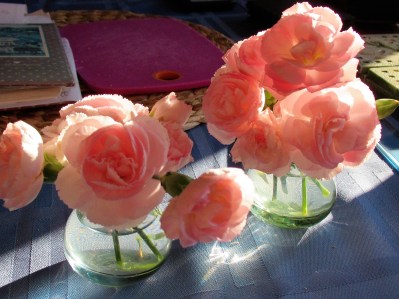
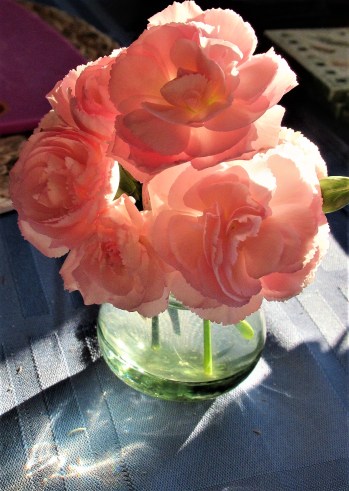
Light is so important, especially here in winter’s dark where the nights are long. The sun’s warmth through the window, the distortion of light through glass and water, the presence of flowers amid the winter’s alternate brightness and gloom. Brightness of sunlight on flowers and of moonlight shifting across garden snow, cratered by the hoof marks of deer into a lunar landscape of shifting shadows.

Sometimes the ageing heart wallows in gloom. Those bedside shadows take on forbidding shapes  and Goya’s nightmarish figures rise out of the pinturas negras, the black paintings from the Quinta del Sordo, to walk again around my room. On nights like these, scarecrows arise from my past and their twigged fingers scratch at my face. They threaten with carrot noses and coal black eyes. They stump their thumping dance steps and send shivers coursing through my veins.

https://www.theguardian.com/artanddesign/2019/jan/30/goya-black-paintings-prado-madrid-bicentennial-exhibition

“What is it?” I ask. “What do you want?” But though their mouths open and lips, teeth, and tongue flap into idle movement, no words emerge and I am left, a broken ghost, floundering in an internal sea, not of light, but of darkness. Downstairs I go, pursued by the clump of snowy feet, to sit at my desk and walk my fingers across the keys in search of comfort. I find it in these photos: sunshine on flowers, a light to lighten and enlighten the darkness stalking through my mind.

IMG_0217.JPG

Warmth and light: together they will dispel this frosty spell that freezes my brain and will not let me close my eyes and go back to sleep.

Sleepless in Island View

IMG_0197.JPG

Sleepless in Island View

I thought nothing could be worse than my current financial situation, until I saw the government shut down in the States and realized how little some very special people earned per month. It’s hard to believe that a hard-hearted government deprived them of even that basic amount for five weeks. I still can’t understand the callous remarks and harsh words of the billionaires who determined that scenario of horror and scandal. “I can’t see why they are using food banks.” “For those on furlough, it’s just one big vacation with pay at the end of it.” “They don’t have to worry, they’ll get their money back.”

My own financial situation is very different. I am on a fixed retirement income that is much, much less than what I used to earn, but sufficient to keep me alive and well. No, I cannot afford Caribbean Cruises. Nor can I have long term winter stays in sunny climes, Mexico or Arizona, or some sultry-sunny palm-tree graced island set among golden sands in a ring of sapphire sea. Summer vacations are out and I haven’t taken a plane for five years or a summer vacation for four. More, as the stock exchange wobbles, my savings decrease. As my savings grow less, the price of food rises higher and our heating bills soar. As the cost of living rises higher, I have more difficulty making my income stretch to the end of each month. Inflation doesn’t help: prices go up, but my income stays the same or steadily diminishes. There is no way, short of winning the lottery, that I can replenish it. And yet still I am blessed, for I have reasonable health, food on the table, and enough (according to my financial adviser) to survive for a little while yet.

Sometimes I wake at night and cannot get back to sleep. Shadows visit me and bad dreams stretch just out of reach of my fingers. So many things might go wrong. So much is out of my control. So many people, friends, relations, colleagues, acquaintances are hurting in so many ways. I work with friends who are suffering with cancer. I stand by friends who are going through the pangs of divorce and separation. I witness the suffering of the survivor in long term marriages when one of the partners fails. These things gnaw away at the central roots of my being. What if …? I say and the shadows gather closer, chattering like sparrows and cawing like rooks and ravens.

Fear: so easy to sow, so hard to put the seeds back into the bag, especially when they have rooted.

I am lucky. I sleep with two Teddy Bears. One, the small one, bears the name of Ted. The other is called Hairy Fred. Ted is an old battered bear. He traveled with me when I used to travel and is a well-bred voyager. Hairy Fred is a more recent acquisition. A lady made him from an old fur coat and yes, he is very hairy. Ted wears a flashlight in his one ear and a clothes peg in the other. Don’t ask: don’t tell. When the night grows dark and a waning gibbous moon sweeps stars from the sky, these two teddies bring warmth and comfort. Beside my bed, Paddington Bear stands on guard. He can stay there. I am not having him in bed with his yellow Wellingtons and his Duffle coat. Besides which he is a rather hard teddy and not a soft one. Blueberry, Rose, and Pierre Bear sit on the cabinet. waiting their turn. When it gets cold and the north wind howls like a wanton wolf, one of them will get the invite and then we’ll have the perfect Three Bear or Four Bear or Five Bear Night. Until then, I may continue sleepless, in Island View.