People of the Mist 1

IMG0137_1.jpg

People of the Mist
Oaxaca, Mexico

Prologue

 I saw my father this evening. I walked through the zócalo, opened the main cathedral doors, looked up, and there he stood, motionless. The lights shone on the engraved glass panels and illuminated him, as if he were some long passed saint come back to visit me. We stared at each other, but I couldn’t open my mouth to speak. The hairs on my neck stood on end and my hands shook. When I forced my mouth open, words stuck in my throat. He wore his best grey suit over a light blue shirt and a dark blue, hand woven tie. This was the outfit in which I had buried him.

Three old women, dressed in black, broke the spell. One stood in front of me and wouldn’t let me approach my father. She held a large bag of knitting in her hands and the wool spilled everywhere as she pushed me away. The second threatened me with a pair of scissors that she held in her left hand. The third shook a tailor’s measuring rod in my father’s face.  He nodded, smiled sadly, and they all turned their backs on me and hurried away out of the cathedral and into the square.

 I stood there in silence. Then, as the door snapped shut, I pulled it open and ran after them. The setting sun filled the square with shadows that whispered and moved this way and that, as if a whole village had come down from the hills to walk beneath the trees and dance in the rays of the dying sun. I stood on the cathedral steps and called out my father’s name, but I could see no sign of him among the cut and thrust of the shadowy crowd.

 I ran out into that crowd and pushed at insubstantial people who stood firm one moment and then melted away the next like clouds or thick mist. I came to a side street and saw real people, flesh and blood beings, a group of villagers grouped behind their band. I stopped as the village elder put a live match to the taper of the rocket he clutched between his thumb and forefinger. The taper caught on fire and as the rocket roared upwards the village band started to play a military march. Thus encouraged, the rocket clawed its way into the sky to explode with a loud knock on the door of the gods.

 Tired of grasping at shadows and afraid of this living phalanx of men marching towards me I went back to the cathedral and knelt at the altar of La Virgen de la Soledad, the patron saint of Oaxaca. Real wax candles stood before her altar, not tiny electric bulbs, as there are in some of the smaller churches. I put five pesos in the slot and lit a fresh candle from an ageing one that had started to sputter. For the first time in years I said a prayer, first for the soul I had saved from extinction by lighting my candle from his flame, then for my mother, then for the real father whom I had never known, and finally for the man I had just seen.

 Tim closed his journal, screwed the top back on his Mont Blanc pen, laid it on the table, put his head in his hands and sat there, thinking. Then he got up, went to the kitchen, opened his last bottle of Sol de Oaxaca, poured the quarter litre that remained of the mescal into a glass. Six wrinkled worms floated down through the yellow liquid wriggling as if they were live. He pulled them out with a spoon, popped them one by one into his mouth and swallowed them whole. They tasted of smoke and garlic but he knew they would bring him visions and dreams. Then he wrinkled his nose and swallowed the mescal in three fierce, burning gulps.

He coughed, blinked the tears from his eyes and went into the bedroom where he undressed and climbed into bed. The ceiling fan droned on and on like a large propeller on a long-distance flight. Sleep did not come easily, nor did dreams, in spite of the mescal. When the dreams did come, they built like thunder clouds and he entered them with fear and a strange kind of joyous expectancy.

Comment:
This is the prologue from my first novel, People of the Mist. Following in the footsteps of my two blogger role models, Meg Sorick and Mr. Cake, I will publish People of the Mist, chapter by chapter, on this blog, as I revise it. I am a poet, rather than a novelist, as you will see. Your comments will be welcome as I start this venture in the old year (2016) and plan to continue through the new (2017).
Gorilla Drives the Zoo Bus

img0046_1

Gorilla Drives the Zoo Bus

Gorilla drives the same zoo bus all day, every day,
same starting time, same finishing time, same route, same stops,
different passengers, but all passenger equally faceless.
Gorilla doesn’t want to know their names.

“Please tender the exact fare!”

Not a penny less, not a penny more, and he polices every penny.
Bus conductor and master of every passenger’s destiny,
he opens and shuts the door, letting passengers on and off the bus,
but only at official stops.

Every passenger has a ticket,
and Gorilla punches every ticket with a neat, round hole.
He never makes mistakes.
He grinds, like God’s own mills, exceedingly small.

He has spent all his life in uniform.
He has a belt and braces to hold his trousers up.
He’s always prepared for the worst.

Ten, fifteen, twenty years:
an anonymous wife; anonymous little babies;
at shift’s end, a pension, and another bus.

St. Peter’s at the wheel.
He doesn’t want to know where gorilla wants to go:
he wants to know where he’s been.

Commentary:

This poem follows on from my statement in Structure in the Short Story that “my greatest fear then becomes the gate-keepers, those anonymous figures who sit on shadowy selection committees, place ticks in appropriate boxes, and judge the quality of writing by consensus in committee.”

A long time ago, on holiday in Cardiff, the capital of Wales, we caught the bus from where we lived into the city center. I made a mistake in the name of the stop to which we wanted to travel and the bus driver insisted we got off at the place I had named. He would not let us travel to the stop a little further on to which we wanted to go. It was raining hard and so I told him that, rather than get wet, we would pay the difference in fare, but he said he had no change and insisted we get off the bus. I didn’t have any change either and had only a five pound note, so I gave him that and after a few curses and meaningful looks, he pocketed the money (more than three times the original fare), allowed us to stay on the bus, and took us to our true destination.

I have often thought about the “anonymous, shadowy people” who rule a tiny kingdom and insist, sometimes with the utmost vigor, that everything should be done exactly they way they want it done. There is no room in their lives for creativity, for adventure, for generosity, for a different way of life. More to the point, they seem (many of them, but not all) to enjoy bullying the people over whose lives they have for control for such a small amount of time. Some school teachers I have known fall into this category: utterly miserable people whose sole joy consisted in indoctrinating and dominating their young charges.

I think of them as the gate-keepers. They hold the key to a very small gate through which we all must pass, but their motto is a famous one “no pasarán” — you shall not pass.

Monkey Throws Away the Keys

img0046_1

Monkey Throws Away the Keys

Monkey is tired of writing reports
that are never read.
He is fed up with frequently asked
questions and their unread answers.
To every lock, there is a key.
Monkey looks at the red and gold
locks of the last orang-utangs
and wonders how to unpick their DNA.

Monkey would give his kingdom
for a key, a key, a little silver key:
the key to a situation, the key to a heart,
the office key, the key to the door,
at twenty-one, the keys of fate,
the Florida keys, the key to San
Francisco’s Golden Gate,
a passe-partout, a skeleton key,
the key to Mother Hubbard’s
cupboard, where she hides dry bones …

On the last day, when monkey leaves work
he takes a lifetime of keys
and throws them down a deep dark well.
As they halve the distance to the water,
he listens to the sound of silence
and wonders if they’ll ever hit the bottom.

Sun & Moon

IMG_0231 (2).jpg

Sun and Moon was published on Amazon and Kindle today. This is the second (revised) edition of Sun and Moon, the first edition having been published in 2000. Although this is the second edition, I have returned to and revised the original manuscript. It is clearer, stronger, and better than the first edition. Here is the description of the book as it appears on Amazon and Kindle.

“They tore down our walls,” Mono whispered, “stone by stone. A new church they built on the land they stole from us.” These opening lines begin the verbal adventure of Sun and Moon. Written in Oaxaca, Mexico, between 1995 and 1999, the poems tell some of the tales  of the voiceless, of the conquered, of the displaced, of the survivors, of the people who eat and sleep in the streets of Oaxaca, spinning their myths and legends and recalling their oral histories and memories. Sun and Moon traces the relationships between two civilizations, the indigenous and the conquerors, from the first contacts between Europeans and the people of the Oaxaca Valley up to the modern day interactions between locals and tourists. In these pages, some of the ancient ceremonies and beliefs, as described by indigenous people, are brought back to life in vivid images and colorful metaphors, so sharp, they can be grasped between the fingers and examined by the light of the sun by day and the moon by night. The multiple voices in the poems are those of human beings who, like the author, himself an émigré, find themselves in exile, lost, abandoned, and displaced. As the final character cries out in the final poem: “You do not worship at our sacred places … you don’t know even know the meaning of my name.”

Obisidian’s Edge 1

At the Edge of Obsidian

“everything burns, the universe flames,
nothingness burns itself into nothing
but a thought in flames: nothing but smoke”

Piedra de sol
Octavio Paz

IMG0004_1.jpg

“todo se quema, el universo es llama,
arde la misma nada que no es nada
sino un pensar en llamas, al fin humo:”

At the Edge of Obsidian is the second book in The Oaxacan Trilogy. It was published in 2005 and outlines the events of a single day in the City of Oaxaca (Mexico). I have always loved the Medieval Books of Hours and wondered if they would transfer themselves into a book of hours based on a day in a place with which I was familiar. This is my effort to do just that. I will publish regularly from this book, beginning at the beginning with the church bells and the early morning light that waken the sleeper from his dreams.

IMG0001_1.jpg

6:00 am
church bells

1

The alarm clock shuffles
its pack of sleeping hours:

a clicking of claws,
needles knitting outwards
towards dawn’s guillotine;

a knife edge
sharpened on this keening wind
sets my blood tingling in my toes.

Bright jungle parrot,
its querulous caged voice glimpsed
darkly through dawn’s looking glass.

2

Tochtli was caught by the ears
then thrown against the second sun
sizzling in the sky.
His sharp teeth burrowed,
burying themselves deep in the fire’s red light.
The second sun turned into the moon;
now we can see Tochtli’s face,
simmering in its dwindling pool.

Old myths, like languages,
grow legs and wander away.
They gather in quiet corners,
in village squares
where the night wind weaves
dry leaves in endless figures of eight.

 An old man now,
I dream of white rabbits,
running down tunnels,
escaping the hunter’s hands.

 3

When my dreams break up,
they back themselves into a cul-de-sac:
a wilderness of harsh black scars.

Dream words:
scalpels carving
red slashes on white-washed walls,
trenchant shadows, twisted dancers,
old warrior kings
bent into pipe wire shapes.

IMG0056_1.jpg

 Suddenly, beneath my balcony,
the handy man
tumble-dries a tv ad
in the washing machine
of his song sparrow throat.

Danzantes

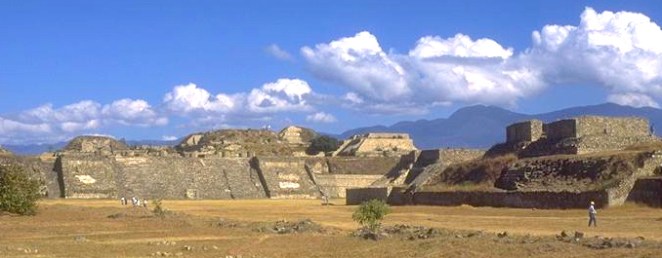
My poem, The Dancers and the Dance, refers both to the danzantes and to Monte Albán. Monte Albán was the capital of the Zapotecs and the principal city in the Oaxaca Valley (Mexico) between its foundation in approximately 500 BCE and its abandonment in approximately 750 CE. The White Mountain, thus named by the Spanish conquistadores, is justly famous for its temples, its tombs, and its carvings.

IMG0041_1.jpg

IMG0013_1

Two natural phenomena affected Monte Albán and its population. The first was drought and the dried earth with its brown and yellow tinges is clearly visible in these photos. The second natural problem came from earthquakes, for this is indeed an earthquake zone with active volcanoes causing tremors at regular intervals. The temples, even today, sometimes need repairing as earthquakes have been known to destroy even the reconstructed temples.

IMG0034_1.jpg

IMG0035_1.jpg

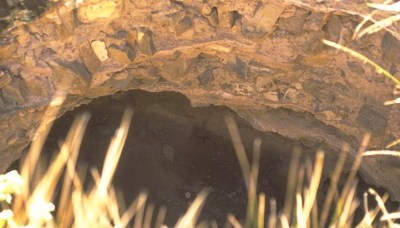
In fact, the abandonment of Monte Albán may well have been caused by an earthquake that cracked the enormous natural cistern in which the population’s water supply was stored.

IMG0031_1.jpg

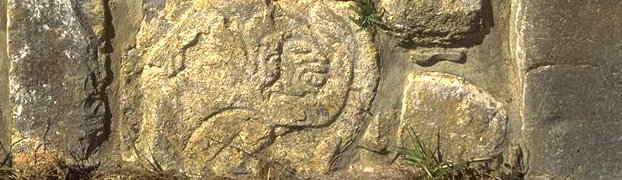
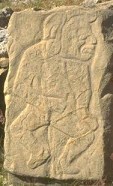
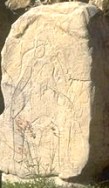
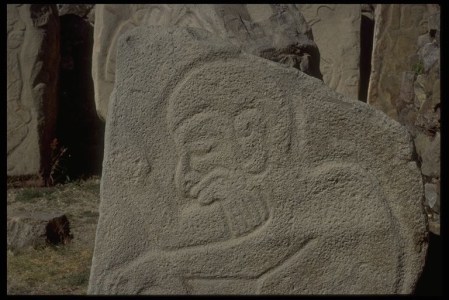
The Danzantes are strange, grimacing characters that have been carved into prisons of stone. They may be captured warriors awaiting sacrifice or the chieftains of conquered tribes humiliated, perhaps tortured, and then flash frozen into stone photographs where for centuries they have danced out their torment. Whoever and whatever they may be, they still dance on  Monte Albán.

IMG0038_1 2.jpgIMG0047_1.jpgIMG0039_1.jpgIMG0038_1.jpgIMG0047_1 2.jpgIMG0045_1.jpg

My poem, The Dancers and the Dance, captures a different form of dancing. It is taken from my book Sun and Moon: Poems from Oaxaca (2000) and contains echoes of the vibrant folkloric culture that thrives to this day both in the city of Oaxaca and in the Oaxaca Valley. Here, traditions are remembered and relived. Each year, on the Day of the Dead, for example, families place food and drink alongside photos of the dearly departed on altars inside their houses and their doors are thrown open to welcome their deceased family members as they return along the marigold paths that lead to their former homes.

The Dancer and the Dance

 1

she comes here to dance for me
only for me does she dress this way

 she shows me her dreams
unfolding them one by one
silk and cotton garments
drawn fresh from her scented closet

thin copper bracelets
carved wooden mask

 only her eyes reveal
subversive flesh and blood

 2

she orchestrates her story
skin drum
rattle of seeds in a sun-dried pod
single violin string
stretched across an armadillo’s shell

 I too am tense like an instrument
waiting to be played

 the bones of my love
reach out towards her

3

when she makes her music
familiar spirits return to the earth
dancing in a sash of moonlight

 she recreates an ancient spell
gold letters plucked from dark scrolls
no wands no words
just water’s purity
flicked fresh
across lips and face

 she binds me with the string of notes
she undoes with her hair
our bodies form an open altar
we worship with mysterious offerings
drawn from wells set deep within us

4

rain falls from the sky
Moon turns his face away
suddenly in darkened alleys
clouds hold hands and dance

dense streamers of light
dangle from street lamps
shadows remember their forgotten steps

gently she draws me to her
I try to follow
frail whirlpools of withered leaves
fragment weak sunshine
in light’s watery pool

 5

her magic grows
I take my first step
an unmapped journey
into desert space

we move to old rhythms
across moon flecked clouds

raindrops fall more slowly
faltering drum beat
diminishing water

6

high above us
the ghost of a melody
shaking its head
wringing its hands

 we return at last
to light and air
the moon’s vacant face
scowls in an empty field

someone has plucked the stars
one by one
and threaded them like a chain of daisies

 now there are no sky flowers
to adorn the night

7

noche de rábanos
someone has taken a knife
and peeled an enormous radish

this cartoon moon face
this full skull hanging from nothing
this lantern lighting from above

 now my lover sculpts time
and space
into small chunks

 each sacrifice
a jewel between her fingers

 I pin to my chest
three small notes
and a skeleton of words

8

inside my dancing head
the fires have gone out

 without her hands to guide me
my feet have turned clumsy

 scars layer my wrists and ankles
star crossed bindings
cutting against the grain

 I gather a harvest of stars
she holds them in her eyes

 her fingers are grasshoppers
making love in my hair

when she kisses my fingernails
one by one
we both know our bodies will never be the same

9

together we weave a slender cage
she cuts out my heart with her tongue
placing it on an altar inside the bars

she locks the tiny door
a silvery key wrought from moonstone

 my fluttering heart grows miniature wings
next time the door is opened
my wings will fly me to her lips

my heart is a caged bird on a tiny perch
it chirrups a love song
its image in the mirror answers back

breathless it scrapes its wings on the moon
its body striving upwards to the stars

10

on Monte Albán the danzantes
sway to soft music
their shadows dance in and on stone
as they have danced for centuries

wind rustles the grass
moon casts sharp shapes

darkness ascends the temple steps
huge fingers grasping upwards
an owl’s feathers clutching at the skies

at dawn tomorrow
the sun will rise beneath our feet
we will squint down on its majesty
we will pluck the ripeness of its orange
in our outstretched hands

11

our last night together
I pluck a blossom from the tulipán tree
a final offering of my love

 she gives it back
I place it in the pocket of flesh
where I once kept my heart

 tomorrow when the flower breaks
it will stain my shirt
a damp splash of blood
no longer running in my veins

 the scent of our happiness
will cling forever to my fingers