Recalcitrant Flash Fiction

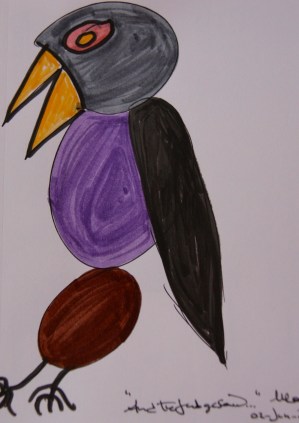
IMG_0013

Recalcitrant
Bistro 19

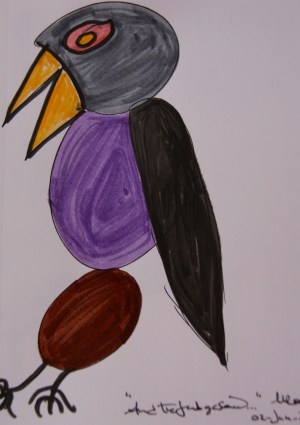
            The annual Old Boys Reunion took place in the sixteenth-century cellar of a world famous winery that also ran a restaurant and banquet service for pecunious customers. A man in a penguin suit, with a foreign accent, and a suspicious looking bulge under his left armpit, ushered the recalcitrant towards a set of well-worn of steps.
            “You are arriving slightly on the late side, sir,” the penguin whispered, staring mockingly at the checkered, American-style sports jacket worn by the man he escorted. “And not dressed like the others. But not to be troubled, I myself will escort you down to the place of the guests.”
As he descended the steps that led down to the former wine cellars, the recalcitrant heard the well-remembered, high nasal bray as his former headmaster’s brass voice pierced the ruminations of the penguin-suited herd that, having sniffed the glorious nature of the gregarious watering-hole, was intent on reminiscing, drinking, and feeding.
“Wonderful place … so fortunate … to be here … thank you … ” the old man neighed.
It was indeed a wondrous place, a semi-whitewashed room, warm in the center where bees wax candles in gold candlesticks blazed on antique tables and cool by the one wall left untouched since that same sixteenth century. Here the damp gathered in great grey clots and the spider webs, also untouched, sparkled and glistened, like “the mythical lights of fairyland” as the winery brochure announced to the limited circle of the wealthy to whom it was circulated.
Empty kettle … the recalcitrant thought as he remembered his old headmaster and then they were, face to face, the head and his obstinately defiant and anti-authoritarian pupil, staring each other down.
“You!” It was an authoritarian call to battle. “I remember you. The boy who denied all authority.”
“Yes, me,” the recalcitrant, eyeball to eyeball with the old enemy rejoiced in his newfound glory. And here he was, back in the old country on a lecture tour of six major universities, one of them being in this city, a full professor now, with international honors, multiple publications, department chair in a well-known university, a household name in his subject, and all of this at forty-two years old. “Yes, me,” he repeated.
“You have done well for yourself,” the ageing donkey brayed.
The gunman in the penguin suit, sensing the tension, placed himself in the gunslinger’s position from which he could survey the whole room. He lovingly stroked the armpit bulge, eyes gleaming with hope.
“Tell me,” the head drew a handkerchief from his pocket and honked his nose into it like a storm-bound goose. “How did your career take off?”
“Well, in two stages,” the recalcitrant paused, partly for effect, partly to gather his thoughts. “Just like a rocket: stage one was when I left your school and stage two was when I left your country.”
The old donkey, blinked, threw back his head, trumpeted down his nose with intense nasal wrath, and turned away with a wave of his hand towards another latecomer who had just descended the stairs. “Ah, there you are Smithers,”the fog horn blared. “At last. Saved me you have. This man was just about to …”
The rest of the sentence was lost in the rush and a hubbub as a new series of delights arrived, tapas, hors d’oeuvres, little sticky creations on fiddly little sticks, they all circulated from hand to hand along with the exquisitely chilled champagne, the single malt whiskies, and the ultimate in estate wines.
Not a penguin spoke to the sports-coated recalcitrant. Nobody offered him a hand. Nobody shared a memory with him. As he arrived at each little group, the penguins gathered in a tight circle, turned their black backs to him, and shut him out. Throughout the feasting, he sensed the gimlet eyes of the gunman glued to a spot mid-way between his shoulder blades.
The recalcitrant didn’t partake of the food or the drink, he just watched. Then, after an hour or so, he turned and climbed the sixteenth-century stairs, the gunman in the penguin suit right behind him, and walked away into the freedom of starlight and the cool night air.
He never returned for another reunion.
He never received another invitation.

Obsidian’s Edge 29


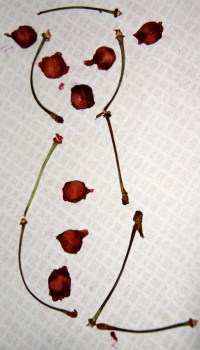
IMG_0150.JPG

El sueño de la razón produce monstruos.
When reason sleeps, monsters are born.

Francisco de Goya.

5:00 AM

… bright flowers of penance purchased for a pittance finger knitted spider webs of silence spun into wrinkles between stars and evensong while an old film shadow boxes black and white photographs and a rowing boat lurches over the waves as if a soggy brown cardboard box had dropped down on a moonbeam to pluck the mote from a one-eyed jack-in-the-truck who surveyed his road map for the dead days lying in ambush next to the sudden bonfire that flared on Guy Fawkes night and ignited the world like a Jacky-jumper vaulting a Roman Candle as Catherine spun on her wheel and a sky full of stars wheeled round the North Pole and slid down the Big Dipper’s handle to launch a long white scar of lightning that scared night’s velvet mask and plucked a diamond feather from the peacock’s tail as it strutted through the garden of bifurcating paths where Borges left his summer footprints at low tide in the sandy grief of the autumn leaf that the red fox dripped and dropped as he fled in vain like blood sizzles drizzling from an open vein and observe I say the play of light as it glistens on the voices of young children reaching to pluck the church bells as if they were ripe fruit dangling before us in our dreams and the world is a handkerchief so small it is and now not so clean and so we dream these dreams and pluck this unripe apple from the eternal branch where it lay hidden kicking and struggling up like the float that bobbled then sank through deep water and memory bent itself into two like that fragile reed dead in the water lying as straight as a bowing string at a crazy angle   at the pillows edge where mouths flap open as shadows walk and talk and we slide back into sleep’s dark waters where there are no dreams and nothing from those dark depths is ever recalled …

IMG_0152.JPG


6:00 AM

a clicking of claws
needles knitting outwards
towards dawn’s guillotine

the alarm clock shuffles
its pack of sleeping hours

the church bell
lurches into action

IMG_0140 2.JPG

We have come full circle and the sequence of rewrites that I have dedicated to At the Edge of Obsidian / Obsidian’s Edge ends here, with the start of a new day in Oaxaca that will be very similar to the old day that has just passed us by. For those of you who wish to read the full sequence, in its correct order, it will appear (some time soon) under Obsidian’s Edge at the top of this page.

I would like to thank all those readers who have accompanied me on this journey. In addition, I would like to thank all of you who lent your voices to this sequence either below the line with your comments or, and I refer specifically to those who are close enough to know me in the flesh and blood of real life, with your verbal comments and telephone conversations.

I hope this will be the first of many journeys that we make together. My best wishes go out to you. I trust you will consider joining me in my next verbal adventure on this blog.

IMG_0149.JPG


Obsidian’s Edge 28

IMG_0188.jpg

El sueño de la razón produce monstruos.
When reason sleeps, monsters are born.

Francisco de Goya.

4:00 AM

… scrabble of agile ruminants goats their basket weave ribs alive on the grass roof of the neighboring azoteas or wandering these cobbled pathways with knife-edge stones and broken all ten of those sea-faring bottles that managed to reach this land though they came floating from a distant shore each with its message lost now and he waded through the incoming waves this god-like ghost emerging from his white-cap snow bank to stagger in the moonlight where a child’s world lay buried like a bone as sharp as this black knife that slices the mind into two twin towers of tall sunflowers trapped in this wet clay rag of a body that binds itself in a fine film of glacial fire where incarcerated birds strut in the rib cage their robin red crests as distant as the light of a hurricane lamp in that moment of silence before an opening door snaps its sudden match of light and the tick of the death watch beetle gnaws at the beams of the worn out house that the earthquake cracked into a thousand pieces though one wall stood still and the alarm clock over the fireplace clicked a death mask for that anonymous face that raised both hands and threaded the black lace of the mantilla through the golden wedding ring as a finger nail of moon shredded the clouds and the body’s house slowly broke down in an unending dance round and round the garden where the teddy bear trod on his partner’s toes and the undergrowth tickled the china doll’s fancy but the garbage can intervened and dust stained the vagaries of a brutish existence both sharp and nasty as a devil’s scissors severed angel wings and tangled this skein of wool that pulled the church bells pounding their celestial hammers into a sea of wind while the sea parrot spoke in a tongue thick with anonymous flames that flickered a trigger of song while flashes of sound sparked twigs from the tree that flamed a joyless overflowing river of unknown light while the brown bear danced to a pipe and drum dance across bamboo marimbas that shimmered and shone and lay fine layers of music and dust that grew beneath bare feet as new flowers stoked a confessional of dust and gave it new life in a resurrection of the body into a world where everything is remembered and nothing is forgotten or forgiven … for how can we forgive if we cannot forget … or forget if we cannot forgive …

Obsidian’s Edge 25 (revised)

IMG_0185.jpg

El sueño de la razón produce monstruos.
When reason sleeps, monsters are born.

Francisco de Goya.

1:00 AM

… threshing from side to side panting and pouting mouths open at pillow’s edge with tongues flapping fiercely as the sharp hook pierces the dry upper lip and drives its root canal into the roof of the mouth where shadows walk and talk to silk worms wrapped in their ghostly cocoons and memories race through tumbledown alleys where shuttered windows wave white hands with silver rings sparkling on gnarled arthritic fingers and doleful uncertainties rush upwards in a cloud of bubbles to cover the sun and blot out daylight as dark descends and grief lies still on dawn’s distant altar where long-forgotten crimes stir and return each night to hunt and haunt the poor and pour fierce tears as a tap pours water and offers subliminal ablutions as the victims on their knees wear wild widows’ weeds as they kneel at each hand-carved wooden station where that dark cross flourishes with its black beads dangling from outstretched nails as necklaces clack and rosaries gnash the falseness of teeth that are white and bright and spotted with fool’s gold that reflects in a counterfeit mirror of surrogate corpulence with fleshed and bloodied hands handcuffed like some rabbit in the headlights of an oncoming crash and the car’s bones lie beached like great white whale bones on the bleached shores of an illusion that moves in time to the continuous clicking of claws and the clacking of needles knitting outwards to build a monstrous guillotine topped like a dictionary with red bonnets that move in the air as a knife edge carves night winds that slice the body’s earthbound cage of skin and bone and strip it of the fur that the white rabbit sheds as it climbs its golden staircase back to the moon from which it descended on this night of nights when sleep is a mystery revealed only to initiates who have mastered their duties and milked this market where a caravan of camels humps its way skywards like dark gibbous moons that burrow a tunnel and seek the fly’s high-pitched note with its angry black mote stuck to the cobweb that nests in whatever brain awaits the wind’s clean broom that wipes the slate clean of wild words and wars that are waged across scars that hack tracks and cross roads over this wilderness wherein we are all star-crossed and lost …

Obsidian’s Edge 27

IMG_0140.JPG

El sueño de la razón produce monstruos.
When reason sleeps, monsters are born.
Francisco de Goya.

3:00 AM

… often the imprisoned heart pinned like a butterfly and chloroformed into silence like a resurgent Guy Fawkes sitting on his bonfire and waiting for the universe to roll its coloured dice a captive and that heart singing as the dark rum of freedom bites into its jackdaw dreams of bright silver rings married to a bird’s leg and the round open eye of a cat staring at a Queen of Hearts as champagne bubbles burst in the mouth and dash on the tongue as they wash against the tooth’s white rock as it waltzes with the white caps that crest into broken ghosts who shuffle in and out like a pack of cards filled with knaves and the joker is belled with a red fool’s cap and a bladder on a stick as a tom cat’s tom fool grin melts in the mirror when the moon’s face skids and bounces off a snow bank where tranquil midnight mysteries trap trembling worlds in hand-blown glass bubble dreams that distort all distances clasped beneath clutching fingers while the crystal raindrops serve as an eye to behold the crimson glory of the hibiscus with its blood red stains where the baby fell from the rocking horse and confessed to a crime it never committed though speckled like a fresh trout it was drawn from deep water and blamed for the rainbow fire that flickered flames to the harsh crisp sound of the candle licking at its waxen jail where flower faces float framed against the white-washed wall as the wide-open staring eyes of the snowy owl speckle a yellow madness and its feathers are nails to be fired into  a pottery tree in this harsh somniferous light that breathes fear and fire into shavings of dry bark and a beaver gnaws at the roots of the world as an accusatory beak points at the funneling snow and puffed up feathers plump out a body so thin it is unfit to fight these flames of ice or withstand these snow stones cast by blameless flint-eyed innocents who have never themselves done anything wrong though they spark at the trough with one eye clouded by a spider web of hate and the other a sharp sun peering through clouds condemned like a donkey to walk round and round crushing the heart out of the maguey in an interior world of  dust and stone where the mote in another person’s eye is larger than the beam in one’s own and slant-eyed dogs eat dust and shadows of dust as they prowl through the courtyard and bark at the full moon blazing above this world that is sacrificed to a madwoman’s madness and an ancient flesh-devouring god who lives in a nearby volcano and is stoned all day on tequila and mescal


Obsidian’s Edge 26

IMG_0188.jpg

El sueño de la razón produce monstruos.
When reason sleeps, monsters are born.
Francisco de Goya.

2:00 AM

… waves of people wandering the streets a hammer blow falling on an echoing anvil and the cracked church bell lurching into its hourly cry of grief dogs barking at the fleshy red crest some playful deity has placed on the heads of domestic fowls and other gallinaceous birds beaks digging for the dawn in parched earth with thin cracks spanning out from its egg shell crazy paving the yellow yolk of sunshine creeping out from cobbles and the Russian egg cup doll after doll unfolding as the hammer’s silver spoon descends on egg shells as thin as a shattered dream of moonlight raked from a pond with its life blood filling a crystalline goblet with a thick rich callous liquid as fierce and sweet as sunshine sacrificed on a branch as rain from the clouds speckles the tree with radiance an arco iris with its semi-circular scarf this deer head mocking pulling back velvet lips white teeth grinning through the wind screen’s shattered glass and man a string quartet of flesh and bone created from a ball of dough and baked in the oven in an earthenware dish with currants for eyes a raisin for a belly button lemon rind for a mouth orange peel for hair while white storks with swaddled babies are scared away by thrown stones and the man in the mirror his hand held up to trap the wind as a falling leaf settles in the secret web between index and thumb puzzles bind like a bird bound in a metal cage the sparrow’s mighty choir chirping at the roof of the circus tent and animals running wild all gone and the smooth grass brown with its withered distorting mirrors of stark staring eyes driving through black paintings of Satanic witches spooning soup between wrinkled lips dark open holes mouths and eyes gouged in slatted wooden faces and Anonymous Bosch’s bourgeois hell of furnaces and factories swarming with sparks of black imps falling from the heavenly meadow and the devil impaired on his black wooden horse …


Writing: To Task or Multi-Task?

IMG_0184.jpg

Writing: Task or Multi-Task?

“To task or multi-task? That is the question.”

In the lonely world of creative writing, be it in poetry or in prose, is it better to continue with one text until the task of writing it is thoroughly finished? Or should we flit from text to text, developing several at once and thus multi-tasking in the best sense of the word? This is a key question in the revision process and relates directly to the concepts of write, re-write, revision, revisionism, and the creative process, all of which have been mentioned both in this blog and in the comments to this blog. However, there is no single answer to this seemingly either / or question as many factors must be considered.

  1. Deadlines:

Anyone who has worked with strict deadlines knows that they matter more than anything else. “I want this work on my desk by 4:00 pm today,” says the manager rubbing the magic bottle in which the genie is kept. “Yes, ma’am,” says the genie bowing before vanishing back into his bottle. Only one thing matters, the task in hand, and there can be no multi-tasking.

  1. Novellas and Novels:

With longer texts, while there might be room for manoeuver, provided no deadline is in sight, it is better by far to focus on the task in hand — the extended narrative — and to dedicate all tasking and multi-tasking to that prime task. The majority of writers who have written on the art of writing, including Stephen King, Graham Green, and E. M. Forster, emphasize the necessity of sticking at it, maintaining focus, and getting on with the task. Graham Green’s recommended approach is to write four to five pages a day, re-reading them and revising them the next day, before writing another four pages. That way the events, the action, the characters, are kept well in mind. In addition, Joan Clark and Norman Levine, in their workshops, advise writers to get to know their characters intimately, to think about them, and to write and rewrite until they come living from the page. Anyone who has taken a longish break and then returned to the writing of a novel knows just how difficult it is to get back into the mind of those characters. With an extended narrative, a dialog abandoned is a dialog lost. And one must learn to listen to one’s characters and to never forget what they have said, mustn’t one?.

  1. Poems, Prose Poems, and Flash Fiction:

This is where multi-tasking can truly take place. The brevity of these pieces, and I classify epic and extended poetry with narrative rather than with poetry, allows the writer time to pick the pieces up and put them down again, to play around, to abandon the text and to return to it later. Being shorter pieces by definition, one can re-read them with ease, correct them at leisure, and research around them with impunity. In an extended narrative, or when writing to a deadline, focus is necessary. With shorter pieces, easily recalled, procrastination is a pleasure, not a crime. With poetry, focus is sharper but for shorter periods.

  1. From Poem to Poetry Book:

As the poems accumulate and the writing, or rather the putting together, of the collection becomes more important, so the need to concentrate and single-task, rather than to procrastinate and multi-task becomes paramount.

These are my initial thoughts on Task or Multi-Task. What happens when we apply them in real life to real questions?

  1. On Revision (Chuck):

Will this exercise (revision of older texts) provide you more gratification than starting new ones that may or may not be so important to you?

The question of revision is key. While I would like to avoid revisionism (Al: There is value in showing poetry as a snapshot in time (if only to avoid endless revisionism), the question of how to revise a text is of maximum importance. The text to be revised may be old or it may be recent, but the act of revision — how and why and what to revise — is one that must concern us as writers if we are to eschew automatic writing in a search for le mot et la phrase justes. If I can learn from the revision of older texts what I need to look for in order to revise newer texts, then my search for a way in which to recognize and achieve better form of writing can be justified, for the techniques discovered can surely be applied to future texts as well as to past ones.

  1. The young Roger who was once you is no more (Kevin):

This is a beautiful thought: thank you, Kevin. Much of that earlier writing must stand as it is (and was) as a monument to what and who I was back then. However, some thoughts and phrasings may well be weak and need revision. The recognition of weakness and the realization of how to strengthen and how to renew is surely a part of our ongoing growing writing process. That is what I would argue, anyway. I would argue further that revision is NOT multi-tasking, but is single-tasking in the sense that I, as reviser, am teaching myself how to revise: an ongoing process in the act of creativity.

  1. Conclusion:

In my current situation, I have five creative works (Echoes …, Waiting, Bistro, Stars … , People … ) lying fallow and waiting for their final touches. As I look back on what I have previously written and how I have written it, I am, in my opinion, multi-tasking. That is to say, I am working with many texts rather than concentrating on a single text. However, at the same time, I am working hard on a single task: that of teaching myself, once again, how to revise and how to rewrite. Hopefully I will put a little, objective distance between my current self and my recent texts. Then, when I return to them, I will be able to take them, one at a time, and revise them properly. That is my hope and my intention.

To task or to multi-task … writing or re-writing … each has its place in the creative process. To conclude: I thank all of you who contributed to this conversation (mentioned or not!), and I wish you joy in your (re-)creativity.

Re-Writing or Writing? 2

IMG_0130 (1)

As one of my friends mentioned recently, writing is indeed a lonely profession. However, it is essential to define what we mean by writing, for that one word covers so many different things from shopping and laundry lists to twitter, tweets, e-mails, and blogs to journals, poetry, prose poems, flash fiction, short stories, novels, to skits, plays, ads, film scripts etc etc … clearly the one word WRITING covers a vast area of understanding and its associations vary in each of these forms. While some of parts of the creative process used in writing is lonely work, some parts are clearly social, hence social media, and demand a different thought process, and a different response and a set of different needs for a response. A writer, for example, does not (and should not) expect instant gratification from the preliminary version of a laundry list, a sonnet, or a short story, whereas one might expect (and hope for) a quick response from an e-mail sent to a friend in a sequence of e-mail exchanges.

In the same way that writing has so many different connotations, so does the act of revising. Some acts of writing need revision, others don’t. Social media is fraught with danger because it is all too often instant thought written down and fired off, sometimes in the heat of the moment. With no live facial expression to guide and no tonal variations to shape the recipient’s response,  there is much room for misunderstanding as writer and reader may well (and often do) attach different meanings to what appear, on the surface, to be the same words.

“Shooting from the lip”– this neat phrase illuminates the perils of the politician on the high wire of the televised interview. There have been many such instant responses, words shot out on the spur of the moment, instantly regretted, and endlessly debated, described, retracted, revised, doctored and spin, span, spun. Fortunately for most writers, their words are rarely exposed to the publicity spotlight that picks out each possible meaning and rarely is the everyday writer banished to the fiery flame.

My motto, for many years, rather than shooting from the lip, has been “think before you ink.” This means thinking out the possible ramifications of any combinations of words before putting them down on paper. Once the words are written, “think before you ink” takes on the meaning of a review and a double think before clicking the send button and allowing the selected combination to wing its way towards the intended and unsuspecting reader. Long ago, Horace (65 – 8 BCE) wrote that nescit vox missa reverti / a word once spoken can never be recalled. We ignore his warning at our peril: for his words still hold true. For me, the necessity of thinking about that word, before it is spoken, before it is written, before it is sent, is paramount.

This brings me to my central idea: if we are serious, deep-thinking, creative writers, rather than instant action, social media, quick response specialists, then thought and revision are necessary parts of our writing skills. Unfortunately, revision also presents the writer with another set of problems. T. S. Eliot has expressed the problem of choosing the right word in the right place better than anyone. He writes

Words strain,
crack and sometimes break, under the burden,
under the tension, slip, slide, perish,
decay with imprecision, will not stay in place,
will not stay still.

And that is only one among many of the writer’s problems: which word to choose and what exactly is the right word in the right place. The examination and re-examination of the words we use is an exercise in itself. If we write rhyming poetry do we stick with the easy rhyme, the first one that comes into our head? Do we shuffle and cut the rhyme scheme, change the order of the sentences, search and re-search for le mot juste, the one that adds meaning and rhythm as well as rhyme? I would like to think that we do, but I know that all too often we take the easy way out. I know I do. And the words themselves are like shifting sands, drifting, moving around, changing their potentialites, not standing still.

And what if we decide to revise? Are we, as revisers, the same poets who penned the initial thought? In other words, do we feel the same way now as we did when we initially put pen to paper? By extension, what do we gain when we revise and what do we lose? I would answer those questions first by referring back to Heraclitus who, according to Plutarch, wrote that it is not possible to step into the same river twice, nor can one come into contact twice with the same person for people and states of mind may well change between meeting and meeting, and people are rarely ever quite the same. For Heraclitus, as the waters flow, so the river changes, and it is never the same river, even though you think it is. For T. S. Eliot, on the other hand,

… every attempt
is a wholly new start, and a different kind of failure
because one has only learned to get the better of words
for the thing one no longer has to say, or the way in which
one is no longer disposed to say it.

Clearly, then, revision is fraught with peril and this is why some people prefer to preserve their thoughts in the original state of inspiration and never revise them. To revise or not to revise: the choice is yours. In my case, revision is always a part of the writing process. In that sense, I think of myself not just as a writer, but also as a re-writer. In that second guise, I revisit my work regularly, re-reading, re-thinking, and, where I deem it necessary, re-writing as well.

Bistro 7 Flash Fiction

Discards

IMG_0143.JPG

Toni walked in, scowling, and strode straight up to Nando who leaned against the bar with a glass in his hand.
“You son of a bitch,” he said and swung his fist. One of the patrons, an ex-bullfighter quick on his feet and even quicker to spot a threat, stepped between them.
“Enough!” He shouted as he parried the blow.
“Are you mad?” Nando put his drink down on the bar.
“Me? Mad?” Tears ran down Toni’s angry face and his breath came in short, sharp gasps. “You’re the one who’s mad. You’re the one who’s screwing her.”
“Screwing who, for God’s sake?”
“Raquel, dammit. You know: my girl. What are you doing here anyway? Waiting for her?”
“Waiting my turn; like everyone else. And I expect they’ll call my number pretty soon.”
“You got a ticket?”
“Of course. I always get a ticket. Why?”
“Because I want her before you get her. Here, give me your ticket.”
“No way.”
“I’ll buy it off you.”
“No way.”
“Why don’t you dice for it?” The ex-bullfighter sensing the possibility of both a truce and a bit of fun broke into the conversation. “I’ll be the judge.”
“Cards?” Nando raised his eyebrows.
“Done,” Toni dabbed at his face with a grubby hanky. “But win or lose: you’re still a son of a bitch.”
“Not if I win.”
The crowd made room for the two men at the bar and Nando asked for a green cloth and a pack of cards. Shuffle and cut. Deal. Frowns and smiles. The patrons looked on in expectation and shouted and groaned with each discard. Every so often, a number was called out and a man stood up, gave his ticket to the barman, handed over some money, and went upstairs.
They played the best of seven hands. Tied at three hands each, sweat drops beaded down both their faces. The ex-bullfighter roared approval with every card and checked each discard. The patrons crowded round shouting their approval in bullfighting terms.
“¡Música! ¡Olé!” They chorused as they clapped their hands and stamped their feet.
“Number 69,” the barman roared.
Nobody moved and a silence fell over the room.
“69,” the barman’s voice repeated, a hard stone cast into the silence.
“Well, I guess that’s me,” Nando rose to his feet, put his hand in his pocket, and drew out his number.
“Son of a bitch …” Toni’s voice rose above the uproar. “I’ll get you for this!”
“”What’s it all about?” A new bass voice rose above the crowd noise. “What’s happening here?” Pedro, the owner stood behind the bar, beside the barman.
“I’m next. That’s all.” Nando waved his ticket.
“He wants my girl,” Toni screamed. “I’ll get him … ” Toni struggled through a sudden thicket of arms to get at Nando.
“And who’s your girl?” Pedro’s deep bass voice rose up and conquered the room.
“Raquel,” Toni stood there, defiant.
“Raquel?” The owner of the deep bass voice sounded incredulous. “Raquel? Raquel!” He shouted. “Raquel, get your ass down here.”
Silence.
All eyes turned to the staircase behind the bar.
A beautiful, dark-haired, brown-eyed woman walked slowly into the room.
“This Raquel?” The owner’s voice shuddered in disbelief. “My wife? The woman carrying my child?”
Toni and Nando stood there, staring eyes, mouths open.
“Get out,” the owner said. “I never want to see either of you here in my bar again.”
He drew a battle-field green Glock 21 from an inside pocket, pointed it at them, and shouted: “Run!”
Toni and Nando ran from the bar, their tails between their legs.


Re-Writing or Writing?

IMG_0130 (1).jpg

I think of myself as a writer, but when push comes to really thinking about it, I am indeed a person who re-writes and re-vises continuously. In order to do this, it is necessary to read and re-read. If a word, or even a comma, in a poem troubles me, then it is a sign that something is wrong, somewhere. Whenever I am faced by this sensation that “something is wrong”, then I re-read, re-think, re-plan, re-vise, re-visit and re-write.

I try to re-work and re-think by asking myself (a) what is missing and (b) what can I add and (c) how am I linking things and (d) am I over-complicating and (e) what is the burning heart of the matter and (f) what am I really trying to say and (g) have I managed to actually say it. If the answer to any of these questions raises even more questions, then it’s back to the drawing board. No: a re-writer’s life is not an easy one.

I usually keep my early variants to poems (and other prose works) in chronological order and I find it useful to go back to that first precious moment of inspiration. Did I stay true to it? Did it change? How? Was the change for the better or for the worse? Occasionally, re-writing takes the original spirit right of the piece. It is sometimes very, very hard to re-write that inspiration back in, without re-turning to the original. If I am in difficulty, I will re-write from a different point of view: another person speaking, perhaps, or in prose, or as a stream of consciousness. This exercise, and that should probably be written in the plural, will either present me with a viable alternative or confirm me in (a) my original wording or (b) a new form of wording. Another simple (relatively speaking) exercise is to check for structure, theme, metaphor, and wording: are they all neatly tied together and well-linked?

This happened to me today with Obsidian’s Edge 14 & 15. Neither of my many attempts at taking Dainzú and placing it into words on a page felt right. Something was missing. But what? I couldn’t put my finger on what was going wrong. I spoke with Jiminy, my friendly Cricket Conscience, and he asked me several questions that I couldn’t answer. Luckily, I was able to choose the TV Show option phone a friend, so I did.

My friend too was troubled by these poems and said that I hadn’t managed to produce anything that seemed to express my better poetic self as he knew it. We talked out several possibilities. “Perhaps you need a lizard,” he said. “It’s a dry, dusty landscape. It can sit on a wall. But don’t worry: you’ll think of something.”

When I put the phone down, I went back to work. Sure, I was struggling with OE 15, but when I checked back to OE 14, I saw that I had been struggling with that too, but without realizing it. What to do? First, I tried writing about the lizard; then I tried adding water and lack of water; then I re-wrote from the point of view of the old lady in the poem. This certainly felt better. Then I shifted images from OE 15 back into OE 14. Then I re-wrote OE 14 from the point of view of the old woman. The poem started to feel better.

The secret, I think, is for me to relax, to be myself, to let the poem flow into me, and then to let it flow out again. I must remember not to force my writing, but to let it flow, and to continue writing as I want to write while paying attention to the small details of which I am becoming more and more aware every day. We are all creative — or we wouldn’t be here, reading this: we must let that creativity flow.

Friends are essential. Writing groups are useful. But the real secret is to develop and polish our own creativity. We must also learn to develop our own voices and to have confidence in those creative sparks that dwell within us. It is only by entering and re-entering that personal creative space that we can write and re-write in the way we really want. And we must have courage: the courage to tear down the wall and free that which is within and let it roam, un-fenced and at will. Like the cattle, like the dogs, like the wind-blown dust my old lady will see and feel, sandpaper on her skin, in the next version of her poem.