Clepsydra

Clepsydra

WFNB 2025 BAILEY PRIZE: 3rd Place
Citation

Clepsydra relates a process of identity loss, as time’s passing removes the people closest to the eroding narrator. Its consistent form – the manuscript is one long poem made up of 48 sections of varying length, each of which begins and ends with an ellipsis – provides a framework in which the narrator strives to describe how their sense of self drains away, drop by drop, the way the liquid in a clepsydra (a water clock) marks the passing of time. Amazingly, the poems convey existential dread through remarkably vivid and grounded images of things like “seals basking in sunshine, / knowing themselves, being themselves, / thinking themselves safe, / kings and queens of their seal-dom, / never questioning” (19) and “…an osprey, sudden, the swoop, / turned into a stoop, water shattered, total immersion, then emerging, / lusty thrust of wings, claws clasping, / prey imprisoned” (20). Sense slides in and around the sounds of the words as well as in their dictionary meanings. In Clepsydra the author rigorously plumbs a difficult subject: the loss of subjectivity.

Exhortation

Thank you for the privilege of reading your poetry manuscript, Clepsydra. I was quite taken with all of its virtues: a meaningful concept, carried out in an impressive form which is followed both rigorously and nimbly in each section.

Introduction

     The National Museum of Wales, in Cardiff, had a working Clepsydra that fascinated me. School children could enter free, and every week day, during the school holidays, I would visit the museum and also the Clepsydra.

     I have built the structure of the Clepsydra into the verses of this book. The words flow down, from left to right, just like the waters of the Clepsydra. Sometimes they overflow the line, and sometimes they hold back, just a little. This visual construction fortifies the idea of the ebb and flow of time, water, and memories.

     I first met the poetic image of the Clepsydra in the poetry of Antonio Machado – No temas. Tú no verás caer la última gota que en la clepsidra tiembla. / Never fear. You will not see the fall of the last waterdrop that trembles in the clepsydra. I have, for better or for worse, repeated this theme throughout the poetic dialog.

     I would like to thank the judge, the poet Kathy Mac, for her comments and her excellent suggestions. I have followed most of them in this revision of the original manuscript. My thanks go to all who have read Clepsydra at one time or another.

Clepsydra

1

… time, and my own place
     not this dry museum
          filled with dust

its ghosts, running rampant,
     raging silent
          over ancient artefacts

the clepsydra dreaming
     time like its liquid
          slipping
               through clay fingers
 
runnels of water
     ebbing flowing
          continually running down

earthen-throated
     its hour glass structure
         
each terracotta bowl
     lower than the one before
   
a mini-cataract
      a constant waterfall
            second by second
                    time dwindling away…
Who do you spend the most time with?

Daily writing prompt
Who do you spend the most time with?

Who do you spend the most time with?

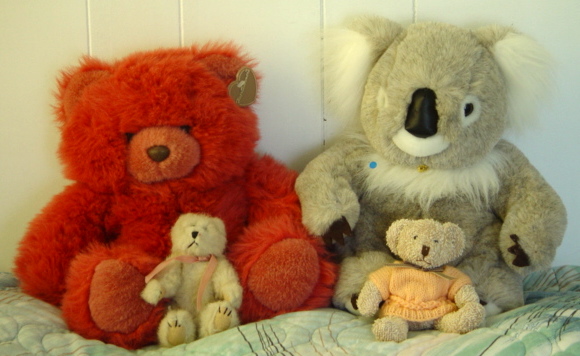
My Teddies. I know, I know. Most of you will say “A Teddy Bear is not a real person. You can say what, but you can’t say who.” And most of you would be wrong. Teddy Bears are trained confessors – they listen to everything you tell them – in silence – and they never condemn you. They are a great comfort too, and are just as good and effective as a comfort dog. Also, they are very, very obedient. Tell your Teddy Bear to sit and wait, and s/he does, very patiently.

I sleep in the same room as my teddies. And since I am in that room for 8-10 hours almost every night, that doesn’t leave much time for spending with other people. Besides which, while Rose and Teddy, the big ones, Mother and Father Bear, so to speak, usually stay in the bedroom, while Basil Bear, the small pocket bear with the pink ribbon, often travels with me, in my pocket, and usually sits on the table with me at meal times and when I read and write.

And remember – Teddy Bears don’t eat your porridge, so you never have to look at your Teddy Bear and say “Who’s been eating My porridge?” I hate porridge, by the way, “Porridge, porridge, thin and brown, waiting for breakfast when I come down. They clean the table of every dish, eggs and bacon, cheese and fish. But however early, however late, porridge is always sure to wait.” Sometimes I wish my Teddy would devour my porridge, especially when it’s burnt. I wounder if I could train him?

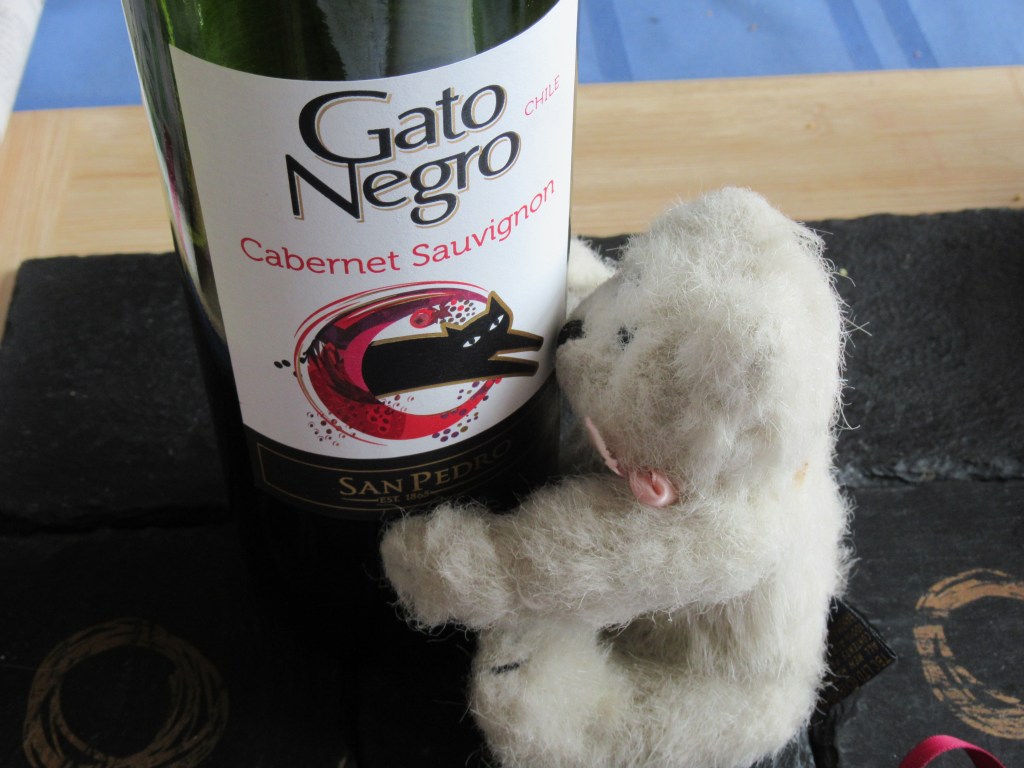
Here’s Basil Bear, on the table with me, helping me to choose my wine. He reads the label, very carefully, and then tells me which one it is. Now that’s what a Care Bear does – cares for and looks after his human. And look at that Black Cat – I do think he’s envious of Basil, four green eyes filled with the light of jealousy. I hope he doesn’t scram my Basil – a gath wedi scrapo Basil fach.

I also talk to that friend , who always walks with me. As Antonio Machado says – “El que habla solo, espera hablar con Dios un dia.” “He who talks to himself hopes to talk to God one day.” Let’s hope that particular chat is delayed a little bit longer. I enjoy writing these prompts. So, happy thoughts, and may you all share a Teddy or two who really care.

What is your favorite season of year? Why?

Daily writing prompt
What is your favorite season of year? Why?

What is your favorite season of year? Why?

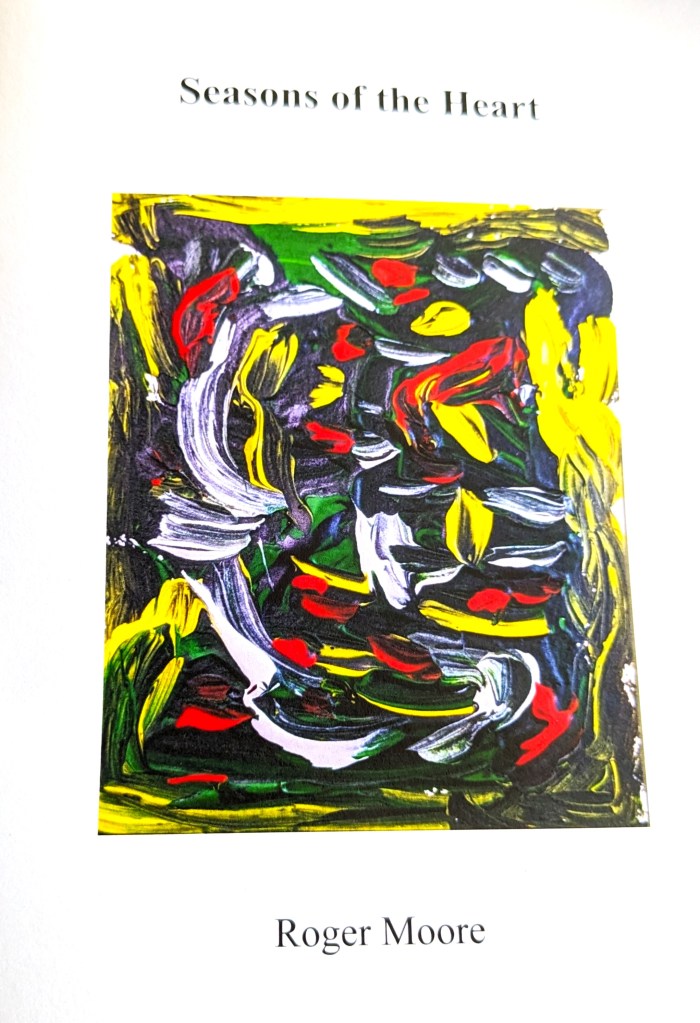
I don’t have a favorite season of the year, nor do I have a favorite Season of the Heart. The book came out today. Hot off the press, it waits to be gifted to my friends and faithful readers.

The heart has multiple seasons, many more than the four with which we endow the earth. The seasons of the heart may occur in any order, for all them may be experienced in a single day. Many will be gifted to us in the brief moments when our modern society allows us the time to meditate and find the inner silence that generates the deepest and most sincere thoughts.

Each heart season – joy, sorrow, remembrance of the past, the dark night of the soul, despair, hope, and there are many more – will recur, some with persistence, others with less frequency.

I enjoy all of them, for different reasons. As Antonio Machado might have written – “In my heart I felt passion’s thorn. When I plucked it out, I was all forlorn for I couldn’t feel my heart at all. Now I’d rather replant that thorn. The pain was better after all.” Remember, wherever there are roses, there are also thorns.