Golden Angels

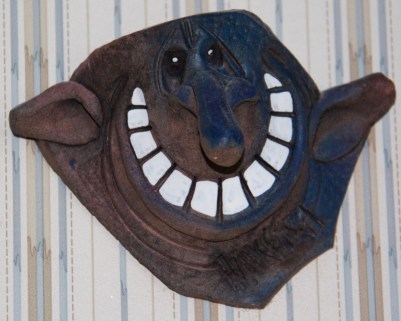
IMG_0189.jpg

Golden Angels
(
from All About Angels)

They stand beneath guardian trees
their saffron garments glossed with gold.

Hands cupped, bodies bent,
they softly swell as they dip
beneath the rain.

They speak to me:
wild prophets from an ancestral book
that I believed in when I was a child,
but no longer understand.

I try to read the aroma of their lips,
their slow, small growth of gesture.

Their wings are traps
tripping my tongue
preventing me from flight.

Monkey’s Tractatus

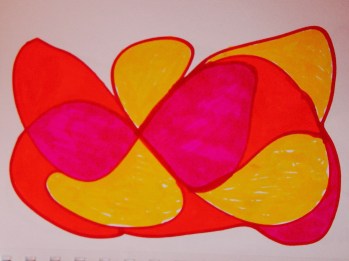
IMG_0186.jpg

Monkey’s Tractatus
(after a philosophical argument between
Ludvig Wittgenstein and Bertrand Russell)

When monkey sees a hippopotamus in the temple grounds
he knows it is grounded in fact.
We really must get rid of it!
It obediently vanishes.

There is a silence in the temple cells
broken only by the broom’s clean sweep
as insects are swept away from the footsteps of the unworthy.

Monkey sees the hippo trapped beneath a chair.
He can feel it struggling to set itself free.
Now hippo gets tangled in monkey’s hair.

Monkey will have its hide for a shield against dark thoughts,
an unbroken umbrella to guard him from this rain of teardrops.

Hippo bathes in a hip bath of crocodile tears:
Sunt rerum lacrimae.
He wallows in philosophical sorrow.

When the hippo leaves the temple,
there is a silence as the unspoken word returns,
a silence broken only by the hum of the hoover,
and the beat of a condor’s invisible wings.

Monkey Chews


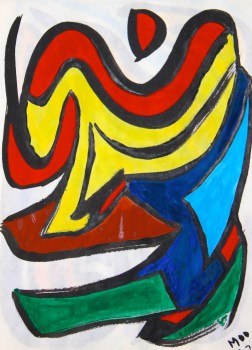
IMG0046_1.jpg


Monkey Chews the Cud
(after Octavio Paz, Ludwig Wittgenstein, and Stéphane Mallarmé)

Brilliant in his rising, a new sun shines on monkey’s world,
dispersing darkness, fragmenting it into shadows.

Sunshine and shadow: heads and tails of an age old
combination sealed back-to-back on the self-same coin.

¿Cara o cruz? Heads or tails? Sunshine or shadow?

Solombra, perhaps? Or is it just the act of perception,
as Wittgenstein would have us believe, and nothing more:
the metal always spinning on its milled edge, never falling,
the coin on its axis, a new day with its potential,
sunshine or shadow, thrown dice still skittering,
a new world imperceptibly poised in its own making?

Monkey scratches his head. Such enormous depths
are not for him to plumb, this early in the morning.

Better by far the banana peeled, the fresh skin thrown
away for someone else to slip on, and monkey
sitting there in silence, chewing his morning cud.


Existentialist Monkey

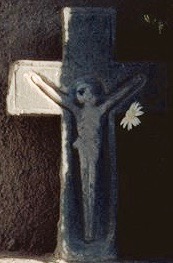
IMG_0181.jpg

Existentialist Monkey
(after Albert Camus and his Myth of Sisyphus)

Monkey watches Budgie tinkle the small bell hanging below
the yellow plastic mirror in which Budgie gazes in fascination
at his own reflection, nuzzling and nipping himself with his beak.

Black and white soccer balls cover the floor:
“Budgies for the Cup!”
A crimson ladder has another bell on top.
Budgie squeezes a soccer ball between beak and claws,
ascends this ladder, and pushes the ball upwards.

When he gets to the top, the ball slips slowly down.

It falls to the sandpaper floor.
Budgie descends the ladder,
takes a new grip on his soccer ball,
and steadily climbs the rungs.

Budgie is clever: he can imitate the telephone, the doorbell,
the pop of a champagne cork shooting from the bottle, the cat, the dog …
When Budgie whistles, the stupid dog leaps to his feet
and rushes, barking, to the door …

Budgie is two thirds up the ladder now. He pauses for a rest,
stretches his wings, and looks at himself in the mirror.

“There’s a pretty boy!”

“Il faut imaginer Budgie heureux.”

Monkey’s Book Burning

IMG_0201.jpg

Monkey’s Book Burning

(Remembering Cervantes’s Scrutiny of the Library
and Ray Bradbury’s
Fahrenheit 451)

Who burnt Monkey’s books?
Who took them from their shelves,
evicted them into the courtyard,
built them into book stacks, like hay,
then applied gasoline, and a lighted match?

Monkey watches in horror as smoke
and flame devour his beloveds.
He tries to approach, but the fire is too hot.
One book jumps out from the smoke,
still smoldering, and monkey
snatches it and carries it away beneath his coat,
the fire burn branded into its cover,
the skin still sizzling on monkey’s hand.

How many books were burned that day?
How many monkeys now walk in the woods,
trying to re-create their lives, circulating
their memories by word of mouth?

Moth is to candle as book is to flame.
Monkey runs his hand in and out of the candle.
He recalls the bonfires in other, far off streets
and coughs through the throat burn of smoke
as he touches the blistered scars of flame.

Monkey Watch

IMG_0185.jpg


Monkey Watch
(after Jean-Paul Sartre, Albert Camus, Bertrand Russell and the Myth of Icarus)

Monkey senses things that are invisible
to other minds. He knows that ink in a pen
can run dry, that word flows can suddenly cease,
that mechanical pencils can so easily
break down into their component parts.

New Year’s resolutions can lie broken on the gym
-nasium’s floor. Scattered on the ground, they lie
shattered, tattered like the beribboned tresses of trees,
blown blind by winter’s feverish, age old wind.

Time has grown feathers and traced
its moth flight round the candle flame.
These solar spots that beautify the moonscape wings
of the meandering moth are too hot to handle.

Suddenly, there is the scent of burning flesh,
of flimsy wings crisping, of high-flying Icarus
left roasting in the candle’s open fire. Monkey contemplates
the dry, tight wrinkles on the back of his paw.

Then he moves his hand slowly and casually through
the candle’s flame as he meditates
on the brevity of life and the multiple meanings
of an existence that precedes all essence.

To be Welsh in the Rhondda


IMG_0147

To be Welsh in the Rhondda Valley
 
To be Welsh in the Rhondda Valley
is to change buses at the roundabout in Porth;
it’s to speak the language of steam and coal,
with an accent that grates like anthracite —
no plum in the mouth for us;
no polish, just spit and phlegm
that cut through dust and grit,
pit-head elocution lessons hacked from the coal-face
or purchased in the corner store at Tonypandy.

And we sing deep, rolling hymns
that surge from suffering and the eternal longing
for a light that never breaks underground
where we live out our lives and no owners roam.

Here flame and gas spell violent death.
The creaking of the pit-prop
warns of the song-bird soon to be silent in its cage …
… and hymn and heart are stopped in our throats,
when, after the explosion, the dust settles down,
and high above us the black crowds gather.

Capella dos Ossos

IMG_0137.jpg

CAPELLA DOS OSSOS
(Chapel of Bones, Evora )

They drew blood from the bull’s body, stretching him,
broken, over golden sand: a playground for the gods.
His one horn, splintered, plowed into the arena,
his other horn pointed skywards: a finger of wrath.

Cannibal red and carnival yellow, his blood and urine
spilled for the drunken pleasure for which we had paid.
We had also paid for bands and martial music; a Mexican
wave swept rhythmically over the bullring to enliven us.

Later that day we gave warm coins to the tour guide.
She counted the whites of our astonished eyes and divided
the total by two as we stepped from the air-conditioned bus.

The chapel’s slaughterhouse stench overcame us.
Bone after human bone thrust out from the ossuary walls:
a generation of tarnished hands held out to greet us.

Note:
This poem is a golden oldie, published way back when, not only in the last century, but in the last millennium, courtesy of the Nashwaak Review. Sometimes, it’s fun to explore that past and see where it led us. This is from my Milton Acorn, almost about to rhyme, Jackpine Sonnet mode. The poem does have 14 lines.

People Poems 3

img_0202-1

People Poems are dedicated to people who, for one reason or another, have distinguished themselves in my life. People Poem 3 is dedicated to Tanya Cliff who has supported me and encouraged me ever since I started this blog. Her comments on my writing have been most welcome and our on- / off-line conversations have led us in many delightful directions. More important, perhaps, in my post-cancer recovery stage: Tanya’s daily quotes from the Bible, some of them very apt [Even to your old age and gray hairs I am he, I am he who will sustain you. I have made you and I will carry you; I will sustain you and I will rescue you. (ISA 46:4, NIV)], have reminded me of a faith that I have never lost. Thank you, Tanya, for your enthusiasm, for your encouragement, for the moments we have shared, and for reminding me of the power of that faith. Please accept this poem and this bouquet of e-flowers as my tribute and acknowledgement of my debt to you.

In the Cave
Brandy Cove
Gower / Gwyr

No:
I do not understand these things.

I have had few visions;
no bush has actually burned for me.

Though I have sat in this cave for many a day
there has been no thunder, no earthquake,
and no thin, small voice has called my name.

I have only heard the wind and the waves
and the sigh of the sea-birds endlessly flying.

Who set the curlew’s cry between my lips?
Who dashed the salt taste from my tongue?

I will never forget the wet sand foaming between my toes
nor the cracked rock crumbling under my hand…

… yet I never fell,
nor was I trapped by the sea below.

Previous People Poem Award Winners include, in alphabetical order:

Meg Sorick, Pearl Kirkby


Man from Merthyr

IMG0040_1.jpg

Man
from
Merthyr

 Memory loss punched
holes in your head
and let in the dark,
instead of the light.

Constellations faded,
erased by the arch-
angel’s coal-dust wing.

 “I’m shrinking,” you said,
the last time I saw you,
you who had been taller
were now smaller than me.

 Tonight,
when the harvest
moon shines bright
and drowns the stars
in its sea of light,
I will sit by my window
and watch for your soul
as it rockets its
way to eternity.

My eyes will be dry.
I do not wish
pink runnels to run
down this coal-miner’s
unwashed face.

“When the coal
comes from the Rhondda
down the Merthyr-Taff Vale line,
when the coal
comes from the Rhondda
I’ll be there.”

With you,
shoulder to shoulder.

Farewell, my friend,
safe journey.