This Death

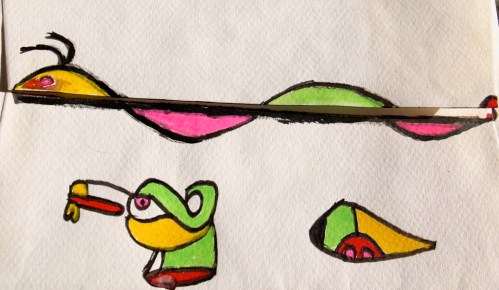
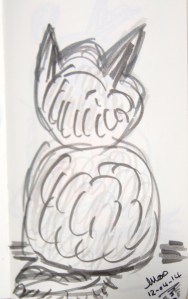
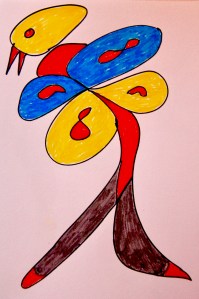
IMG_0380 2.jpg

This death

This death,
born within me,
nurtured by my own body
since before I was born,
squats beside me
in this small room.

Inevitable this end
to which I descend,
the doctor tells me,
but she doesn’t know
when.

Winged shadows
gather in dark corners
and mob my mind.

I bear this dismantling
of my inner cosmos
with baffled bravery.

Alone,
now,
in this hospital room,
I hug myself,
pretending I have
nothing to fear,

though my guts
tense up
and
salt tears
fall.

Novel Writing Mistakes (2)

Well worth reading: another Wednesday Workshop. Thank you, Meg.

Meg's avatarMeg Sorick, Author/Artist

This is the post you hope to never have to write…

Rewind to the weeks leading up to November 1st, 2016. I was preparing to enter National Novel Writing Month with the outline of my fifth novel: Breaking Bread. I never have all the details worked out when I write, just character studies and a list of the major events that need to move the story from start to finish. This gives me, the writer, a lot of flexibility as the novel progresses.

Not every writer writes this way. There are “plotters” –who have all the entire story mapped out in exhaustive detail. There are “pantsers” — writers who “fly by the seat of their pants,” having only the major ideas of the story figured out. And of course there are all combinations of writers who fall in between. That would be me.

There is no right way to write…

View original post 420 more words

Birthday Poem

img_0165

Poem on his 73rd birthday

I won’t sit with my head between my hands
fearing the future or brooding on the past.

Each day is a bonus now, each sunrise a celestial
celebration, each evening a drawing down of blinds.

I welcome each sun with open arms and accept
the gifts it brings. Sunshine fills me with joy. It beams
like a beacon with the warmth of my joyous heart.

Writer’s Block: Wednesday Workshop

IMG_0182

Writer’s Block

Every day, well, almost every day, I meet people who tell me that they cannot write anymore. They have abandoned their current project. They sit in their work space and stare at blank screens or empty walls. They have come face to face with the dreaded Writer’s Block.

While some consider Writer’s Block to be an actual illness, others flaunt it like a flag or a badge of honor:

“Don’t touch me — I’ve got Writer’s Block: I wouldn’t want you to catch it.”

“I’m having a bad week: I’ve got Writer’s Block.”

“Sorry, I can’t make the writer’s meeting, I’ve got Writer’s Block.”

According to Wikipedia, “Writer’s block is a condition, primarily associated with writing, in which an author loses the ability to produce new work or experiences a creative slowdown. The condition ranges in difficulty from coming up with original ideas to being unable to produce a work for years. Throughout history, writer’s block has been a documented problem.”

We have probably all experienced the sensation of being unable to write, unable to think, unable to continue. As an academic, I found that something similar happens frequently in examinations with young students whose minds suddenly go blank when faced by a white page and an awkward question. This form of Writer’s Block comes at the most unfortunate times. Students need to be switched on just when their minds switch off. And something similar happens to writers.

Examination Block can be overcome. In many cases careful preparation for an exam will reduce or eliminate examination block. These preparations may well include correct note-taking and relevant revision procedures. There should be no last minute all-night study the night before the exam and a good night’s sleep, proper food, and water are essentials. Appropriate physical exercises before the exam starts are also useful as these make the heart beat and the blood flow. All these things prepare both body and mind and free the student for that most important task: the struggle with the blank page and the awkward question.

Will a similar set of preparations work for those who suffer from Writer’s Block?

In order to answer this question, I would rather take a different approach. Instead of seeing Writer’s Block as a physical / mental presence that stops us writing, why not look at it as an absence that can be overcome? What can we call that absence? Personally, I look upon it as an absence of creativity. If the creativity isn’t there, then writing creatively won’t happen. So what do we do?

Let us define creativity. For me, creativity is the expression of the creative principle that dwells within all of us. It is there, within us. We may suppress it or we may let it be suppressed. We may ignore it or we may deny it: but it is still there. It is always there. Sometimes it is beaten out of us; or we think it is. But it is still there, beneath the surface, waiting to be called on. The Roman poets spoke of it as Deus est in nobis … the god that dwells within us.

Creativity, for me, is like a river that vanishes underground and then reappears: it will be back.

The most important thing in my opinion is what you do when you’re not writing, what you do when you’re faced with that wall of blackness, what you do when you stare at that blank screen and nothing makes your fingers dance on the key board.

Here’s what I do. I make up my mind not to force myself to be creative. Forget about writing. Do something else. Ignore all idea of Writer’s Block, or the End of the World, or the Imminent Disaster of not being able to write. It may take a mental effort, but forget about it.

Now do something else, something positive. Different people respond to different stimuli. Here’s what I do.

(1) I read books
I read other people in their creative moments. I love reading people who write in other languages that I speak and read, because my own mind tries to recreate their images, their stories. This re-creation is a form of creation in itself. New words, new ideas, new combinations, rise to the surface of the mind, like bubbles on a river.

(2) I color and draw
As any who have seen my drawings know, I cannot draw. However, I can take a line for a walk. And that’s what I do. Then I color the spaces I create. My friends thought I was wasting my time and I believed them until I read one of Matisse’s sayings: “My ambition: to liberate color, to make it serve both as form and content.” Voilà: I have my raison d’être. Nature abhors a vacuum. When you create a space, color and meaning rush in.

(3) I take photos
The capturing of a moment: a sunset, a new bird at the feeder, deer wandering through the garden, a black bear visiting, rain on a spider web, sunlight through a prism, a cat made out of cherry stones … the re-creation of the moment is the creation of the memory. More bubbles flow on the surface of the stream.

(4) I go for a walk, look at nature and the world around me, people too
It is incredibly important to do this. A visit to the local coffee shop, a walk around the super-market or corner store, a seat in the park on a sunny day … just be yourself, believe in your existence, watch things as they happen, relax, look and listen, empty yourself, let the world flow back in … look at the ducks on the lake or the goldfish in the tank … more bubbles on the water, more ideas floating down the stream …

(5) I listen to music
De gustibus non disputandum … we can’t argue about taste. Where music goes, each person must make their own choices. The music I like fills my mind, relaxes me, flows out when it ends, takes my mind for a walk and leaves … a vacuum … into which dreams and colors, words and ideas, build like clouds …

(6) I cook
Cooking has always relaxed me. Sometimes the repeating of an old recipe helps clear my mind. Sometimes I have a need to invent something new. Hands and mind occupied, the secret, sacred underground river of creativity flows on …

(7) I sew
Last summer, an unexpected event led me to join a quilting group … oh what fun … a man quilting among a dozen women … I learned so many things … so many different ways of looking at the world … so many concepts that I would never have dreamed of on my own … Sewing runs in the family: I still have my grandfather’s sewing kit … darning and sewing needles that served him for two years before the mast … that darned his socks as he survived in the trenches of the First World War … it bears his name and I use it with pride … and what memories arise in my mind as I choose the needle … his needle … the one that will lead me into the next adventure, be it quilt, button or patch …

(8) I keep a journal
… and come hell or high water, I write in it every day and have done so since 1985. That’s 31 years during which I have scarcely missed a day. The writing maybe banal, it may be nothing but a note on the weather or a comment on a sporting event … but it’s there … a vital challenge to the idea that Writer’s Block can take me over and stop me writing. This journal is 95% drivel … maybe more … but bobbing along the stream of words are ideas, verses, rhyme schemes, choruses, stories, flashes of inspiration, jokes, memories, magic moments, falling stars, … the secret is to catch these falling stars, to recognize these rough diamonds and to return to them and polish when the moment is ripe … and it will be, sooner or later … for bubbles are buoyant and will lift you to the stars.

(9) Free Writing and the Creation of Metaphors
I also use the journal for free writing and automatic writing. These techniques, drawn from the Surrealists, allow the mind to wander at random. While wandering, the mind creates an interior monologue or a stream of consciousness that in fact turns up a series of delightful metaphors that can be polished and re-used at will. When I use this style of writing, I am reminded of Dalí’s saying (again and as always, from memory): “I don’t know what it means, but I know it means something.” My own theory of metaphor is that the metaphor is defined by two (sometimes more) points and rather than settling on one or the other (as in a simile), the mind moves and flickers sub-consciously between the two extremes so that meaning is sensed, but rarely can be grasped or stated in definitive terms. Thus, the marvelous line from André Breton, quoted by Mr. Cake,  “The wolves are clothed in mirrors of snow” has, according to my theory of metaphor, four defining points, namely, wolves … clothed … mirrors … snow. All four of these defining points creates an image, a very personal image, in the reader’s mind. The mind moves quickly between each defining point and meaning is lost in the rapid shift from image to image. Quite simply, “the hand cannot grasp it, nor the mind exceed it.” This means we have to return, as readers, to the unconscious level where the metaphors were first created. Then: “when we no longer seek it, it is with us.” This same analytical exercise can be performed for each line of Breton’s poem. When we indulge in free writing, much of what we write can be abandoned. The secret is to recognize and rescue the little gems we so often find.

(10) I believe
Through all this runs a thread of belief … belief that the black cloud of despair will not win. The Writer’s Block will go. Creativity will never be lost. It is there, beneath the surface, always ready to be contacted, waiting to rise and take you over again. And all too soon and quite unexpectedly, one form of creativity slips into another and the creative writing (it never really went away because of the journal) comes back.

Writer’s Block: it does exist. It’s how we deal with it that’s important. Creativity rules: forget Writer’s Block and let creativity and the multiple ways back to creativity grow and flow. Sooner or later the clouds will lift, the sun will return, the block will unblock and the words will flow again.

Remember the words on the Roman sundial: Horas non numero nisi serenasI count only the happy hours. And remember: the clouds will lift, the sun will return.

Trust me.
And believe.

Comment:
I first posted this entry on 17 August 2016. Since then it has received a number of hits and comments. Today, I have revised it and tightened it slightly, but the main ideas remain the same. I will try and continue with my Wednesday Workshops on a regular basis throughout 2017. Wish me luck.


Contract: Flash Fiction

IMG_0178 3

Contract

The door to the Principal’s office opened just as Tammy approached, hurrying because she was late for class. Tom, her Department Head, stepped out and stood in her way.

“Tammy,” his tongue swiveled around his thin lips in nervous fashion. “I’m just talking with the Principal about your new contract. Come in,” he extended his arm and shepherded her towards the open door.

“Not now,” Tammy replied.  “I’m late for class. “Can’t it wait?”

“Strike while the iron’s hot,” Tom showed teeth yellowed from tobacco. “We’ve got a great deal for you. Come in, come in.”

Tammy found herself face to face with the Principal.

“Tammy, my dear, we’re so proud of you,” the Principal flashed a row of crocodile teeth, two of them gold-capped. “I have some papers for you to sign.”

“But, I’m late for class and …”

“I know, don’t worry. This won’t take a moment,” Tom winked at her as he and the Principal led her towards a typewriter that sat on the desk with a blank page and two carbon copies inserted in it.

“Here, at the bottom of the page, just sign here,” Tom pointed.

“But it’s a blank page. I can’t sign a blank page,” Tammy stammered in response.

“You’ll see it when it’s typed and signed,” the Principal assured her. You can always change it later.”

“Can’t I come back after class?”

“I’m afraid not,” the Principal frowned. “I have an important meeting in half an hour, with the school board, and you’ll still be in class. This must be signed now if it’s to get board approval.”

“But you said … you said I’d only be here for a year …”

“We’re very pleased with you,” the Principal flashed the sunshine of his teeth. “We want to keep you here.”

“Very pleased,” said Tom. “This is a first class, independent school run, as you well know, on a non-profit basis. Only the children of the rich and privileged come here to study,” he paused. “And some of them come here because of you. That’s why I’m recommending you for this new and improved contract. I signed my first three-year contract this way, didn’t I?” he looked towards the Principal.

“You did indeed,” said the Principal. “And just look where you are now: Head of your Department.”

“A three-year contract …” Tammy blinked and ran her tongue over her lips. “I wasn’t expecting that. I thought a year … thank you … but …”

“No buts. Jobs are scarce nowadays, particularly in your field,” Tom looked at his watch. “Time’s getting on. You don’t want your students walking out of your class, do you? Here you are now: just sign here,” he handed her the pen he held in his hand.

“You’d better be quick,” the Principal said. “This offer may not be here tomorrow and … my goodness, look at the time. You are running late.”

“Sign,” Tom told her. “I signed and I never regretted it. Remember, we can always change the wording later.”

“Drop in after class,” the Principal smiled. “It will all be approved by then and you can read it and we’ll modify what you want.”

Tammy sighed and signed.

The Principal and the Department Head ushered her to the door.

“Hurry,” they exhorted. “Run. You don’t want to be late.”

Tammy ran to her class.

The two men watched her go. Then they went back into the office, shook hands, and grinned at each other.

Tammy never saw that contract. She stayed at the school for three more years, as she had promised, but in all that time she never got a pay raise and the not-for-profit school board never allowed her to join the employees’ health and pension plan.

Terza Rima

img_0188
Terza Rima
 Apologia pro verbum meum
Dear followers of my WordPress Blog: sometimes
I write what I do not mean to write
and say what I do not mean to say. Rhymes
make things clearer, for I puzzle what I might
say, and plan ahead so an awkward word
doesn’t intrude. Words, birds in flight,
bright as postage stamps across the absurd
white snow of a page or a digital screen:
when I think about it, I assume about a third
of what I say, I really mean. Who has seen
the early morning wind drifting our thought cloud
across trees and lawn, shadows cast on green
leaves of grass as we think our thoughts aloud,
each thought a pea in a pod, as some we clasp
between finger and thumb while others crowd,
and the loud, uneasy word slips from our grasp
to wound or injure or otherwise to hurt and maim.
It’s not my aim to do this. My word is not an asp
or a viper or a screw to be driven. I lay no claim
to hurt and yet sometimes a word slips sideways
and does not say what I mean it to say. I aim
to please, to tease, to provoke, in so many ways
and yet I often hurt where no hurt is intended.
If I have done you wrong and my word displays
unintended ends, forgive me: let all rifts be mended.
Comment:
Terza Rima was, for a long time, the chosen verse form for letters and epistles: the epistolary form, in fact. The rhyme scheme is very flexible and easy to maintain and the syllable count is also relatively easy. As for the length of the letter, well, that is entirely up to the writer. The one that I have chosen here has seven tercets and ends in a quatrain. The quatrain is a standard “stitch up” with which to end. I have used the epistolary form on many occasions, especially when sending postcards and letters to friends. Add it to your poetic arsenal. You will not regret doing so.

Last Night’s Reading

IMG_0146 2.jpg

Last Night’s Reading

I can hear the questions now:
“How do you feel
when he writes about you?”
“What do you think?”

The question of how
the listener feels doesn’t enter
the reader’s mind
when it imprisons
this furious god
who drives us onward.

We carry a picture within
our hearts that corresponds
to an internal reality
that has nothing to do
with the world around us.

At first, we impose.
Next, we learn to shape.
Then we realize we are the ones
who’ve been shaped
and we learn to share.

Only then do we understand
that what we carried within us
like the mother carries
a baby kangaroo in her pouch,
was not at all what we thought it was.

“Mankind can withstand
a small amount of truth,”
some poet wrote, Eliot, I think.
And what we release hops out,
floppy ears, long legs, bounding,
bonding with its own sweet music.

What if …?

img_0265-2

What if … ?
Secret Garden 5

Here, between the hedges,
snakes the maze.
We can see the entrance.
We know where the exit lies.
We can even see each other
on our separate paths,
but we can’t come close
unless we break the rules.

Faced by constantly forking paths
we play the “What if … ?” game.
There are no answers,
just a series of trials and errors
where right and wrong
are paths we may, one day,
be forced to choose.

Forced:
for we cannot stand here
motionless.
Sun travels sky,
casts shadows long over
labyrinth and lawn.
Fish rise to flies on the lily
pond and life slips slowly by
as we ponder each decision,
over and over.

Time’s up.
The uniformed keeper
moves toward us.
Jumping low hedges,
we meet, hold hands,
and hurry to the exit.
Behind us,
the keeper smiles.
He rakes our foot
prints from the path.
The gates click closed.

Comment:

Fifty years ago today, Clare arrived in Canada. A friend drove me to Malton Airport, as it was then, and we waited for her to clear Customs and Immigration. While waiting, I played the “What if …?” game. “What if she’s not on the plane? What if she doesn’t like the apartment I’ve rented? What if she no longer likes me? What if she hates it here? What if she wants to go home?” So many questions stormed through my head. There were no answers, just a series of trials and errors where right and wrong were paths we chose; and we chose to get married, to stay, and to make Canada our home. Fifty years later, to the day, the “What if … ?” game goes on. The playing field has changed, the game rules are different, it’s a whole new ball game … yet we still ponder each decision, over and over. We have changed, both of us, over the last fifty years together. Changed, yes, but deep down we are still the same, for some things never change. And we are happy to keep it that way. Oh yes: and we still hold hands.

Wheelbarrows

img_0183-2

Wheelbarrows
Secret Garden #6

Once upon a time,
an inmate at Cefn Coed,
the Swansea lunatic asylum,
walked around the garden
with his wheelbarrow
upside down so nobody
could put anything in it.
Not so crazy, eh?

That’s what you and I are
without each other:
upside down wheelbarrows,
or wheelbarrows
with the one wheel missing,
or wheelbarrows
with the bottom boards gone
and everything falling out.

So here’s my card for you
on Valentine’s Day:
I’ve painted an upside-down
wheelbarrow missing a wheel.

There’s not a flower
or a heart in sight.
Anyone can give hearts
and flowers.
Only someone really special
merits a wheelbarrow,
upside down,
with the missing wheel
long gone.