Writing or Re-Writing? 5


IMG_0130 copy 4.jpg


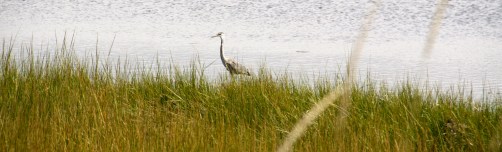
High Tide exists in two separate forms under two different names: (1) the prose poem High Tide and (2) the poem, Though Lovers Be Lost. The title of the poem comes, of course, from Dylan Thomas.

High Tide     

High tide in the salt marsh and now you are a river flowing silver beneath the moon, your body filled with shadow and light. I dip my hands in dappled water. Twin gulls, they fly down stream then perch on an ice floe of half-remembered dreams. An eagle with a broken wing, I am trapped in this cage of flame. When I turn my feathers to the sun, the black and white of a convict’s bars stripe my back.

Awake, I lie anchored by what pale visions fluttering on the horizon? White moths wing their snowstorm through the night. A feathered shadow ghosts frail fingers towards my face. Butterflies stutter their kisses against the closed lips of shuttered eyes and mouth. Hands reach out to grasp me. A candle flickers in the darkness and I am afraid.

Who mapped in runes the ruins of this heart? Eye of the peacock, can you touch what I see when my eyelids close for the night? Black rock of the midnight sun, blocking the sky’s dark cave, when will I be released from my daily bondage? Last night, the planet quivered beneath my body and I felt each footfall of a transient god.

The prose poem shortens the verse poem and turns it into a rushing hurly-burly of breathless words strung together by metaphor and magic. They flash and twist this way, that way, like minnows in shallow waters, allowing no time for pause, no time for thought. When I have read the passage in public, the listeners have always looked slightly stunned, bemused, battered almost by the storm of emotion tied into the piece.

The prose poem was published in Fundy Lines (2002) but it was originally conceived as a poem written in stanzas and took this form when published in Though Lovers Be Lost (2000). When the poem is set out in stanzas, it is shaped by the spaces that surround each line. These spaces slow the poem down, allowing the reader to permit the listener, to dwell on each group of words. Obviously, in a silent and private book reading, each one of us will read poetry and prose in our customary way. That said, in a public reading, I usually read the prose slightly faster than I do the poetry. The metaphoric nature of the language stands out in the longer version, and instead of the rush of words (prose), we have a measured resonance that shapes meaning. Impact in prose versus depth of meaning in poetry: I think both forms work in different ways.

In addition, the prose poem has been very selective and has abandoned several of the images and themes that appear in the poem. This increases the sense of urgency and unity while diluting the strength of the metaphors. Although the words are basically the same, the shapes and forms make for two different works, two distinctive appearances.

Though Lovers Be Lost

1
Once,
you were a river,
flowing silver
beneath the moon.

High tide
in the salt marsh:
your body filled
with shadow and light.

I dipped my hands
in dappled water.

2
Eagle with a shattered wing,
my heart batters
against bars of white bone.

Or am I a killdeer,
trailing token promises
for some broken god to snatch?

Gulls float downstream.
They ride a nightmare
of half-remembered ice.

Trapped in my cage of flame,
I return my feathers to the sun.

3
Awake,
I lie anchored by
what pale visions of moths
fluttering on the horizon?

A sail
flaps canvas wings
speeding my way
backwards into night.

A feathered shadow
ghosts fingers over my face.

Butterflies
stutter against
shuttered windows.

Strange hands
reach out to grasp me
and again I am afraid
of the dark.

4
When was my future
carved in each sliver of bone?

A scratch of the iron pen
jerks the puppet’s limbs
into prophesied motion.

Who mapped in runes
the ruins of this heart?

Above me,
a rag tag patch of cloud
drifts here and there,
shifting constantly;

like this body of water
in which I sail.

5
Eye of the peacock,
can you touch
what I see when
I close my eyelids
down for the night?

Black rock of the midnight
sun, rolled up the sky,
won’t you release me
from my daily bondage?

Last night, the planet
quivered beneath my body
and I felt each footfall
of a transient god.

6
Thunder knocks
on the door of my dream
and I am afraid.

I no longer know my way
through night’s dark wood.

Who bore her body
out in that rush of rain?

Could she still sense
the sigh of wet grass?

Could she still hear
the damp leaves whisper?

7
A finger of fog
trickles
a forgotten face
down the window.

The power of water,
of fire, of frost;
of wind, rain, snow,
and ice.

Incoming tide:
stark waters.

Rising.

I would welcome any comments you may have (a) on the difference between the two forms, as they impact you; (b) on the perceived differences between the prose poem and the poetry; and (c) on the perceived revision and thought process that turns poetry into prose, and vice-versa.

Bistro 12 Flash Fiction

IMG_0170.JPG

High Tide     

High tide in the salt marsh and now you are a river flowing silver beneath the moon, your body filled with shadow and light. I dip my hands in dappled water. Twin gulls, they fly down stream then perch on an ice floe of half-remembered dreams. An eagle with a broken wing, I am trapped in this cage of flame. When I turn my feathers to the sun, the black and white of a convict’s bars stripe my back.

Awake, I lie anchored by what pale visions fluttering on the horizon? White moths wing their snowstorm through the night. A feathered shadow ghosts frail fingers towards my face. Butterflies stutter their kisses against the closed lips of shuttered eyes and mouth. Hands reach out to grasp me. A candle flickers in the darkness and I am afraid.

Who mapped in runes the ruins of this heart? Eye of the peacock, can you touch what I see when my eyelids close for the night? Black rock of the midnight sun, blocking the sky’s dark cave, when will I be released from my daily bondage? Last night, the planet quivered beneath my body and I felt each footfall of a transient god.

Bistro 11 Fast Fiction

Doppelganger

IMG_0147.JPG


Last summer, in Oaxaca, Tom bumped into his twin, Gerry. Candles flickered on the engraved glass panels of the cathedral’s main doors illuminating Gerry’s ghostly face as if it were that of a young martyr. Mouth open, Tom stared at the apparition, but neither of them spoke. Tom’s neck-hairs bristled, his mouth ran dry, and his hands shook. He closed his mouth, tried to swallow, but the dryness in his throat prevented him from doing so. He opened his mouth and tried to speak, but words stuck in his throat and meaningless sounds emerged.

Three old crones, dressed in black, broke the spell. One stood in front of Tom and struck him with the large black bag of knitting that she held in her hand. Thin threads of red wool spilled out as she pushed him away. The second threatened Tom with a pair of scissors that she held in her left hand, jabbing them repeatedly towards his eyes. The third produced a tailor’s measuring rod and, using it like a cattle goad, prodded Gerry in the side. Gerry nodded, smiled sadly, and then the three women shepherded Tom’s dead twin away, hurrying out through the cathedral’s glass doors and back into the square. Tom stood motionless for a moment and then as the doors snapped shut he pulled them open and ran out after the group.

The setting sun filled the square with shadows that whispered and moved this way and that. It was as if the earth had shaken, a hole had appeared in the cemetery wall, and a whole generation of dead people had walked out of the cemetery to gossip beneath the trees and dance in the rays of the dying sun. Tom stood on the cathedral steps and called out his twin’s name. Gerry half-turned, but the three old ladies closed together and the herd hurried on.

Tom ran out into the crowd and followed the shadowy quartet, pushing his way through insubstantial people who stood firm one moment and then melted away the next like clouds or mist so thick one could almost lean on it. He ran as far as a side street that led away from the square and there he stopped.

The three crones pushed Gerry into an alley and Tom ran in after them. At first, it was dark. Then, as he brushed through a final curtain of mist, he emerged into a sunlit courtyard. Three beautiful young women in diaphanous garments sat working at an enormous loom. One spun thread and she beckoned to Tom. He approached and she pointed at the loom where tiny figures walked up and down the wool as it was being woven. He felt himself grow smaller and smaller. Then the weaver picked him up and placed him firmly on the loom and wove him into the threads. The third lady clicked her scissors and severed the wool that held him. The wooden shuttle clacked and he remembered no more.

Gerry emerged from the alley and entered the square where real people, flesh and blood beings, turned to gaze at her.  A group of villagers carrying the banner of a small town in the hills stood in a group behind their village band. An elder, carried a live-match in his hand. Deep lines scarred his face with living shadows that danced in the match-light. He put the live-match to the taper of a rocket and it soared upwards with a long-drawn out whooooosh. The village band struck up a traditional dance tune as the rocket clawed its way into the sky to explode with a loud knock against the door of the ancient gods.

Afraid of grasping at shadows and scared by this living phalanx of bandsmen that suddenly marched towards her, Gerry retreated across the main square and hurried back to the cathedral. There, she knelt at the altar of La Virgen de la Soledad, the patron saint of Oaxaca. She inserted five pesos in the collection slot, took a taper, lit it, and applied it to a candle.

Then she started to cry. Her twin brother Tom had been wearing his best grey suit over a light blue shirt and a dark blue, hand woven tie. These were the same clothes in which Gerry had dressed him for burial.

Gerry was on her knees before the statue of the Virgin. Her breath came in short, sharp bursts. She clenched his fists so tightly that her fingernails gouged into her palms. She looked into the Virgin’s eyes and candle light sparkled through the single, silver tear that trickled down the Virgin’s cheek.

https://rogermoorepoet.com/2016/07/03/writing-or-re-writing-4/

IMG_0147 2.JPG

Bistro 10 Flash Fiction

IMG0038_1.jpg

Gravitas

Last summer, in Oaxaca, Tom bumped into his father. Candles flickered on the engraved glass panels of the cathedral’s main doors illuminating the old man’s face as if it were that of  some long gone saint. Tom’s father wore his best grey suit over a light blue shirt and a dark blue, hand woven tie. In the funeral home, Tom had had dressed him for burial in just that outfit. Both the suit and its wearer had perished the following day in the crematorium.

Tom and stared at the man who appeared to be his father, but neither of them spoke. Tom’s neck-hairs bristled, his mouth ran dry, and his hands shook. He opened his mouth and tried to speak, but words stuck in his throat and meaningless sounds emerged.

Three old women, dressed in black, broke the spell. One stood in front of Tom and struck him with the large black bag of knitting that she held in her hand. Thin threads of red wool spilled out as she pushed him away. The second old lady threatened Tom with a pair of scissors that she held in her left hand, jabbing them repeatedly towards his eyes. The third produced a tailor’s measuring rod and, using it like a cattle goad, prodded Tom’s father in the side. Tom’s father nodded, smiled sadly, and then the three women shepherded Tom’s father away, hurrying him out of through the cathedral’s glass doors and back into the square. Tom stood motionless for a moment and then as the doors snapped shut he pulled them open and ran out after the group.

The setting sun filled the square with shadows that whispered and moved this way and that. It was as if the earth had shaken, a hole had appeared  in the cemetery wall, and a whole generation of dead people had walked out of the cemetery to gossip beneath the trees and dance in the rays of the dying sun. Tom stood on the cathedral steps and called out his father’s name, but he could see no sign of him among the cut and thrust of the shadowy crowd.

Tom ran out into that crowd and pushed at insubstantial people who stood firm one moment and then melted away the next like clouds or mist so thick one could almost lean on it. He ran as far as a side street that led away from the square and there he stopped and let out a loud cry of grief.

Real people, flesh and blood beings, turned to gaze at him.  Villagers carrying the banner of a small town in the hills stood in a group behind their village band. An elder, deep lines scarring his face with living shadows that danced by match-light, put the live match that he clutched between his thumb and forefinger to the taper of the rocket that he held in his other hand. The taper caught fire and the rocket soared upwards with a long-drawn out whooooosh. The village band marched forward and struck up a traditional country dance tune as the rocket clawed its way into the sky to explode with a loud knock on the door of the gods.

Afraid of grasping at shadows and scared by this living phalanx of men that now marched towards him, Tom retreated across the main square and hurried back to the cathedral where he knelt at the altar of La Virgen de la Soledad, the patron saint of Oaxaca. Tall wax candles stood before her altar. He  inserted fifty pesos in the slot, took a taper, lit it, and applied it to candle after candle.

He knelt before the virgin and started to cry. Tears ran down his cheeks, his breath came in short, sharp bursts. He clenched his fists so tight that his finger nails gouged into his palms. He looked into the Virgin’s eyes and prayed for his father, and his mother and, above all, for himself.

Then, for the first time since the funeral, he allowed himself to mourn.

Obsidian’s Edge 18

6:00 PM
The andador turístico
outside Hernán Cortés’s House

IMG0006_1.jpg

1

Dark settles early on streets and squares,
shop windows form islands of brightness.
Mankind’s future cradled in the empty life raft of a crib,
waiting for midnight.

IMG0008_1.jpg

2

An opening door snaps a sudden match of light.
Tick of the death watch beetle:
crumbling colonial house.

When I look at my watch,
the hands turn into lifeless arrows.

Numbers dance the periphery of their silent circle:
a henge of black stones falling in time with the stars.

3

The old sword sits outside its scabbard
and howls like a dog that scents a full moon.
Its long tusk dwells on forgotten blood:
dead flesh carved over rock and dry stone.

4

After the earthquake,
the museum’s walls
break at an angle.

IMG0031_1.jpg

A pendulum lowered from the roof
swings for a while, then settles heavily:
a dead weight at the end of a noose.

5

Gunpowder blunted the sword’s edge.
Bereft of sharpness,
it lies confined in its coffin of rusty dust.

Washed of all numbers,
anonymous clocks wear Hallowe’en masks
to disguise the blankness of their faces.

A mantilla of cloud
draws its black lace:
a blindfold over the moon.

Bistro 9 Flash Fiction

Grave Expectations

For Tanya Cliff

https://postprodigal.com/2016/06/27/curdled-milk-in-burning-hands/
IMG_0051.jpg

“Good evening, ladies and gentlemen. Thank you for being here tonight”

Jerry took a sip of water from the glass on the lectern. The hand that held his speech shook and the sheets of paper whispered like reeds in the breeze. He cleared his throat.

“My eldest brother, Eric, is according to many, and judging from the prestigious teaching awards he has won, a fabulous teacher. Part of his skill has been to involve the learner in the act of learning to such an extent that the subject learned becomes part of the learner’s life-style. Teaching and learning then become an act of love in the course of which learners reshape and rethink themselves. This reshaping does not come in a narcissistic imitation of the teacher, but in an act of self-discovery which releases and hones latent talent.”

Jerry looked up from his pages and glanced around the room, trying to catch the eyes of as many as would look at him. Some stared at the remains of food on the table, others gazed up at the ceiling or shuffled their feet.

“My second brother, Phillip, is named after our grandfather who was an outstanding professional athlete.”

A murmur of interest slid around the room. Jerry watched as several heads nodded in appreciation.

“Phillip, my brother, was a reasonably good rugby player who turned into an exceptional coach. He coached at all levels: junior high school, high school, club, junior and senior provincial, regional, the national championships, and even internationally. His teams won regularly both in leagues and play-offs at the provincial and regional level. He was also an instructor of coaches and for nearly 20 years all the area rugby coaches at Levels I and II (National Coaching Certification Program) were taught and assessed by him. In addition, he worked in administration and was the president of the provincial rugby union for 6 years.”

A soft sigh greeted these words, the letting out of a gentle breath.

“I am the third brother, the academic, the one who won scholarships and was the first of our family to go to university.

Jerry raised his voice at this last word and, owls on a branch, the guests at the nearest table nodded their heads.

“I am also the only one to go on to graduate school and earn an MA and a PhD. Throughout my academic career I received national and international recognition for academic publications and have been an editor, an associate editor, an assistant editor, an editorial assistant, a book review editor, and a proof reader. I currently sit on 2 editorial boards in Spain, 1 in the USA, 2 in Canada. This editing has gone hand in hand with research and publishing as anyone who has consulted my books, my online Bibliography and data base, or one of my 70+ peer-reviewed articles will know.”

Jerry took another sip of water. Two tables away, the guests sat with their eyes shut, meditating. At another table, a man with a long white beard that flowed over his chest breathed deeply, head down.

“My youngest brother, Peter, is quite possibly the best of us. He is the dreamer, the poet, the writer. He has won several writing awards and has written and published 8 poetry books, 9 poetry chapbooks, and 12 short stories. Lately, he has produced a score of films and videos. He loves working in multi-media and has built two web-pages packed with audio-visual displays in which photos and videos stand beside poems in a series of expressions which he calls video poems and photo poetry.”

Jerry turned the page. He sensed a bored restlessness in the audience’s slow adjusting of body angles, in their shuffling of feet.

“My parents would have enjoyed tonight’s celebratory dinner and tomorrow’s ceremony, but unfortunately, they cannot be here. They passed away some twenty years ago. My brothers would have loved to have been present, but alas, that too would be impossible. My older brother, Eric, was still-born. Phillip and Peter died at birth.”

Heads jerked up, glazed eyes brightened. The audience sniffed as they sensed a fresh wind carrying revelation and scandal.

“Although they died in the flesh, their spirits have never left me. Eric’s spirit represents my career as a teacher: I dedicate it to him.”

Some of the guests put palm to palm in light applause.

“Phillip’s spirit represents my adventures in sport and coaching: I dedicate them to him.”

Jerry emphasized the last word and the audience responded.

“My academic and research career, for better or for worse, is my own.”

The audience clapped and one man stood, only to be pulled down by the woman beside him who tugged at his sleeve.

“Peter’s spirit represents my creative side: I dedicate my creativity to him. I have thought about the lost potential of these three brothers of mine every day of my life. Their presence has never left me. It has been a privilege to incorporate their three different spirits, personalities, and work ethics into this unique life with which I have been blessed.”

Spoons tinkled against cups.

“I would like to thank you, the members of this university community, for permitting me to work here for so long.”

A murmur of appreciation rose from the audience and body positions were again re-adjusted.

“You have given me the space and freedom to express not one, but multiple personalities and talents: researcher and teacher, athlete and coach, academic and editor, and last, but by no means least, creative artist in image and word. I would also like to thank my nominator and the Board of Governors, who unanimously approved my nomination. I look forward to receiving the honorary status of Emeritus Professor which you will so kindly confer upon me tomorrow.”

The audience, sensing an ending, stamped their feet and tapped open palms on the tables.
“Well deserved.”
“Well done.”
“Hear, hear.”

“In honoring me, you honor my parents and my brothers, whose spirits continue to thrive and work within me. You also honor my wife and my daughter who have played such an important role in keeping me balanced, committed, healthy, positive, productive, and, in spite of the occasional insanity of the world around me, sane. Thank you all. And to all a goodnight.”

The audience struggled to its feet and former colleagues touched Jerry’s arm as he walked from the podium back to his table. He sat down and took a sip of water. As he glanced around him, he took in the mad babble of voices, the swirls of divergent conversations, and realized, sadly, that nobody had understood, really understood, a word that he had said.
 

Aubade @ Corked

Yesterday, Corked Wine Boutique in Fredericton, NB, was the scene of a creative writing reading (Sunday, 26 March, 2016) for two writing groups: Fictional Friends and Wolf Tree. A reception was held in order to celebrate award winning writers from these two groups and about 25-30 people, group members and family friends, were present. I would like to thank all those who made this event possible. A special thank you, in alphabetical order, to Ana, David, Jane, and Neil, for making me feel welcome in what was for me a new environment. And a great big thank you to Charlotte, for allowing us to read in Corked.

For my contribution, I read Fear of the Hawk and followed it up, in a second reading, with the three poems that appear below.

Three Poems

 IMG_0033.JPG

 1.

Aubade

The crows in the garden complain of the cold,

cawing from their look-out points

with short, sharp calls.

A life of ease they seem to live,

but when the mercury descends and water freezes

icy blinds inside our window panes and snow-

squalls bluster in from north and west,

who knows what’s best for those poor birds

aloft in their crow’s nest spars,

sailing snow’s seas,

steadfast in their skippering of wind-bent trees?

This Arctic cold is such

that neither man nor beast can love it much,

crouched close to whatever warmth there is,

shivering in the wind’s cold touch.

 2.

 Fore-shadowing

Yesterday, a dozen crows pecked at salt grains

scattered over the road.

A black-clad chorus, they rejoiced

when sunshine drew the white-tailed deer,

from winter depths of banked up snow.

Not long ago she was alive;

now she lies stiff and broken.

Soon she’ll be picked up by workmen,

dumped, and forgotten.

Stars drift hidden through the sunny sky.

What magic spell invokes what beginnings?

To what end do we prolong our days?

What myth,

this fairy-tale I call my life?

3.

Driving Home

Driving home from the hospital,

bullied by fierce winds

on a snow-packed road,

I dream as I drive.

I envision a past

that never was, a future

that may never be.

As I hibernate in that past,

last summer’s flowers

flourish in my mind.

The car skids into a snow bank

and my world shakes in shock.

A thirty wheeler rumbles by:

there are so many ways to die.

Bistro 8 Flash Fiction

Fear of the Hawk

IMG_0085.JPG

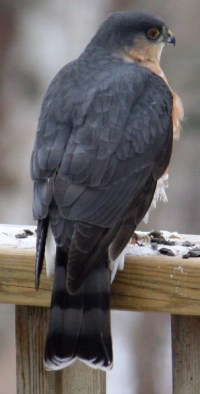
The hawk glides in on silent wings. He sits on top of the hydro pole and surveys his empire watching for the slightest weakness. Bored, he takes a step into space and drops the weight of his body onto a gangplank of fragile air. He opens his wings and speeds the feathered arrow of his passing across Frank’s garden.

CBC reports another incident. This time, Frank’s son’s regiment is involved. The boy hasn’t e-mailed his father for seventy-two hours now and Frank’s worried about him. The father thinks of his son making all those patrols among today’s smiling friends. These friends may well turn out to be tomorrow’s scowling foes. Frank knows that every day something bad may be coming, but neither he nor his son knows how or when.

Outside in Frank’s garden, the morning sun carves charcoal lines of shadow. Light dances and reduces the snow to tiny islands of white that float in a rising sea of grass. What remains of winter is no longer smooth, but dimpled and wrinkled, glowing with a million tiny dots of color. From the cloudless sky, an occasional snowflake parachutes down, cross-wise, like a feather.

A military robin, nonchalant in the sunshine and bright in his scarlet uniform, steps his sentry duty across advancing grass.

The predator comes from nowhere, makes contact, talons first, lifts the robin, and slams him into the ground. A single prolonged shriek emerges from the robin’s beak. The sharp-shinned hawk tightens his grip. Claws clench, the robin’s movements weaken and his eyes glaze over. The hawk’s eyes throw a defiant light challenging the space before him. One final spasm, a last quick twitch, and the robin is gone, one wing dragging, borne skywards in triumphant claws.

Frank opens the door to the garden and walks to the killing field. A white tail feather and several bright beads of blood mark where the robin surrendered his life. Silence reigns around the place of execution.

A flutter of feathers beneath the silver birch catches Frank’s attention.  A red-tailed hawk lies there with the wind ruffling its plumage. Frank walks to the bird and turns its body over with his foot. He examines the gashes beneath the left wing where the crows’ marauding beaks have punched their way through to the white bones of the rib cage and into the heart. No wonder the crows were making so much noise earlier this morning, he thinks.

He walks to the garage, fetches a spade and places the blade beneath the corpse. Then he carries it to the back porch and sits down beside it on the step while he talks to the hawk. What shall I do with you? I can’t just throw your body into a plastic bag and leave it for the garbage men, or can I?  No, I’ll have to dig another grave and bury you in the garden.

Frank has buried so many bodies at the garden’s foot. When he lost his wife and daughter to a highway tractor that swerved into the vehicle they were driving, he scattered their ashes beneath those trees. He still prays there daily and tells them all the news. Burials: he’s done them before and he’ll do them again. He thinks of his son and the lack of emails. He hopes all is well, but he fears that any day now he may receive that fatal call.

The ground’s still hard, but he’ll be able to scratch a shallow grave, a scrape, if nothing more. It will be enough to keep the neighbor’s cat at a distance and to deter stray dogs. Never two without three, he thinks as he walks to the garden’s foot and starts to dig.

The digging done, he returns to the back porch and sits on the step. From there, he watches the sunlight playing touch and go with the early oven birds that scratch among the dead leaves.

Somewhere, high above, another hawk casts its shadow across the lawn.

Inside the house, the telephone shrieks like a dying robin.


Obsidian’s Edge 17

5:00 PM
Home thoughts

1

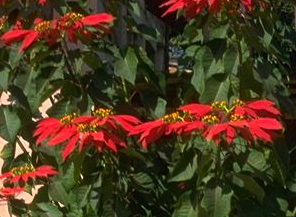
Nochebuena / Christmas Eve:
last year, a star fell down the chimney
and landed on the poinsettia.

IMG0034_1.jpg

The cat and the dog stood up to deliver
new versions of their Christmas vision.

Birch bark: ghosts on the snow bank turned
white in the moonlight as they danced,
so slender and so bright.

IMG_0033.JPG

An obsidian knife hacks through the mind
carving it into two uneven pieces.
Snowflakes invade its split personality.
Thin ice spread across glacial fires.

Incarcerated birds sing in the rib cage.
A child’s world: with its lost toy
buried beneath fresh snow.

IMG_0039.JPG

2

Last night tears froze in my eyes
and fell to the earth as stars.

Now I am an enormous sunflower,
trapped in this wet clay rag of a body.

IMG_0103.JPG

If I lie here in silence
will my world go on without me?

The bird of paradise opens his eye,
all querulous with sunshine,
and watches me waiting.

IMG0051_1.jpg

Obsidian’s Edge 16

4:00 pm

Siesta
&
Dream

IMG0051_1.jpg

1

Sweet wet bark bleeds until sack-
cloth binds the wounded rowan.

Claws trapped in the sacking, the sap-
sucker family points accusatory beaks.
They have fluffed up their feathers.

Red beads on the mountain ash: the young girl
offers me a rosary of bright red berries.

IMG_0157.JPG

Bitter on the tongue,
sunset’s first flourish tinting my dream.


2

Tochtli gnaws at the moon’s white skull.
Murciélago exits his cave with night
tightly wrapped beneath his wings.
Tezcatlipoca: a stone knife in an iron hand.

At the cathedral’s shallow edge,
the golden tree bends like a rainbow,
exposing its roots as the end draws near.

Cycle upon cycle: dead men’s gifts,
these spirits walking over night’s waters.

The dream cat’s round green eye
staring out of the window,

willing this willow pattern world

cat and bat 094.jpg
to end its cat and mouse game:

IMG_0177
darkness within darkness.