Tomorrow

DSC02478.jpg

Tomorrow

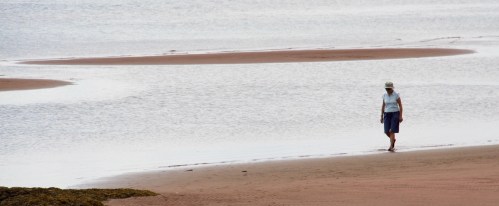
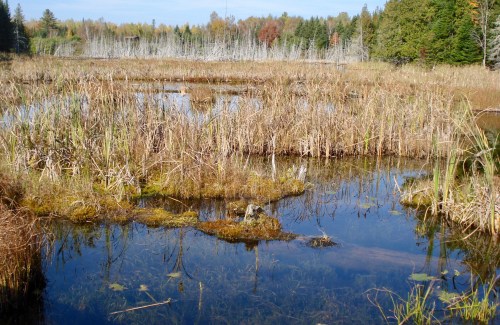
Tomorrow, early, my love, you’ll fly away. Today, all tense and stressed, your foot in the stirrup, as Cervantes would say, the anxiety of the journey on your back, you walk around the Beaver Pond where red and yellow leaves abound. I know you are hoping to see, once more before you leave, the Great Blue Heron that was here last week. Some ducks remain. I can see them standing on the water, flapping their wings, inflaming the wind, keeping themselves warm, not looking as if they really want to fly.

Alas, there are no beavers now. An abandoned lodge, the grass on its roof turning brown and dry,  lofts white sticks into the sky, but the waterways are clogging and the beaver have gone. Drowned tree trunks, beaver-gnawed and languishing, grow tiny clumps of grass and weed. Sometimes, they join together and form a miniature island that will grow at last into a grassland. The deserted lodge reminds me of our home, soon to be abandoned by the life and soul that animates it and keeps it alive. It will be sad and lonely living there without you. I know I will have the cat for company, but that’s not the same. I think I’m in charge of her, but I wonder sometimes if you’re leaving her in charge of me.

A thin grey woven webbing garlands one moribund tree. I don’t like tent worms or their equivalents. Every year we face a different invasion of this worm or that and the trees stand shocked by crawling creatures that infest their branches and build their silk cities up into the sky. I hate it when those dangling inhabitants, escaping from their cocoons, swing from low branches and twine silk threads around my face. Give me any day a fresh green frond caught by the morning sun in early spring, or else bright autumn leaves so soon to fall.

I love American Goldfinches when they sing that last departing song. I love most of all the occasional visitors that wing up north on the wings of a summer storm. Do you recall the Indigo Bunting that perched in the Mountain Ash just outside our kitchen window? He had the look of a lost bird and his call was more a cry of help than a birdsong. You took such lovely photos of him as he sat there, looking this way, that way, anyway for the way he needed to go home … and those two cardinals, orange the one, bright red the other, standing beneath the feeder, so bright against the early snow.

The hunting hawks give everyone a fright. They perch on top of a power line pole then step off into space to alight, claws first, on some poor songbird trilling away, quite free from fear, his unfinished symphony of song. Claws first? I gaze again at the photo you took of the Sharp-shinned Hawk that settled on our porch that day it rained. Claws? The massive yellow talons are high grade weapons fit for any war. I pity the poor bird clasped in those claws and brought to earth or lifted high into the sky, a feast for the marauder.

It’s getting late, my love. You walk towards me out of the woods like some lost spirit returning to this earthly world from some spiritual sanctuary. The season is ending. Thanksgiving is close. It will soon be time for you to pack your bags and go. Three silent wishes for you my love: enjoy yourself; don’t forget me … and don’t stay away too long.

Comment:
This piece goes back to the Fall of 2016. Clare and I visited the Beaver Pond at Mactaquac the day before she left for Ottawa. I sat at a picnic table and watched her as she walked through the woods and around the pond. ‘Parting is such sweet sorrow’: she didn’t want to leave me and I didn’t want her to go, yet we both knew how important it was for her to visit our grandchild for Thanksgiving. Time apart is good: it makes us realize how much we miss each other. For me, above all, it is a reminder of everything that gets done around the home without my ever noticing the care and love that is poured into each moment of every day. Having to provide that care and love for myself is an object lesson that makes me so thankful for the seemingly simple blessings Clare has brought to me throughout our married life …

Indigo Bunting, for Meg:

For you, Meg: photos, by Clare, of our second Indigo Bunting.

IMG_0206.jpg

He’s rather handsome. We usually get them in from the States following a strong south wind or  a summer storm.

IMG_0207.jpg

Great Blue Heron, for Tanya:

He was right over the garden: beautiful. We don’t often see them up here as we are on the far side of the hill from the river. Must have been raiding a neighbor’s goldfish pond.


IMG_0231.jpg

Terza Rima

img_0188
Terza Rima
 Apologia pro verbum meum
Dear followers of my WordPress Blog: sometimes
I write what I do not mean to write
and say what I do not mean to say. Rhymes
make things clearer, for I puzzle what I might
say, and plan ahead so an awkward word
doesn’t intrude. Words, birds in flight,
bright as postage stamps across the absurd
white snow of a page or a digital screen:
when I think about it, I assume about a third
of what I say, I really mean. Who has seen
the early morning wind drifting our thought cloud
across trees and lawn, shadows cast on green
leaves of grass as we think our thoughts aloud,
each thought a pea in a pod, as some we clasp
between finger and thumb while others crowd,
and the loud, uneasy word slips from our grasp
to wound or injure or otherwise to hurt and maim.
It’s not my aim to do this. My word is not an asp
or a viper or a screw to be driven. I lay no claim
to hurt and yet sometimes a word slips sideways
and does not say what I mean it to say. I aim
to please, to tease, to provoke, in so many ways
and yet I often hurt where no hurt is intended.
If I have done you wrong and my word displays
unintended ends, forgive me: let all rifts be mended.
Comment:
Terza Rima was, for a long time, the chosen verse form for letters and epistles: the epistolary form, in fact. The rhyme scheme is very flexible and easy to maintain and the syllable count is also relatively easy. As for the length of the letter, well, that is entirely up to the writer. The one that I have chosen here has seven tercets and ends in a quatrain. The quatrain is a standard “stitch up” with which to end. I have used the epistolary form on many occasions, especially when sending postcards and letters to friends. Add it to your poetic arsenal. You will not regret doing so.

Last Night’s Reading

IMG_0146 2.jpg

Last Night’s Reading

I can hear the questions now:
“How do you feel
when he writes about you?”
“What do you think?”

The question of how
the listener feels doesn’t enter
the reader’s mind
when it imprisons
this furious god
who drives us onward.

We carry a picture within
our hearts that corresponds
to an internal reality
that has nothing to do
with the world around us.

At first, we impose.
Next, we learn to shape.
Then we realize we are the ones
who’ve been shaped
and we learn to share.

Only then do we understand
that what we carried within us
like the mother carries
a baby kangaroo in her pouch,
was not at all what we thought it was.

“Mankind can withstand
a small amount of truth,”
some poet wrote, Eliot, I think.
And what we release hops out,
floppy ears, long legs, bounding,
bonding with its own sweet music.

Candles

img_0136

Candles

I love the flicker of flame,
the yellow light dancing
shadows on face and plate.
Let’s clear away the dishes
and bring the table back
to its pristine state: grained
wood. Now let’s talk of old
times back home when coal
fires roared and drafts ran
from dark corners, raising
hair on necks and sending
shivers down spines. It’s so
easy to believe in ghosts
when night winds howl
through windows, dogs bark
at nothing, houses are older
than families, and the land
snuggles down to sleep
in its winter blankets.
Beware of the sudden draft
on the oil lamp’s frail chimney:
cold will crack the glass, sending
us to bed by candlelight while high
on corridor walls old folk come
alive and frown down from
their sepia photographs. Cold
and frightened by their restless
afterlives, we shiver in the grave
cloths of our damp beds.

In Vino Veritas

img_0149

In Vino Veritas

Last year, on the road to Pwll Ddu,
I turned the steering wheel too fast
and almost rolled the car I rented.
My mother’s ashes were in the back.

I was driving my father to the Gower
so he could scatter them on the sea,
as she had requested. “Watch what
you’re doing,” my father cried.
“You’ve knocked your mother down.”

Now, as I drink to forget her ashes
tumbling around in their plastic urn,
I call you names. Crude graffiti clings
to the wall I have built between us.

Can you forgive me? In vino veritas,
said the ancient Romans, but truth from
a bottle is a double-edged sword cutting
both striker and person struck. My love,
I sense stark darkness within you. I see
black stars exploding to flood blue skies
with their inevitable ink. Can you feel
the instant hurt behind my eyes, like I
sense yours? Here, in one of our secret
gardens, give me the pardon I never gave
my parents. Heal the harm I’ve done.
Forgive me. Break the cycle. Set us all free.

Wheelbarrows

img_0183-2

Wheelbarrows
Secret Garden #6

Once upon a time,
an inmate at Cefn Coed,
the Swansea lunatic asylum,
walked around the garden
with his wheelbarrow
upside down so nobody
could put anything in it.
Not so crazy, eh?

That’s what you and I are
without each other:
upside down wheelbarrows,
or wheelbarrows
with the one wheel missing,
or wheelbarrows
with the bottom boards gone
and everything falling out.

So here’s my card for you
on Valentine’s Day:
I’ve painted an upside-down
wheelbarrow missing a wheel.

There’s not a flower
or a heart in sight.
Anyone can give hearts
and flowers.
Only someone really special
merits a wheelbarrow,
upside down,
with the missing wheel
long gone.

Lover

img_0051

Lover

Love, what little boys
dwell in grown men’s hearts,
struggling to break free.

I want to spend the day in bed,
buried beneath the blankets.
I want to call out for attention.

Will you boil me an egg?
Bring sweet, sugared tea?
Cut my toast into tiny soldiers
so I can march them through
the boiled egg’s yolk?

Upstairs, downstairs, I want
to keep you running all morning.
Will you straighten my blankets?
Will you tuck me in so only
my eyes and nose are showing?
Bring me my dog: let her lie
beside me, warmth and comfort
in her wet tongue washing me.

Suddenly, my world’s caved in
and there’s so much missing.
Lover: be a mother to me.

Secret Garden 4

IMG_0137.jpg

Secret Garden 4
Pause for Thought

My love, are you my muse?
Or do I write to amuse myself?
I don’t know any more.

I only know for sure
that every second is precious
here in our secret garden
where we cultivate these creative
moments when the world stands
still and our breathing makes
light of the void within us.

Right side, left side: who cares
what’s dominant when our bodies
are tuned like strings on a lute
and you blend with that blood-
red body space beneath my ribs
until my heart beats to your rhythms,
Princess of Paradise, fair of face.

We must never permit these memories
to fade. All too soon chaos will serve us
its tainted apple, tunneled by surging
worms, dark-serpent heralds fore-
telling death’s angel, the night to come,
and the cold of our ultimate separation.


Ice Pack

IMG_0162.jpg

Ice Pack

Downstairs at 3 AM with frozen French Fries
stuffed down the back of my jammies and
tightly pressed between chair back and spine.

Yesterday, when the pains in my lower back
ran rampant and I was too stiff to bend,
I lay on my back in bed, begging you for help.

Seventy-two hours flat on my back with my feet
on a chair did nothing to improve my temper.
I thought of my mother lying hopeless,

of my father being dressed, washed, shaved,
cared for as if his return to a second child-
hood was accompanied by a necessary

humiliation, a lowering of every inhibition
that gives a man his manhood and allows him
a minimum of dignity. Lying there, helpless,

my feet stretched out before me, I saw my
future as if it were an endless pack of ice
barring the horizon, groaning when I moved.

I must learn to lean on the closest shoulder.
This is really love, my love, your gentle hands
pulling sock over foot and ankle, lacing my shoes,
standing by my side, letting me lean on your arm,
refusing to discard me in my time of trouble.

Overnight Rain

IMG_0229.jpg


Overnight Rain

Do you remember sharing the single
bed in my room in Bristol? It was
not so much the sound of raindrops
falling, but rather that of water gurgling
through gutter and pipe that kept
us awake, turning to each other, rest-
lessly for comfort and dreams.

Downstairs, in our little yellow
house, the dogs are quiet. Upstairs,
rain drums its rhythms on our thin
tin roof and I cannot go to sleep.
The grass will be much too wet
to tackle and scrum: tomorrow I’ll
call around and cancel practice.

Funny how this season winds down
to its end. Tomorrow, no practice.
Then two more games, three maybe,
and a portion of my life will fade
into history. How many forty minute
periods can the human mind retain,
with wins and losses all crammed in?

A strange thing, memory. Even now
I can sing the tunes from the kiddy
shows I watched so many years ago:
Bill and Ben, The Woodentops, Andy
Pandy, Muffin, The Magic Roundabout.
Some nights, in my wildest dreams,
Mr. Plod, the Policeman, still comes

into the tv room with shiny handcuffs.
He leads me to my childhood cell,
high beneath the eaves, and I am
condemned to bed with nesting birds
rustling beneath the roof, rats and mice
scratching, half-heard waters whispering
off-beat lullabies: all oddly disturbing.

Comment:

This is one of my favorite poems from the sequence of love poems I wrote for Clare back in the nineties. It recalls the persistence of memory: how all things are linked throughout our lives and how one thought triggers another. The phenomenon of rain is the starting point for a journey back to a time or times that still remain firmly embedded in the writer’s mind. Memory is indeed a strange thing. I am certain that no two people recall the same incident in exactly the same way. How could they when viewpoint and memory create such wonderful and different links?

One thing I will never forget: the rats and mice in the rafters of our bungalow in Gower. My father and grand-father built it in 1928 and my uncle was the caretaker who took loving care of it throughout his life. They did their best to keep the bungalow vermin free. But we closed it down in September and over the winter all manner of things found their way in. Those first spring nights, until the rafters were cleared again, were full of the sounds of nature’s revolution against humankind.

The other thing I remember very vividly was the lack of running water and electricity. Wood stoves, a fireplace in the dining room, an enormous cast-iron kitchen range, wood and coal burning, on which my grandmother cooked and did the baking. Then there were the cows that wandered through the bungalow field. They would be there, all night, nurtured by the bungalow’s warmth. Many’s the night I wandered out to the outdoors bathroom, the out-house, in fear of a meeting a nocturnal cow. One of my worst memories: walking barefoot through a cow-pat, warm and wet, and the moisture rising up soft and squishy between my toes. Those were the days … the stuff of which memories are made …