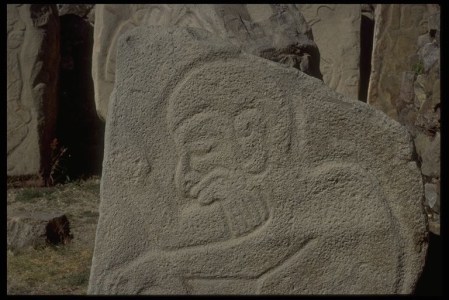
Wheelbarrows

img_0183-2

Wheelbarrows
Secret Garden #6

Once upon a time,
an inmate at Cefn Coed,
the Swansea lunatic asylum,
walked around the garden
with his wheelbarrow
upside down so nobody
could put anything in it.
Not so crazy, eh?

That’s what you and I are
without each other:
upside down wheelbarrows,
or wheelbarrows
with the one wheel missing,
or wheelbarrows
with the bottom boards gone
and everything falling out.

So here’s my card for you
on Valentine’s Day:
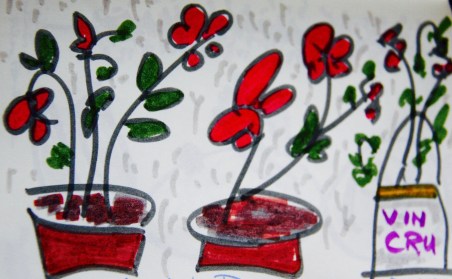
I’ve painted an upside-down
wheelbarrow missing a wheel.

There’s not a flower
or a heart in sight.
Anyone can give hearts
and flowers.
Only someone really special
merits a wheelbarrow,
upside down,
with the missing wheel
long gone.

S.W.A.L.K.

img_0195

S.W.A.L.K.

Where did all the sighs go?
The love that would last forever?
The tears that stained the letters?
The everlasting? The undying?

The eternally yours? The initials
we wrote on the back of envelopes?
SWALK, OXO, PHTR, RLN, ILYE,
ICWTKY, or was it ICWTMLTY?

I forget so much. But I do remember
how the windows steamed up
in your mother’s car when we sat
together for hours with nowhere to go

and nobody around to disturb us.
Combe Dingle, Wotton-Under-Edge,
Weston-Super-Mare: these were our
favorite places, do you remember them?

Just being together was more than enough
to keep us happy. We don’t hold hands
anymore. It’s not something grown-ups do,
especially in front of the children or the late

night news. Nor do football games inspire
passion and send us into ecstasies the way
the white spot did as it lit up your mother’s
TV, with us alone, and her asleep in bed.

Comment:
There are so many things packed into this poem, old things, perishable things, memories that will vanish, if they haven’t vanished already. Who now remembers writing regular letters, not e-mails or e-cards? Who remembers sealing them, perhaps with a loving kiss? Who remembers rushing to the front door as the postman pushes letters through the letter-box to see if the beloved has written back? If you didn’t go to a boarding school, you will know nothing about the 11:00 am break when we rushed back to our houses to go through the mail and see who had written. I’ll never forget those perfume-soaked envelopes I received from the local village girls. Nor will I forget a wrathful house-master, my scented letters stuffed up under his nose, sniffing at my letters like a bloodhound tracking me down.

Swans Swimming

img_0195

Swans Swimming

You swim so much better than I:
one length of the pool, then two
and your grace in the water is fluid,
like a swan’s. I think of white feathers,
dark feet paddling under water.

Swans follow the ferry as it crosses
the River Stour. Yellow bills, sharp
over the side of the boat, stretch
for the dry crusts the ferryman
keeps in a plastic bag by the engine.

When he smiles at you, my stomach
tightens. When he nods, you break
bread, pinch it tight in rigid fingers,
and offer it to the swans. Round, black
buttons of eyes judge the exact distance.
Can these sleek, folded wings really
break an arm or a leg? Serrated edges
on wicked bills make short work
of stale bread even if it is iron hard.

After a little while, the pool’s chlorine
stings our eyes. Swimming side by side,
our eye-lids tightly closed, we dream
our way across the pool. Ten lengths,
twenty: our world is a watery vision
of a weekend package deal: paradise
for two. Your body above me now,
locked together in an ancient dance,
Leda and the Swan performed to perfection.


Predicting My Death 3

fundy-05-mistwolfepipers-081


Predicting My Death before Yours

3

Know this: I have no regrets. Not in anything that touches you.
No regrets, that is, save for the thing I have done to hurt you.
Many things. Some underhand. Some unsuspecting. Some deliberate.
You know, after all these years, the way I am. Unthinking.

Selfish. Never unfeeling. Often unknowing. So many negatives.
Is it negative to embrace my death before it comes? I don’t
think so. Perhaps it’s the most positive thing I’ve ever done,
this coming to grips with the maggots that gnaw me away,

night and day, gnawing me away. They aren’t invisible. You see
them  sometimes yourself: in the bottle I drain to send me to sleep;
in my tone on the phone when I answer an unwelcome call; in kicks
delivered to sleeping dogs that I can never let lie. Why? I cannot

answer that question. It bounces like a pinball round my head:
why? why? why? But try as I may, there is never any answer.
Why am I made as I am? Why do things happen the way they do?
Why do you still love me, in spite of all my faults, my kinks?

There: I’m being negative again. Be positive: this is my last will
and testament. My love, I leave to you the pleasant memories.
Days in the sun in Spain; our daughter born healthy; grooming
the show dogs; digging the snow together. Our very presence here

in Canada is a sign of the highest bond that could ever unite
two people: leaving their homes, their families, their friends,
their birthplace, their nationality to set up a new home together,
crossing the sea to reach this new found land of ice and snow.


Predicting My Death 2

fundy-05-mistwolfepipers-081

Three Poems Predicting My Death before Yours

2

There never was anybody else but you. Too late now when
you’ve discovered this to tell you that there probably
never will be anyone else. Middle age: I look back on all
the things we’ve done together. Shall I count the ways?

No: I’ll make a list. So often we’ve sat together at the table
planning the next set of duties that will keep us occupied
by driving us apart. But of all the people in the world
you’re the only one who doesn’t need a list of what we’ve done

or haven’t done. Goodrich Castle, last year in England,
was your discovery. We went there together at your instigation.
A part of you that will always be me, that first discovery
of ruins, new to us, growing from red bed-rock. I thought I had

seen everything worth seeing till I looked on Goodrich,
explored its towers, its labyrinth of connecting rooms.
Civil War tore down the curtain walls, fired the stables,
driving the horses wild with fear. Sometimes, at night,

I can feel that fear pumping through my veins. Knowing
I will die before you, knowing I will leave you alone
to defend yourself between curtained walls, isolated,
besieged by the same memories that mill in my mind.

Predicting My Death 1

fundy-05-mistwolfepipers-081

Three Poems Predicting My Death before Yours

1

I cannot always talk to you. There are so many barriers.
The hoovering, the cleaning, cooking the daily meals.
When we go to bed, you are tired, I’ve had too much to drink.
We know our routine answers off by heart. There’s never any time

for each other. House work, gymnastics, paying the bills,
even housekeeping on the computer: they all take time.
Time, time: so little of it left. I can feel death’s seeds
rooting in heart and chest. Premonitions: so little time.

Comment:

Rummaging in the dusty memories that line my bookshelves, I rediscovered a sequence of love poems I wrote for Clare, 25 years ago, in 1991. This is the second in the sequence. A Golden Oldie, it grips today even more than it did back then. I am growing old. The insurance company’s statistics tell me that soon, all too soon, I will join those statistics and become another black number on a white page. According to those statistics, Clare will survive me, but we don’t know by how much.

How do we prepare ourselves for such things? Our society, a society that sees violent death every day on the road, on the street, on television, backs away from death. We don’t face it, not in the same way they do in Oaxaca, for example, where it is celebrated once a year on the Day of the Dead. Homes are lit up. The dead ones favorite food is prepared. Little altars are illuminated by candles. Photos appear. Do the dead return to their homes to join in the celebrations? Sometimes, I guess they do. Certainly the would be made welcome if they did.

Perhaps Francisco de Quevedo, the seventeenth-century Spanish poet who was the subject of my doctoral thesis, was right. “The day I was born, I took my first step on the road to death.” He writes too of “this death that I carry within me, that has walked beside me all my life.” “If death is a law, and not just a punishment,” he writes, “then we must accept it and obey its call.” I guess it’s easier, if you are a Stoic or a Neo-Stoic, to face up to such things.

I once asked my grandfather, a man who survived the trenches of the First World War, if he was worried about dying. He looked at me in silence for a long time. I was very young and we were sitting in the sunshine on the bench by the old Swansea Hospital where he went daily to gossip with his friends. “Roger,” he said. “We are all going to die. We will die if we worry about it. We will die if we don’t. So why worry?”

I certainly don’t want to go. I didn’t want to go twenty-five years ago and I really don’t want to go right now. I have decided to take my grandfather’s advice. I’m not going to worry and I am going to continue to enjoy myself for as long as possible because: “For there are many fine things to be heard and good things to be seen / before we go to Paradise, by way of Kensal Green.”


Your Voice

IMG_0196 2.jpg

Your Voice
Love poem

Still in the still of the rain
I sense you near.

The room is full
of the scent of emptiness
yet even the silence
turns my head.

The walls expand
to enclose the world.

With gaudy flags
on a colored map
I mark your progress
through my memory,
upwards and inwards
your progress to my heart.

A moth glistens in the circle
cast by my reading light.

Your stealthy footsteps
sound in the corridor.

A voice, your voice,
drifts through the night

Gorilla Drives the Zoo Bus

img0046_1

Gorilla Drives the Zoo Bus

Gorilla drives the same zoo bus all day, every day,
same starting time, same finishing time, same route, same stops,
different passengers, but all passenger equally faceless.
Gorilla doesn’t want to know their names.

“Please tender the exact fare!”

Not a penny less, not a penny more, and he polices every penny.
Bus conductor and master of every passenger’s destiny,
he opens and shuts the door, letting passengers on and off the bus,
but only at official stops.

Every passenger has a ticket,
and Gorilla punches every ticket with a neat, round hole.
He never makes mistakes.
He grinds, like God’s own mills, exceedingly small.

He has spent all his life in uniform.
He has a belt and braces to hold his trousers up.
He’s always prepared for the worst.

Ten, fifteen, twenty years:
an anonymous wife; anonymous little babies;
at shift’s end, a pension, and another bus.

St. Peter’s at the wheel.
He doesn’t want to know where gorilla wants to go:
he wants to know where he’s been.

Commentary:

This poem follows on from my statement in Structure in the Short Story that “my greatest fear then becomes the gate-keepers, those anonymous figures who sit on shadowy selection committees, place ticks in appropriate boxes, and judge the quality of writing by consensus in committee.”

A long time ago, on holiday in Cardiff, the capital of Wales, we caught the bus from where we lived into the city center. I made a mistake in the name of the stop to which we wanted to travel and the bus driver insisted we got off at the place I had named. He would not let us travel to the stop a little further on to which we wanted to go. It was raining hard and so I told him that, rather than get wet, we would pay the difference in fare, but he said he had no change and insisted we get off the bus. I didn’t have any change either and had only a five pound note, so I gave him that and after a few curses and meaningful looks, he pocketed the money (more than three times the original fare), allowed us to stay on the bus, and took us to our true destination.

I have often thought about the “anonymous, shadowy people” who rule a tiny kingdom and insist, sometimes with the utmost vigor, that everything should be done exactly they way they want it done. There is no room in their lives for creativity, for adventure, for generosity, for a different way of life. More to the point, they seem (many of them, but not all) to enjoy bullying the people over whose lives they have for control for such a small amount of time. Some school teachers I have known fall into this category: utterly miserable people whose sole joy consisted in indoctrinating and dominating their young charges.

I think of them as the gate-keepers. They hold the key to a very small gate through which we all must pass, but their motto is a famous one “no pasarán” — you shall not pass.
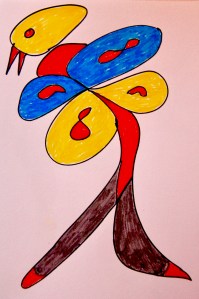
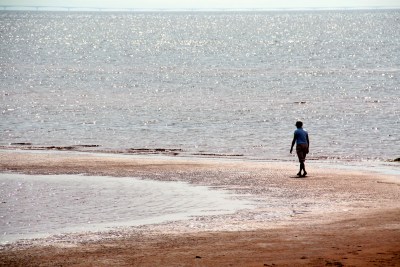
Catching Crickets


IMG_0265.jpg

Catching crickets, caging them, and making them sing

We track them through their courting ceremonies
hunt them down by the noise they make
clutch them tight between anxious fingers

We weave glass jails
sentence them one by one to green imprisonment

At day’s end we ferry them to city apartments
incarcerate them like canaries in their cages
and wait for them to sing

At first they are silent in this strange environment
we feed them with bread dipped in brandy and wine
and sooner or later they sing in their captivity

Now they will not eat
they await the liquor that burns them
into fiery tongues of song

 Our midnights are haunted by their spirituals

Commentary: This is a “Golden Oldie”going back to when we were living in Santander, Spain. When we visited the beach at Noja, we would lunch with our Spanish family and all their children on the grassy headland overlooking the sea. After lunch, the children would hunt for crickets. When they caught one, they would weave a grass jail from blades of grass and place the crickets in there, one by one. Then, when they went home, they would bring the crickets with them and cage them. The crickets usually ‘sang’, but if they didn’t then alcohol was used as a bribe and a persuasion. I told this story in class one day and one of my students, Sheree Fitch, herself an excellent poet and story teller said: “It’s a poem: quick, write it down.” And I did. And here it is. With many thanks to Sheree Fitch.

NB Our cricket, the one they caught for us, wouldn’t sing. Clare and I took it down to the local gardens and released it when nobody was looking.

Power Out-[R]-age

IMG_0303.JPG


Power Out-[R]-age

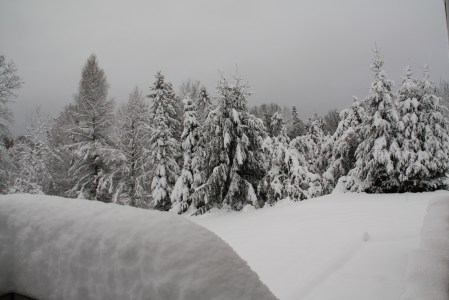
A tree fell across the wires.
Our power went ‘poof’!
No lights. No water. No heat.
We lit a log fire and strove to keep
sub-zero temperatures at bay.

It was as if God had stepped
away from the high altar
and gone out for a coffee
at the local Tim Horton’s
leaving a deserted church
to the mercy of the elements.

Guttering candles surrender
their skimpy lives but scarcely
warm us as more snow falls.

Shadow demons creep in
with the gathering night.
Shivering beneath piled blankets,
we cling together and hope
to keep out the growing cold.

 Warning: Raw Poem

Another raw poem. We lost power at 8:30 am on Wednesday, 30 November and it returned on Friday, 2 December at 2:00 am. 42 hours without power and the temperatures not rising above +2C and dropping to -3 / -5C. No light. No heat. No water. No phone. No internet. I thought of the victorious general who announced to the tune of the bombs bursting behind him on our tv screen that “We bombed them back to the Stone Age.”

Well, here we were sitting in our own miniature stone age and mentally unprepared for the shock of what it all means. What a struggle: to light the fire, to keep it alight (day and night), to keep warm, to prepare hot food over a log fire in an insert fireplace (and us so lucky to have one; some of our neighbors didn’t), and we won’t talk about going to the bathroom! At least, I now what it means to lose power at the start of winter. However, I really don’t understand what it means not only to lose power, but to know that an enemy deliberately and callously stripped that power away.

I tried to put those thoughts into the first version of the poem, but then I took them out as I didn’t want to politicize what is right now a nature poem, pure and simple. The out-[R]-age is there, with or without those other memories and that out-[R]-age comes partly from the knowledge that our civilization, if indeed we can truly claim to be civilized, is indeed skating on very thin ice.