Moonshine: FFF


fundy-05-mistwolfepipers-081

Moonshine
Flash Fiction Friday
Friday, 5 May 2017

Here, on the wharf, in Santander, I stand in the shadow cast by the Customs House and gaze at the moon path sketched out over the water. “Over the mountain, over the sea, that’s where my heart is longing to be.” I taste the bitter salt of homelessness and know that I will never belong in this world and that I will never find a place to call my own. Back home, I have a black and white television and a black and white dog. Here I have nothing. Back home, when I am home, I am a latch key kid. My parents leave for work at seven in the morning and my mother gets home about five every night. Those ten hours on my own are mine to do what I like with: but I must account for them. “What did you do today, dear?” And everything I say I do is checked. Did I make the beds? Did I do the laundry? Did I finish the ironing? Did I wash and dry the breakfast dishes? Did I clean the house from top to bottom?

Sometimes I strip and stand in front of the mirror in their bedroom and look at my naked body. It’s not much to look at. Once I stood there with the carving knife in my hand and deliberately cut myself across the ribs, just to feel the pain and watch the blood flow down. Other days I play cards against myself. That way one part of me always wins, but then the self I play against is always doomed to lose. Sometimes I wage battles with toy soldiers, moving them up and down across the carpet in front of the fire. Occasionally, I throw a soldier in the fire, just to watch him perish.

Sometimes I just sit on the back of the settee and press my forehead against the cool window. The rain is cold and cools the window pane. I know the sky is crying and sometimes I think I know why. I’ll go back to my boarding school soon. There, we are taught to be isolated and to live in isolation. The bullies will come and they will bully me. I have not grown much over the holidays and I know they will be even bigger, and even stronger, and even faster. I don’t want to go home. I don’t want to go back to that school. I don’t want to be bullied and abused. The masters cane me and the older boys beat me and the bullies force me to do things, unspeakable things, things that I don’t want to do. I have tried to run away but someone always brings me back and then they beat me for running away. “Don’t be a coward,” they say, “take it like a man.” And I do.

I look across the water. How beautiful is the Bay of Santander beneath the moon. I look up at the hills, at Peña Cabarga, at the hills from whence cometh my salvation. My grandfather walks towards me over the waves. He helps me choose stones and pebbles, helps me to fill my pockets with them. He takes me by the hand and gives me courage. He and I walk down the slip way, hand in hand, and then we walk out across the moon path and into the sea.
Three Bears Wood

IMG_0156

Three Bears Wood

Nobody has seen them,
those three bears,
nor naked nor clothed.

So who now walks
in
Three Bears Wood?

Who now stands
where he once stood
in
the shadow of the trees?

Sometimes
he walks there
in
his dreams.

What magic power
puts him back there
beneath the trees?

What ghosts does he see,
what words does he hear,
what dreams does he dream
in
Three Bears Wood?

Scarecrow

IMG_0085

Scarecrow

Flash Fiction
Friday, 21 April 2017

            Sometimes at night I hear nocturnal animals walking across the lawn outside my bedroom window. Intruders in the garden, they rattle the feeders, walk dark through the woods, and sometimes howl at the coyote moon. My heart pumps sudden blood, rapid, through my veins and toes and fingers twitch as I toss around, restless, in my bed.

            Below me, in the hall, the grandfather clock ticks the night away. I stitch myself up in my dreams, count the black sheep in the family, and iron old ghosts upon the ironing board until they are as flat as the white shirts we wore in boarding school on Sundays.

            If I close my eyes, they rise up before me, those Sunday shirts, flapping their arms, and mouthing their apologies for the sorry life they made me lead. No, I didn’t need to spend those days praying on my knees before the stations of the cross. Nor did I need to ask forgiveness for all the transgressions pulled from me, like teeth, in the weekly confessional.

            Marooned in a catholic cul-de-sac, I went around and around in rigid circles like an academic puppet trapped in the squared circle of an endless syllogism. Who locked me into this labyrinth of shifting rooms where sticky cobwebs bind windows, doors, and lips? Why does the razor blade whisper a love song to the scars crisscrossing my treacherous wrist? Who sealed my lips and swore me to secrecy?  And why?

            A tramp with a three-legged dog, I sleep beneath a pier at midnight and watch the waves rolling up the summer beach to catch me out. Sometimes I steal a deckchair, place it at the edge of the sea and bid the tide to cease its climb. The moon winks a knowing eye and the waves continue to rise. Toes and ankles grow wet with wonderment and I shiver at the thought of that rising tide that will sweep me away to what unknown end?

            Last night I wrapped myself in a coward’s coat of many-colored dreams. My senses deceived me and I fell asleep in a sticky web spider-spun by that self-same moon that hid among the clouds and showed her face from time to time. My fragile fingers failed to unravel all those knots and lashings and I was a child again walking the balance beam that led from doubt to knowledge.

            A thin line divides the shark from the whale and who knows what swims beneath the keel when the night is dark and the coracle slides sightless across the sea? I gathered the loose ends of my life, wove them into a subtle thread, and made myself a life-line that would bind my bones and lash my soul to my body’s fragile craft.

            What could I possibly have dreamed as I paraded the promenade a stone’s throw from the barracuda? I crossed my fingers and the beggar at the gate rolled up his sleeves and bore witness to my penitential wounds.

            “How many times,” he asked, “can you pay those thirty silver pence? Don’t they lie heavy on your eyes and heavier on your heart?”

            “Indeed they do,” I answered. “Yet the debt must be paid, but I don’t know how, and where, and when, and to whom?”

            Carnivorous was the carnival he promised and he turned my small world upside down. With coals for eyes and a carrot nose, a scarecrow descended and devoured my town in a clash of flashing teeth. Beneath the waves, the conga stamped its sudden feet of flame. A sea parrot scraped its red and yellow beak against a rainbow of crusty, feathered rage. I awoke to the dog’s sudden tongue in my mouth: an invasion of salt, saliva, and wet, crumbling biscuit.

            That night I opened a bottle of Scotch and drained it dry. I took no prisoners. Around me, the dead and dying licked their wounds as they sank lifeless to the bottom of the glass.

            “Hickory-dickory-dock,” said the mouse as he ran up the grand-father clock. But that particular clock stopped long ago, at midnight, when the Queen of Hearts tied a dead rat to the pendulum, the house slipped sideways, and my heart was filled with woe.

            This morning, fresh snow. The garden basks white beneath pale sunshine. The back porch bears no footprints. The raccoon has abandoned me and chipmunk and squirrel have turned their backs. Today, the scarecrow will scare those nightmare crows away and not a memory will survive to haunt my waking dreams.

The Brick

img_0372

The Brick

 The brick sits on the master’s desk.
The master enters the classroom,
sees the brick, picks it up,
and without even looking
hurls it out of the window.

It is a warm, spring day
and luckily the window is open.

The schoolboys watch the brick
as it tumbles in slow motion
end over end through the air.

It lands with a thump in the quad
right at the feet of another master.

This second master looks around
but there’s nobody in sight.

He shrugs his shoulders,
bends down, picks up the brick,
puts it in his briefcase,
and walks away.


The Perfect Boiled Egg

img_0184

The Perfect Boiled Egg

two dozen
at the bottom of the pot
as hard as rocks

two dozen at the top
liquid beneath the stale bread
resurrected as toast
and used as blotting paper
to mop them up

and there
lurking somewhere
in the middle of the pot
hiding like the prize number
waiting for the winner
in a national lottery

the perfect boiled egg

Comment: School food was always a thing of wonder and I remember it only too well. If nothing else, the school sports gave me an appetite and the school food made me more or less omnivorous and gave me a cast-iron stomach. I can’t remember who said them first, but I always associate these words it with St. Trinian’s: “School fish: the piece of cod that passeth all understanding.” We sat at tables of eight and we could always find someone who would eat whatever we left … more about that (and school) later.

Contract: Flash Fiction

IMG_0178 3

Contract

The door to the Principal’s office opened just as Tammy approached, hurrying because she was late for class. Tom, her Department Head, stepped out and stood in her way.

“Tammy,” his tongue swiveled around his thin lips in nervous fashion. “I’m just talking with the Principal about your new contract. Come in,” he extended his arm and shepherded her towards the open door.

“Not now,” Tammy replied.  “I’m late for class. “Can’t it wait?”

“Strike while the iron’s hot,” Tom showed teeth yellowed from tobacco. “We’ve got a great deal for you. Come in, come in.”

Tammy found herself face to face with the Principal.

“Tammy, my dear, we’re so proud of you,” the Principal flashed a row of crocodile teeth, two of them gold-capped. “I have some papers for you to sign.”

“But, I’m late for class and …”

“I know, don’t worry. This won’t take a moment,” Tom winked at her as he and the Principal led her towards a typewriter that sat on the desk with a blank page and two carbon copies inserted in it.

“Here, at the bottom of the page, just sign here,” Tom pointed.

“But it’s a blank page. I can’t sign a blank page,” Tammy stammered in response.

“You’ll see it when it’s typed and signed,” the Principal assured her. You can always change it later.”

“Can’t I come back after class?”

“I’m afraid not,” the Principal frowned. “I have an important meeting in half an hour, with the school board, and you’ll still be in class. This must be signed now if it’s to get board approval.”

“But you said … you said I’d only be here for a year …”

“We’re very pleased with you,” the Principal flashed the sunshine of his teeth. “We want to keep you here.”

“Very pleased,” said Tom. “This is a first class, independent school run, as you well know, on a non-profit basis. Only the children of the rich and privileged come here to study,” he paused. “And some of them come here because of you. That’s why I’m recommending you for this new and improved contract. I signed my first three-year contract this way, didn’t I?” he looked towards the Principal.

“You did indeed,” said the Principal. “And just look where you are now: Head of your Department.”

“A three-year contract …” Tammy blinked and ran her tongue over her lips. “I wasn’t expecting that. I thought a year … thank you … but …”

“No buts. Jobs are scarce nowadays, particularly in your field,” Tom looked at his watch. “Time’s getting on. You don’t want your students walking out of your class, do you? Here you are now: just sign here,” he handed her the pen he held in his hand.

“You’d better be quick,” the Principal said. “This offer may not be here tomorrow and … my goodness, look at the time. You are running late.”

“Sign,” Tom told her. “I signed and I never regretted it. Remember, we can always change the wording later.”

“Drop in after class,” the Principal smiled. “It will all be approved by then and you can read it and we’ll modify what you want.”

Tammy sighed and signed.

The Principal and the Department Head ushered her to the door.

“Hurry,” they exhorted. “Run. You don’t want to be late.”

Tammy ran to her class.

The two men watched her go. Then they went back into the office, shook hands, and grinned at each other.

Tammy never saw that contract. She stayed at the school for three more years, as she had promised, but in all that time she never got a pay raise and the not-for-profit school board never allowed her to join the employees’ health and pension plan.

Raptors Flash Fiction

IMG_0236.jpg

Raptors
Bistro 21

“Falcon, Richard?”
“Here, sir.”
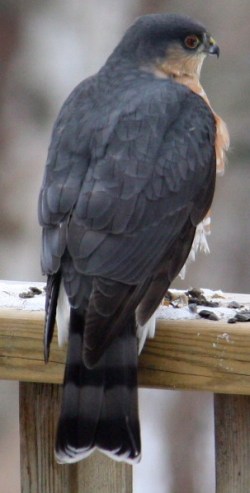
“Finch, Thomas?” Mr. Shrike’s predatory eyes squinted out over half-rimmed glasses.
“Thomas Finch?”
“Not here, sir,” Dick Falcon answered.
“Why not? His trunk’s here.”
“Don’t know, sir.”
“Hawk, Peter?” Mr. Shrike continued.
“Here, sir.”

* * *
“Tom Finch not back?” Mr. Shrike perched by the fireplace with his conspicuous, upright stance. “Why not?” He addressed the staff room then spat in the fire.
“Tricky business,” Mr. Slaughter replied. “Important birthday, his mother said when she called. He’s at home but his trunk’s here. He’ll be back.”
“Pity,” Mr. Shrike winced. “That boy’s spineless. I’d like to…”
“Impale him on a thorn and hang him out to dry like the butcher you were in the war?” Mr. Slaughter peered down the long beak of his nose. “Not on school grounds, I hope,” he sniggered.

* * *
Tom and his mother lived with her parents. His birthday cake had thirteen candles that year. He blew them out and made a silent wish: “Let me be brave enough to do it.”

* * *
After tea, Tom’s mother sent him into the kitchen while she talked with her mum and dad.
“He’s got to go back to school,” Tom’s grandfather cleared his throat and spat in the fire. Tom’s mum recoiled at the stench of burning phlegm.
“He doesn’t want to go,” she murmured. “The boys bully him and the masters are worse.”
“Just like the army: he’ll get used to it. It’s me paying his fees; it’s my money you’re wasting when he’s not at school,” he spat again.

* * *
Tom leaned over the chipped porcelain sink in the kitchen. His fingers brushed against the damp red flannel and the soap dish. Then he touched the leather case of his grandfather’s cutthroat razor.
The folded razor lay cradled in his left hand. He nursed it, swaying back and forth on his feet. He found the groove and pulled the cold steel blade from its protective casing.
The razor formed a glittering right-angled claw. Then it became the sinister half-wing of a hawk that fluttered for a second, hovering above his wrist.
It pounced.
A fierce talon slashed into Tom’s wrist and a red river of pain sprang out. Tom fought the urge to scream as he stared at the flowing blood. The great claw of the triumphant hawk lay deep in his wrist. Strong wings flapped and bore him away.

* * *
“Falcon, Richard?”
“Here, sir.”
“Finch, Thomas?” Mr. Shrike’s strident voice pierced the classroom. “Thomas Finch?”
“Not here, sir,” Dick Falcon answered.
“Why not?” Mr. Shrike surveyed the class.
“Don’t know, sir. But he won’t be back.”
“How do you know that?”
“Saw his trunk being sent home, sir.”
“Finch, Thomas: absent,” Mr. Shrike looked down at his list and skewered the boy’s name with the absentee’s black cross. He smiled a cruel, calculated smile, and returned to his list.
“Hawk, Peter.”

* * *

Remembrance Day Flash Fiction


039

Remembrance Day
Bistro 20

Previously published on
http://commuterlit.com/2015/12/wednesday-remembrance-day/

            The old man watched a drop of red wine slide slowly down the side of the bottle. It was November 11, his birthday.

Seventy-three years ago, Father John had taken the boy’s ear lobe between thumb and forefinger and pinched the nail deep into the flesh until the blood ran.
“This afternoon you will go down to the bamboo grove and cut a cane. Bring that cane to me and I will bless it.”

That night, the boy woke up. Snuffles, snores, and an occasional sob broke the dormitory’s silence. The bamboo was a long, cold serpent drawn up in bed beside him.

The next day, he awoke to his seventh birthday.

Father John beckoned and the boy followed him to his cell and knelt with his hands stretched out like those of Christ on the Cross. The priest struck him with the bamboo cane six times on each hand.
“Your Savior, blessed be His name, suffered more, much more for you,” the priest sighed. “Examine your soul. Find fault with each flaw, for you are unworthy. Remember: the eye you see is not an eye because you see it,” Father John droned on. “It is an eye because it sees you. Christ sees you as you kneel there. He sees. He knows. He judges. Examine your soul with care and stay there until I return.” The priest raised his right hand and made the sign of the cross in the empty air.

The boy spent his birthday kneeling before the crucifix in prayer. He contemplated the wounds of Christ. He imagined each blow of the hammer and imagined the pain of cold nails biting into his warm flesh. He tasted bitter vinegar as it dripped off the sponge, gasped at the thrusting spear, felt the lash’s sting as it fell across his flesh. He became the flagellated Christ and knelt before the crucifix, staring at himself eyeball to eyeball in the same way he looked at himself in the morning mirror. The crucified Christ gazed back at him, his brother, his soul mate, his double.

After an hour, a red drop of paint slipped slowly from the nail hole in Christ’s right hand. The boy blinked. The red drop trembled then fell.
After two hours, Christ opened his eyes and smiled at the boy.
After three hours, salt-water formed at the corner of Christ’s eye. It glistened in a sunbeam that entered through the cell’s narrow window.
After four hours, tears began to flow down flesh and painted wooden face.
It was Remembrance Day, the boy’s birthday. He was seven years old.

Seventy-three years later, the old man sat at the table. He watched the red wine trickle down the bottle. He remembered it all and his tears flowed again.

Recalcitrant Flash Fiction

IMG_0013

Recalcitrant
Bistro 19

            The annual Old Boys Reunion took place in the sixteenth-century cellar of a world famous winery that also ran a restaurant and banquet service for pecunious customers. A man in a penguin suit, with a foreign accent, and a suspicious looking bulge under his left armpit, ushered the recalcitrant towards a set of well-worn of steps.
            “You are arriving slightly on the late side, sir,” the penguin whispered, staring mockingly at the checkered, American-style sports jacket worn by the man he escorted. “And not dressed like the others. But not to be troubled, I myself will escort you down to the place of the guests.”
As he descended the steps that led down to the former wine cellars, the recalcitrant heard the well-remembered, high nasal bray as his former headmaster’s brass voice pierced the ruminations of the penguin-suited herd that, having sniffed the glorious nature of the gregarious watering-hole, was intent on reminiscing, drinking, and feeding.
“Wonderful place … so fortunate … to be here … thank you … ” the old man neighed.
It was indeed a wondrous place, a semi-whitewashed room, warm in the center where bees wax candles in gold candlesticks blazed on antique tables and cool by the one wall left untouched since that same sixteenth century. Here the damp gathered in great grey clots and the spider webs, also untouched, sparkled and glistened, like “the mythical lights of fairyland” as the winery brochure announced to the limited circle of the wealthy to whom it was circulated.
Empty kettle … the recalcitrant thought as he remembered his old headmaster and then they were, face to face, the head and his obstinately defiant and anti-authoritarian pupil, staring each other down.
“You!” It was an authoritarian call to battle. “I remember you. The boy who denied all authority.”
“Yes, me,” the recalcitrant, eyeball to eyeball with the old enemy rejoiced in his newfound glory. And here he was, back in the old country on a lecture tour of six major universities, one of them being in this city, a full professor now, with international honors, multiple publications, department chair in a well-known university, a household name in his subject, and all of this at forty-two years old. “Yes, me,” he repeated.
“You have done well for yourself,” the ageing donkey brayed.
The gunman in the penguin suit, sensing the tension, placed himself in the gunslinger’s position from which he could survey the whole room. He lovingly stroked the armpit bulge, eyes gleaming with hope.
“Tell me,” the head drew a handkerchief from his pocket and honked his nose into it like a storm-bound goose. “How did your career take off?”
“Well, in two stages,” the recalcitrant paused, partly for effect, partly to gather his thoughts. “Just like a rocket: stage one was when I left your school and stage two was when I left your country.”
The old donkey, blinked, threw back his head, trumpeted down his nose with intense nasal wrath, and turned away with a wave of his hand towards another latecomer who had just descended the stairs. “Ah, there you are Smithers,”the fog horn blared. “At last. Saved me you have. This man was just about to …”
The rest of the sentence was lost in the rush and a hubbub as a new series of delights arrived, tapas, hors d’oeuvres, little sticky creations on fiddly little sticks, they all circulated from hand to hand along with the exquisitely chilled champagne, the single malt whiskies, and the ultimate in estate wines.
Not a penguin spoke to the sports-coated recalcitrant. Nobody offered him a hand. Nobody shared a memory with him. As he arrived at each little group, the penguins gathered in a tight circle, turned their black backs to him, and shut him out. Throughout the feasting, he sensed the gimlet eyes of the gunman glued to a spot mid-way between his shoulder blades.
The recalcitrant didn’t partake of the food or the drink, he just watched. Then, after an hour or so, he turned and climbed the sixteenth-century stairs, the gunman in the penguin suit right behind him, and walked away into the freedom of starlight and the cool night air.
He never returned for another reunion.
He never received another invitation.