Monkey’s Tractatus

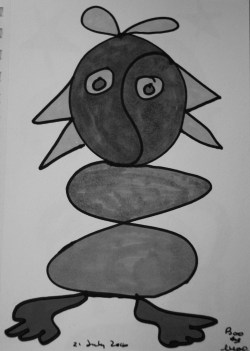
IMG_0186.jpg

Monkey’s Tractatus
(after a philosophical argument between
Ludvig Wittgenstein and Bertrand Russell)

When monkey sees a hippopotamus in the temple grounds
he knows it is grounded in fact.
We really must get rid of it!
It obediently vanishes.

There is a silence in the temple cells
broken only by the broom’s clean sweep
as insects are swept away from the footsteps of the unworthy.

Monkey sees the hippo trapped beneath a chair.
He can feel it struggling to set itself free.
Now hippo gets tangled in monkey’s hair.

Monkey will have its hide for a shield against dark thoughts,
an unbroken umbrella to guard him from this rain of teardrops.

Hippo bathes in a hip bath of crocodile tears:
Sunt rerum lacrimae.
He wallows in philosophical sorrow.

When the hippo leaves the temple,
there is a silence as the unspoken word returns,
a silence broken only by the hum of the hoover,
and the beat of a condor’s invisible wings.

Monkey Chews


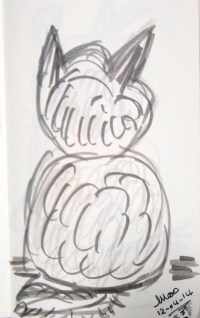
IMG0046_1.jpg


Monkey Chews the Cud
(after Octavio Paz, Ludwig Wittgenstein, and Stéphane Mallarmé)

Brilliant in his rising, a new sun shines on monkey’s world,
dispersing darkness, fragmenting it into shadows.

Sunshine and shadow: heads and tails of an age old
combination sealed back-to-back on the self-same coin.

¿Cara o cruz? Heads or tails? Sunshine or shadow?

Solombra, perhaps? Or is it just the act of perception,
as Wittgenstein would have us believe, and nothing more:
the metal always spinning on its milled edge, never falling,
the coin on its axis, a new day with its potential,
sunshine or shadow, thrown dice still skittering,
a new world imperceptibly poised in its own making?

Monkey scratches his head. Such enormous depths
are not for him to plumb, this early in the morning.

Better by far the banana peeled, the fresh skin thrown
away for someone else to slip on, and monkey
sitting there in silence, chewing his morning cud.


Existentialist Monkey

IMG_0181.jpg

Existentialist Monkey
(after Albert Camus and his Myth of Sisyphus)

Monkey watches Budgie tinkle the small bell hanging below
the yellow plastic mirror in which Budgie gazes in fascination
at his own reflection, nuzzling and nipping himself with his beak.

Black and white soccer balls cover the floor:
“Budgies for the Cup!”
A crimson ladder has another bell on top.
Budgie squeezes a soccer ball between beak and claws,
ascends this ladder, and pushes the ball upwards.

When he gets to the top, the ball slips slowly down.

It falls to the sandpaper floor.
Budgie descends the ladder,
takes a new grip on his soccer ball,
and steadily climbs the rungs.

Budgie is clever: he can imitate the telephone, the doorbell,
the pop of a champagne cork shooting from the bottle, the cat, the dog …
When Budgie whistles, the stupid dog leaps to his feet
and rushes, barking, to the door …

Budgie is two thirds up the ladder now. He pauses for a rest,
stretches his wings, and looks at himself in the mirror.

“There’s a pretty boy!”

“Il faut imaginer Budgie heureux.”

Wales

IMG_0182.jpg

Wales

Wales is whales to my daughter
who has only been there once on holiday,
very young, to see her grandparents,
a grim old man and a wrinkled woman.

They wrapped her in a shawl and hugged her
till she cried herself to sleep
suffocating in a straitjacket of warm Welsh wool.

So how do I explain the sheep?

They are everywhere, I say, on lawns, in gardens.

I once knew a man
whose every prize tulip was devoured by a sheep,
a single sheep who sneaked into the garden
the day he left the gate ajar.

They get everywhere, I say, everywhere.

Why, I remember five sheep
riding in a coal truck leering like tourists
travelling God knows where
bleating fiercely as they went by.

In Wales, I say, sheep are magic.

When you travel to London on the train,
just before you leave Wales
at Severn Tunnel Junction,
you must lean out the window and say
“Good morning, Mister Sheep!”

And if he looks up,
your every wish will be granted.

And look at that poster on the wall:
a hillside of white on green,
and every sheep as still as a stone,
and each white stone a roche moutonnée.

Monologue: Sun & Moon

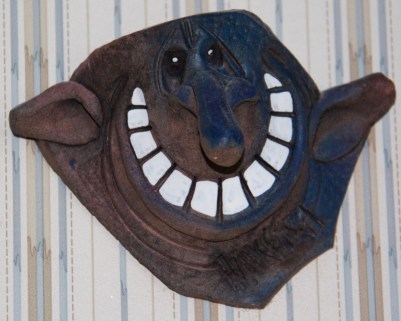
IMG_0211.jpg

Monologue

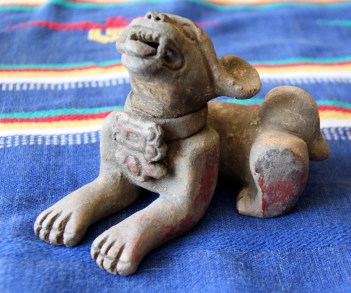
 Mono means Monkey in Spanish. Monkey is one of the day names in the Mixtec calendar. 
Monologue, then, is Monkey, talking, perhaps to himself.

“They broke our walls,” Mono whispered, “stone by stone.
A new church they built, on the land they stole from us.
Red was its roof from a thunderstorm of blood.
The white bones of their lightning scattered us like hail.

They ripped out our tongues and commanded us to sing.
Carved mouths were ours, stuffed with grass.
Stone music forced its way through our broken teeth.

Few live now who can read the melodies of our silence.
We wait for some sage to measure our dance steps:
treading carefully, we walk on tiptoe.

A + cross  these stepping stones of time.”


Note: I am working on Sun and Moon. It will be ready for publication on Amazon and Kindle some time this week. Monkey Temple, Though Lovers Be Lost, Bistro, and Empress of Ireland are now available for review or purchase on Amazon and Kindle.

Moose

Moose

Who has nailed summer to its autumn cross? Sunbeams dazzle in the wind, footsteps follow, or is it a shadow’s shadow flickering its year’s end dance on a twisting path? Beneath our feet the painted leaves lie still. Bottled sunshine abandoned now in rusted flakes, who will replace them in the tree’s discarded puzzle? Footsteps crackle along the trail and, as they draw closer, our cold breath hangs a question mark on the air before us. Yesterday, the salmon danced on their tails. Lettuces went to seed and built tall pyramids up to the sky in a world all yellow with the sun and blue with the sea. Primrose and bleu céleste, this stretch of Fundy, where the islands are large black beads, threaded together by tiny strings of ducks and geese. Today, going home, a bull moose thrust his head through the windshield of a speeding car. For an instant the trees caught their breath, the air stood still and a red fox tore from the trees like a runaway leaf, so quick, so silent, a shadow across the road melting into dark woods to lie silent in the forest. I can still see the occupants of the shattered car standing by the roadside, their cell phones in their hands, punching urgent numbers. Shock had rounded their snow white lips into an O for Operator.

Very surprised (and pleased and proud) to hear this prose poem from my book Fundy Lines read on Shift, CBC, this afternoon. Here it is in a more permanent form — the written word. Thank you Shift CBC and best wishes to all.

Bullfight


F1040022.JPG

BULLFIGHT
Not So Fast Fiction

…at the beginning of the end, when more things have gone than are with us and the summer’s sun withers the grass and wrinkles our faces baking us bright red – como un cangrejo te has puesto, hijo mío, en el sol de Somo, como un cangrejo – and — pulpo en un garaje — you grasp at the new words, the new colours, the new delights, your tongue trapped clumsily in your mouth like a red rag doll and the midnight bull charging the spectators who gather and olé, au lait … as the drunken bullfighter climbs the bull and kills the post.

F1040020.JPG
The red cape flutters in our memories as we go to the slaughterhouse now where the open body hangs loose like a flag and the red meat of him held out for all to see and some to share … and this is his body and this is his blood, sacrificed in a circle of golden sand for our drunken amusement … for whatever I did, I never visited those bull fights when I was sober … at five thirty, they began, and at 3 o’clock we would gather in the city centre and slowly wend our way from bar to bar, up the Calle de Burgos, past the street where you lived and upwards, ever upwards, towards the bull ring at the top of the hill, from bar to bar, I say, and the bota, the wine-skin filled and re-filled with that dark red fluid that will set us all baying for the bull’s blood, or the matador’s blood, it doesn’t matter whose blood, as long as someone bleeds and the bull is butchered, torn from this life by a man on horseback, armed with a lance, and he thrusts the heavy blade between the shoulders of the bull, the blood first dripping red, then gushing, a small stream over the rock of the

F1040011.JPG
bull’s shoulder, and down the bull’s front legs, to slither on the sand, and the bull still ready to charge the horse, and the bull’s head steadily dropping as the muscles in the back and neck are gashed and torn and there’s no purgatory any more so this must be hell, this gaping wound between the bull’s shoulders and the blood flowing freely and vanishing into the sand, the golden sand, once pristine, stained now with blood, and soon to be further stained with feces and urine, and the picador, his job done, walks his blind-folded, armored horse out of the ring, and the bull, un-armored, un-enamored of this process that turns his torment into a spectacle staged for our drunken delight, as we pass the bota round, and the blood red wine travels from hand to hand, and we squirt the bull’s blood squarely between our lips and it dashes against tongue and teeth and we swallow the body’s sacrifice hook, line, and sinker, as the banderillero runs in, harpoons in hand, waving his banderillas and plunging their arrowed barbs into the gaping wound that flowers on the bull’s back, and the bull stands there, twitching, wriggling, saliva and drool slipping down, sliding stickily into the sand, as the matador doffs his hat, takes his vorpal sword in hand and treads the light fantastique in his laced-up dancing pumps, his Waltzing Matilda feet so swift, so sure, eluding the lumbering rush of the charging bull, the load of bull, that tumbles down the railway track towards him as he stands there, the matador, poised like a ballerina, as stiff and as steady as a lamp-post around which the bull circles, a drunken man, staggering a bit, but still bemused by the red flag tied to a stick which waves before his eyes and goads him onwards, ever onwards, in his plunge towards a brilliant death, as he pauses, feet together, and the matador makes his move, one, step, two steps, tickle you under … and the bull lurching forward to impale himself on three or four feet of curved, stainless steel, and the matador immaculate in his reception of the bull – and what is happening? What will happen next? Sometimes, the sword pierces the spinal cord and death is instantaneous. Sometimes, the sword pierces the heart, and death is more or less swift, but definitely certain. And sometimes the sword pinches against the bone and flies from the matador’s hand, and the matador must bend, and pick it up, and try, try again, the red rag below the bull’s nose, the bull drawn forward, to impale himself, yet again, on the sharp end of the sword, and this time, the sword goes in, but the wound is in the lungs and the peones, the pawns, the workers, the drones, the little men help, turn the bull round and round in ever tighter circles so the sword will open and even larger wound, sever the main arteries perhaps, and the bull, blood spurting through nose and mouth, lurches now, then falls to his knees, and lies there, bleeding, and the matador chooses the descabello, that little sharp sword with the razor blade at the end and he tries to sever the spinal cord, there at the back of the neck, and sometimes he does, and sometimes he doesn’t, and if he can’t then it’s the little men again in their colourful sea-parrot suits all gleaming with sequins and stars and they carry a sharp little instrument, with a pointed end, la puntilla, that short, double-edged, stabbing knife which is plunged into the occipito-atlantal space to sever the medulla oblongata in the evernazione method of mercy killing, and the puntilla is plunged again and again into the bull’s neck at this atlanto-occipital joint, until it severs the medulla oblongata, and when it is severed, in this glorious neck stab, then finally the bull drops dead, and the show must go on and the horses come in, black funeral horses with colourful feathers on their heads and they loop a rope around the bull’s horns and away he goes, trailing blood, and urine, and excrement, all across the sand and other little men appear to sweep the sands clean, though if seven maids with seven mops, swept it for half a year, do you think, my neighbor, the local carpenter, asks, they’d ever sweep it clear, and I doubt it, says the little man on my other side who wears a large walrus moustache stained red now and purple with the wine that he has splashed about, and shaking the wine skin he finds it as not as full as it was, so he sheds a bitter tear, and since the death was slow, the crowd and my neighbours all whistle and boo the matador and his merry men, but when the death is swift and quick then the crowd is aroused and they wave white hankies at the presidential box and the president awards the matador an ear, a salty, smelly, sticky ear which the peones cut off the bull before he is towed away, and then the matador throws the ear in the direction of his current sweet heart, the fairest lady in the crowd although she be as black as charcoal or as brown as the beauties baking daily on the summer sand where the sea horses dance and there are no bulls, and no bull shit, and no seven maids with their seven mops, just the scouring sea, and sometimes the president gives away two ears, or two ears and the tail, dos orejas y el rabo, though this I have seldom seen, and what does the bull care that he dies bravely and well, for now he is dead he hasn’t a care in the world, and the butchers in the butcher’s shop are carving him away, carving him to the skeletal nothingness of skin and bone that awaits us all, the nothingness of this more or less glorious death, with our tails cut off and our ears hacked away to be pickled or smoked or other wise kept in the fridge as the butcher’s trophy … and who now will walk stone cold sober into that magic circle of sun and shade and stand there, unbowed, before the might of the untamed beast, the untamed bestiality that drives us wild as it wanders through our nightmare cities and our wildest dreams … and now the crowd call música, música and the band strikes up and martial music plays as the bullfighter and his troupe march gaily round the ring, their trophies held high for all to see then thrown to the ravening crowd who bay like dogs as they taste fresh, bloodied meat …

F1040014.JPG

Aubade @ Corked

Yesterday, Corked Wine Boutique in Fredericton, NB, was the scene of a creative writing reading (Sunday, 26 March, 2016) for two writing groups: Fictional Friends and Wolf Tree. A reception was held in order to celebrate award winning writers from these two groups and about 25-30 people, group members and family friends, were present. I would like to thank all those who made this event possible. A special thank you, in alphabetical order, to Ana, David, Jane, and Neil, for making me feel welcome in what was for me a new environment. And a great big thank you to Charlotte, for allowing us to read in Corked.

For my contribution, I read Fear of the Hawk and followed it up, in a second reading, with the three poems that appear below.

Three Poems

 IMG_0033.JPG

 1.

Aubade

The crows in the garden complain of the cold,

cawing from their look-out points

with short, sharp calls.

A life of ease they seem to live,

but when the mercury descends and water freezes

icy blinds inside our window panes and snow-

squalls bluster in from north and west,

who knows what’s best for those poor birds

aloft in their crow’s nest spars,

sailing snow’s seas,

steadfast in their skippering of wind-bent trees?

This Arctic cold is such

that neither man nor beast can love it much,

crouched close to whatever warmth there is,

shivering in the wind’s cold touch.

 2.

 Fore-shadowing

Yesterday, a dozen crows pecked at salt grains

scattered over the road.

A black-clad chorus, they rejoiced

when sunshine drew the white-tailed deer,

from winter depths of banked up snow.

Not long ago she was alive;

now she lies stiff and broken.

Soon she’ll be picked up by workmen,

dumped, and forgotten.

Stars drift hidden through the sunny sky.

What magic spell invokes what beginnings?

To what end do we prolong our days?

What myth,

this fairy-tale I call my life?

3.

Driving Home

Driving home from the hospital,

bullied by fierce winds

on a snow-packed road,

I dream as I drive.

I envision a past

that never was, a future

that may never be.

As I hibernate in that past,

last summer’s flowers

flourish in my mind.

The car skids into a snow bank

and my world shakes in shock.

A thirty wheeler rumbles by:

there are so many ways to die.

Obsidian’s Edge 15

3:00 pm

Old Woman
@

Dainzú

IMG0067_1.jpg

5

Sandpaper wind
polishing the land
erasing its identity
as barefoot
over dust and stone
the old woman
feasts her heart
on a banquet of song.

A rag-bag her body
stitched together
by memories and bone.

IMG0064_1.jpg

6

She shows me fear
in these grey shadows
dancing their dust
beneath carved rocks.

IMG0055_1.jpg

7

Abandoned now,
visited only by ghosts,
this resurrected ball park.
Buried beneath their stones
its heroes,
the men who wooed her.

I look at carved faces.

Which one captured
her flowering heart,
pierced it with an arrow,
and scarred her name
forever
letter by letter
on the face of this rock
?

Obsidian’s Edge 14

2:45 pm

Old Woman
@

Dainzú

IMG0054_1.jpg

 1

Dusty paths
meander beneath
a drifting sun.

Shiftless ruins
cloak the land
in worn-out
shadow rags.

IMG0072_1 2.jpg

Scrawny cattle
herded by an old man
and his sly-eyed dogs:

the old woman,
threatened,
stoops and picks up
a handful of stones.

Moving targets:
dust and shadows of dust.
So much stone and sand
sifted through the hand
and trodden underfoot.

3

In the distance,
a low mound
covered with grass and weeds:

IMG0056_1.jpg
her family’s ancestral home,
its bountiful community
abandoned to the wilderness,
to the wild thorn
thrusting its spear
through her mortal heart.

Weed-filled walls,
empty houses, ruined fields.

4

Wise old woman
with her hands full of stones:

that first rock
freed from her fist
booms thunder
off the sheep
in a  wolf-skin’s
cowardly frame.