Recycling

Books

Recycling

“You never know when you might need it,” my
grandfather said, finger-nails cracking red-
waxed parcel string. Bright sealing wax rained down
on the tablecloth, covering it with hard,
scarlet chips. Wax cracked, tight knots emerged.
One by one, my grandfather first loosened
them, then sought the string’s free end, following
it along its snaking way from knot to
knot. Like Theseus following his twine
through the labyrinth below the palace, my
grandfather mused, hesitated, followed
the clues given him by the knotter’s mind.
Set free from its parceled knots and lashings,
he looped the string around his fingers and
tied the twine into a tight bow that he
stowed away for future use. Reef knots, slip
knots, sheep-shanks, bowlines, bowlines-on-the-bight,
he showed me how to tie them all. He taught
me too how to never tie granny knots.
“Never cut string with a knife: untie knots,”
strict his advice. I follow it today.

Commentary:
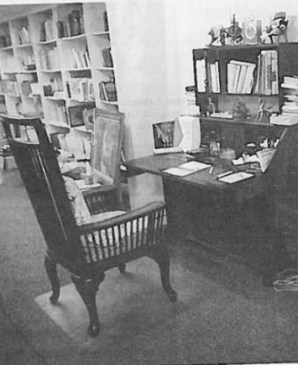
The photo shows my grandfather’s chair sitting before my basement desk where I write and store my books. I used to climb up the back of this chair when I was a tiny child, and blow on the bald spot on his head while he was asleep. Such memories nesting in the attic corner of the dormant mind. One day, I will write about that. Oh: I just did.

Inundation

DSC01055

Inundation

Seven flashes of light, then raindrops start
falling, one, two, followed by a curtain
dragging its damp dishcloth wetness over
windows, walls. It pocks the river’s troubled
face. Rising waters surpass all levels
from former floods. Water pours into homes,
floods basements, climbs stairs. Drowned branches scratch at
second floor windows as they float by.  Old
people evacuate their houses, are
boated to higher ground, beloved pets
upon their laps, boxed and caged. Men wonder
when this will end while older people shake
their heads, saying that they have never seen
anything like it. Overhead the storm
gathers strength. Rain tumbles, bubbling in
brooks that slide downhill filling the river.
Grand Lake now extends from Freddy to Saint
John. Why has it come to this? What can we
do to appease the mindless river gods,
fall on our knees and pray, if so, for what?
Last year we suffered drought, forest fires,
wells running dry, wild life dying of thirst.
This year it is death by inundation.
Rain continues. Thunder rolls. The wind gets
up and drives waves high against house windows.
Lightning carves fresh scars across dark clouds.
We shuffle our feet, accepting our fate
with grimaces, hugs, kisses, and sad smiles.

Darning Socks

F1030024 2

Darning Socks
(for Angela Wink)

My grandfather taught me how to darn socks.
I sat beside him by the fire and placed
a grey, wooden mushroom inside the sock,
stretching the sock wool to expose the hole.
He chose his colors with care, bright yellows,
oranges, reds, sky blues, anything that
stood out against the sock’s dark drabness. If
the socks were thin, he split new wool, pulling
it into individual strands that
he would draw through tongue and lips, wetting them
so they would thread with ease through the needle.
Curled wool threaded, I would cross-hatch the sock’s
hole, slowly forming a life raft that I’d
fill with colored wool. All my life, I have
darned socks, sewn buttons, mended my sweaters.
I always use bright colors, to my wife’s
dismay. Then, I know who did the darning,
and when. I still have my grandad’s First World
War sewing kit, all wrapped up in his signed
canvas wrap with his needles and some wool.
It’s lovely just to touch where his hands touched.
I still see dark blood traces where he pricked
his thumb, and where he sewed up wounded friends.

Commentary:

This poem comes from a comment, made by Angela Wink, on yesterday’s post. Such exchanges are precious and help create new memories. Thank you Angela.

Friday Fiction: Crave More

IMG_0125

Friday Fiction
04 May 2018
Crave More

Crave More: I hate those words. I always choose
a cart with the shop’s name on the handle.
I can handle that. I can’t stand a cart
that screams Crave More at me every time I
bend to place an item in the wire grid.
If stores were honest they would write Think More
and Crave Less
 on their shopping carts. I bet
that would cut into profits. Anyway,
there I was, in LaLaLand, leaning on
my cart, half asleep, when this ghost drifted
towards me. “Help me,” it said. “I’m hungry.
I need money for food.” I woke up from
my dream, looked at the ghost, tall, skeletal
thin, cavernous eyes and cheekbones sticking
out, gaps in the teeth, grey face drawn with shame.
“Sorry,” came automatically. Then I
too felt shame. I looked at him again. “I
only carry plastic.” The excuse limped
heavily across the air between us.
I saw something in his eyes, I knew not
what, and turned away. As I walked away,
I added one hundred pound of muscle
to the scarecrow frame. Took forty years off
his age. Filled his body with joy and pride,
not shame, and remembered how he played, hard
and fast, but true. I ran the card index
of former players that I had coached through
my mind. I knew their moves, and attributes,
the way they played the game, strengths, weaknesses …
I remembered him holding up the Cup.
But I couldn’t remember his name. I
pushed the cart all over the store in a
frantic search for him. At the ATM
I withdrew cash. I could hand it to him.
I could tell him he had dropped it. I went
through a thousand scenes. I could invite him
to the snack bar. I could tell him to buy
what he needed and follow me. Check out
time, I would add his purchases to my
bill. I looked everywhere. He was nowhere
to be seen. One opportunity. One
chance. That’s all we get. Miss it, and we blow
the game. Grasp it and we medal with gold.

Commentary:
I have been experimenting with iambic pentameter, counting words and syllables on my fingers, tapping rhythms on the table, driving Clare crazy, and disturbing the cat. I have also disturbed my usual way of writing, for better or for worse I am not yet sure. Yesterday’s entertainment was to rewrite my brief story, Crave More, as a poem in pseudo-iambic pentameter. The measures seem to function and the rhythm and word count move both within the line and in the melodic, rhythmic phrasings that move between lines in a constant enjambement.

So, by all means let me know what you think of this experiment.  Here’s the link to the short story, also called Crave More. I would love to receive your opinions on narrative pseudo-iambic pentameter.

Revised Version:

Encounter

I was in the Superstore, leaning on
my cart, half asleep, when this ghost drifted
towards me. “Help me,” it said. “I’m hungry.
I need money for food.” I woke up from
my dream, looked at the ghost, tall, skeletal
thin, cavernous eyes and cheekbones sticking
out, gaps in the teeth, grey face drawn with shame.
“Sorry,” came automatically. Then I
too felt shame. I looked at him again. “I
only carry plastic.” The excuse limped
heavily across the air between us.
I saw something in his eyes, I knew not
what, and turned away. As I walked away,
I added one hundred pound of muscle
to the scarecrow frame. Took forty years off
his age. Filled his body with joy and pride,
not shame, and remembered how he played, hard
and fast, but true. I ran the card index
of former players that I had coached through
my mind. I knew their moves, and attributes,
the way they played the game, strengths, weaknesses …
I remembered him holding up the Cup.
But I couldn’t remember his name. I
pushed the cart all over the store in a
frantic search for him. At the ATM
I withdrew cash. I could hand it to him.
I could tell him he had dropped it. I went
through a thousand scenes. I could invite him
to the snack bar. I could tell him to buy
what he needed and follow me. Check out
time, I would add his purchases to my
bill. I looked everywhere. He was nowhere
to be seen. One opportunity. One
chance. That’s all we get. Miss it, and we blow
the game. Grasp it and we medal with gold.

Comment to the Revision:

The first eight lines of the original poem set the scene. While I tried to use them to accentuate commercial exploitation of the customer’s potential for greed, Crave More, they are not essential to the story of the encounter. Meg noticed this and following her interaction I have revised the poem, eliminating those first eight lines.

This is an interesting and inter-active way to work. Thank you Meg!
Thursday Thoughts: On Water

fundy 05 mist+wolfepipers 081

Thursday Thoughts
03 May 2018
On Water

In the seventy-fourth year of my life,
sitting on the car in Mactaquac Park,
waiting for my wife to walk down the slope
to where I’m writing, a warm wind today,
sunshine, the river still rising, more rain
called for tonight, another inch or more,
that’s twenty to thirty millimeters,
you can hear from here the restless waters
powering the dam’s dynamos, creating
great creamy waves to wash over coffee
colored waters fathered upriver with
their splintered debris wafted from waters
still gathering strength in the north where snow
melts steadily while the stormy sky builds
clouds, and weathermen forecast thunderstorms
yet to descend and overflow our streams:
sitting safely I fear for those downstream
who deal with flooded basements, water pumps,
animals in distress, destruction come,
no sanctuary save in flight, wood, mortar,
brick promising no safety, no respite
from rising waters and eternal rain.

Commentary:

In the great flood of 1973, we lived on the Woodstock Road in Fredericton. We watched the river waters rising. Luckily they stopped on the other side of the road from where we were living and didn’t cross the road. This year we live out of town on the other side of the hill away from the river. Each time we drive into town we see the river waters and measure how they rise. Our hearts go out to those folk who are forced to evacuate their homes. We find it hard to believe that the waters are now at the levels they reached in 1973 and may, in some places, exceed those levels by a meter or more.

Next weekend, Word Spring, the spring meeting of the Writers’ Federation of New Brunswick, is scheduled to take place in Quispamsis. Yesterday, the people of Quispamsis found themselves on flood alert and were told to prepare for instant evacuation. It rained last night and more rain is expected. While it may not rain here in Island View, the catchment area of the St. John River, the Rhine of North America, is enormous. Any rain falling in the north of the province may affect the river. The snow is still melting from the deep woods and clear cutting along the river banks has, according to some, affected the ground’s ability to retain water.

All in all, a difficult situation and one that is forecast to last for another week or ten days. More details can be found here:

http://www.cbc.ca/news/canada/new-brunswick/homes-cottages-flooded-1.4645225?cmp=news-digests-new-brunswick

Wednesday Workshop: The Poem Itself

Books

Wednesday Workshop
02 May 2018
The Poem Itself

One of the joys of downsizing one’s library is rediscovering old books, genuine treasures, that one wishes to read again. On my basement bookshelf I found an old copy of Stanley Burnshaw’s The Poem Itself (New York: Crowell, 1976). I thumbed quickly through it and found my old marginal notes on poems by Miguel de Unamuno and Antonio Machado. Reading the annotations to the poems I came across such literary and philosophical gems as these.

  • “Poetry gave (Unamuno) permanence to the temporary forms of the self” (p. 167).
  • “Unamuno’s God needs men to be sure of his own existence” (p. 171).
  • “The poetic element (for Machado) was not the word for its phonic value, nor color, nor line, nor a complex of sensations, but a deep palpitation of the spirit” (p. 172).
  • “In the life of every sensitive person there is much spiritual experience which cannot be given a name or a title” (p. 173).

These brief insights into the nature of poetry sent me back to the book’s first pages and I read with much joy and pleasure the opening essay entitled The Three Revolutions of Modern Poetry (pp. xvii-xliv).

The first revolution is that of Syntax (p. xxiii). Word order is changed substantially and words and thoughts are inverted. Sixteen lines of Mallarmé (p. xxiv) are composed of one sentence with five commas and a colon. There is no logical sequence of beginning, middle, and end as one thing runs into another and thoughts shape-shift and move. The structure becomes that of presences and dreams as Mallarmé writes to his new theory: “to paint, not the thing, but the emotion it produces” (p. xxv). Other analyses of syntactical distortion and fragmentation follow and Emily Dickinson’s Further in summer than the birds— leads into Cummings’ my father moved through dooms of love / through names of am through haves of give. When I link this most modern movement to Francisco de Quevedo’s ‘soy un fue, y un será, y un es cansado’ / I am a “was” and a “will be” and a  tired “is” … I realize yet again that all is not new in this modern world of ours. After all, Quevedo lived from 1580-1645, a modern poet indeed.

The second revolution is that of Prosody (p. xxvii). Rimbaud’s first poem in vers libre / free verse was written (probably in 1873) and published in 1886. Today, we are no longer shocked by the breaking down of the tyranny of verse. In fact, we are probably more shocked by people who use rhyming, metric poetry than by the many innovations in line length and word arrangement with which we are so steadily bombarded. That said, I still find some of Cumming’s innovations, Grasshopper / PPEGORHRASS for example (p.xxi) to be quite stunning and not always readily intelligible.

The third revolution is that of Referents, “the upheaval in poetic communication as a whole and specifically its referents” (p. xxxi). This is basically the writers of poetry turning to their private, interior worlds for inspiration. While poetry has always contained references to the self, modern poetry may be full of meaning for the writer, but that meaning doesn’t always extend to the reader. This is particularly true of automatic writing, surrealism, and the metaphoric poetry that floats, sometimes without factual substance, in the mind of reader and writer alike. Burnshaw isolates three moments in the development of this obscurity.

  • “a deliberate attempt to enrich the communicative content of language by expunging the unessential words” (p. xxxiii).
  • “to compress years of anguish, dreams, and projects into a sentence, a word” (p. xxxvii).
  • “the use of personal symbols and hence the creation of a private cosmology” (p. xxxviii).

These three elements contribute to the privacy and hermetic obscurity prevalent in certain poets. Le jeu ne vaut pas la chandelle / the game isn’t worth the candle … alas, while some difficult poems and poets are very worthwhile, some poetry is definitely not worth the valuable time wasted in trying to decipher it. That is my conclusion: nobody else’s.

This re-adventure back into modern poetry contributed to a delightful voyage through the verse of Baudelaire, Mallarmé, Nerval, Verlaine, Machado, and Unamuno (among others).  It is a voyage that I have started, but not yet finished. It is also a voyage that is generating new thoughts, fresh understanding, and a renewed desire to write. What more can a reader / writer desire than to be among friends, also sharing loneliness and despair and also held at bay by the living words of dead men, their voices and wisdom heard through ageing eyes that can still scan the printed page … vivo en conversación con los difuntos / y escucho con mis ojos a los Muertos // I live in conversation with the deceased / and listen with my eyes to the dead (in my friend Elias River’s translation) of Quevedo’s poem Retirado en la paz de estos desiertos.

Poetry


img_0189

Poetry

“Poetry gives permanence to the temporal forms of the self.”
Miguel de Unamuno.

That is what my writing is all about.
Those temporal forms, fluttering and changing.
Butterflies, they live for a day or two,
perch and flourish, spread their wings,
excel for a moment, catch our attention,
blown by a sudden gust, tear their wings on a thorn,
perish in the blink of an eye, cluster and gather,
reborn in dusty ditches, congregate on bees’ balm,
smother Cape daisies and black-eyed Susans,
shadows shimmering, butterflies by day,
fireflies lighting up the night, terrestrial stars
floating in their forest firmament, hackmatack,
black oak, bird’s eye maple, silver birch, fir,
impermanence surrounds us, dances beneath stars,
sings with robins, echoes the owl’s cry through woodlands,
poetry, the elemental soul, our words capturing nothing,
turning it into eternity, holding it for the briefest moment,
then letting it go. Island View: my dialog with time and place.